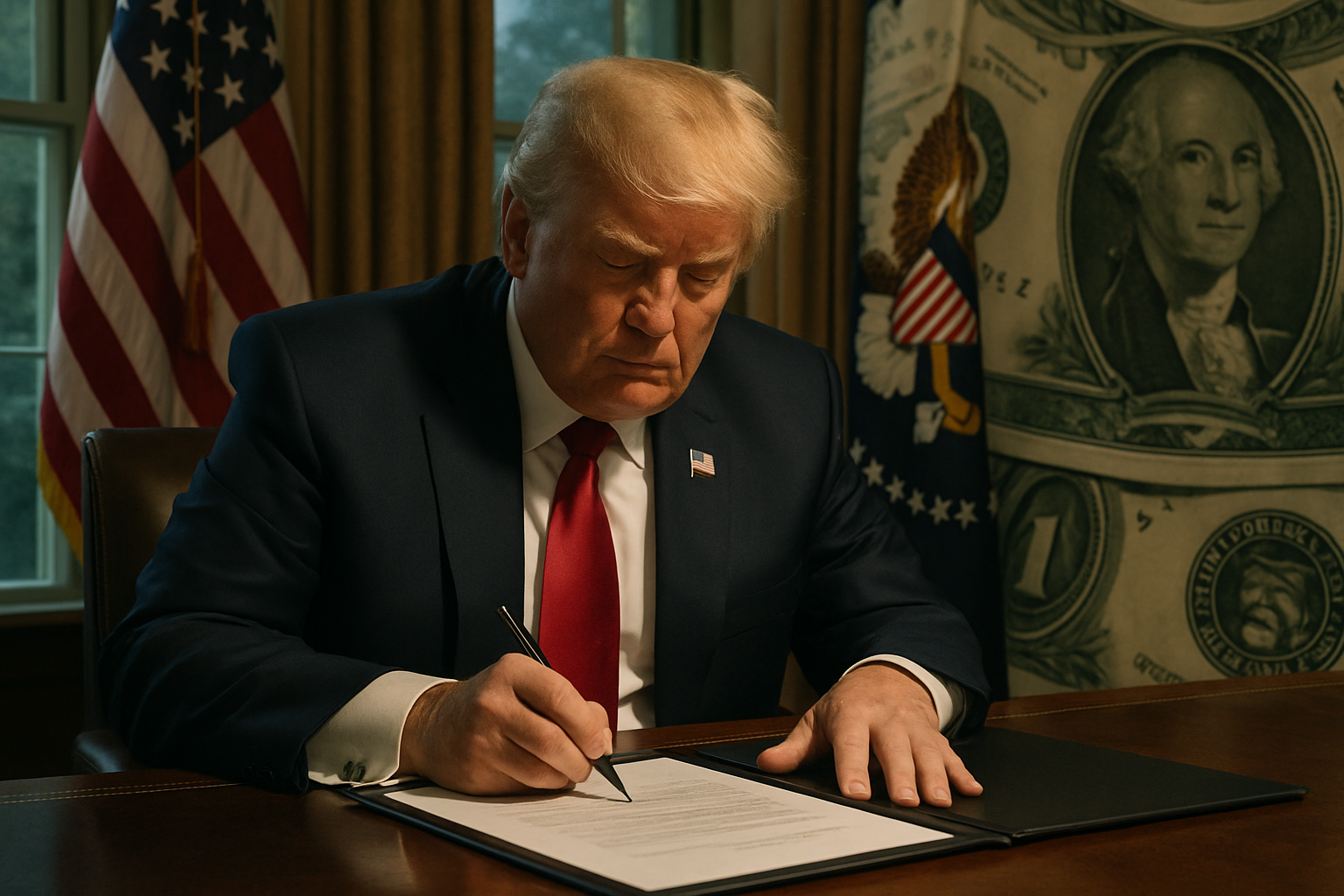
President Donald Trump's signature will appear on United States paper currency for the first time in American history, the Treasury Department announced Thursday, as his administration implements unprecedented changes across multiple government departments that are reshaping both domestic and foreign policy.
The redesigned notes, planned to commemorate the 250th anniversary of American independence, will feature Trump's signature alongside that of Treasury Secretary Scott Bessent starting this summer. The decision marks the first time in 165 years that a sitting president's signature will appear on U.S. currency, breaking a tradition established during the Civil War era that had only featured Treasury officials.
Breaking Historic Currency Traditions
The first $100 bills bearing Trump's signature will be printed in June, with other denominations following in subsequent months. The new bills will take several weeks to circulate through the banking system, according to Treasury officials. Simultaneously, the department will drop the signature of the U.S. Treasurer, ending a practice that has continued uninterrupted since 1861.
"Under President Trump's leadership, we are moving forward with bold changes that recognize American strength," Treasury Secretary Bessent said in a statement. The initiative represents one of the most visible symbols of Trump's efforts to place his mark on federal institutions during his second term.
"This is a historic moment that celebrates American achievement and the president's commitment to our nation's economic strength."
— Scott Bessent, Treasury Secretary
Sweeping Policy Changes Across Government
The currency change accompanies broader policy transformations across Trump administration departments. The Justice Department has implemented new enforcement priorities, while immigration agencies have expanded operations under enhanced authorities. Federal courts have responded with systematic resistance to several initiatives, creating a pattern of legal challenges that administration officials say demonstrates the need for constitutional reform.
International observers have noted the currency decision as part of Trump's broader effort to reshape American institutions. European officials privately expressed concerns about the precedent of personalizing monetary symbols traditionally reserved for institutional continuity.
Constitutional and Legal Challenges
The administration's policy changes have faced significant judicial pushback. Federal Judge Brian Murphy in Massachusetts recently ruled against the "third country deportation" policy, while Judge Ana Reyes blocked the termination of Temporary Protected Status for 350,000 Haitians, citing evidence of "racial animus." Multiple civil rights organizations have filed lawsuits challenging various executive orders.
These legal challenges have created what constitutional scholars describe as a fundamental test of presidential authority versus institutional checks and balances. The currency change, while legally within Treasury's administrative powers, represents the most visible symbol of these broader constitutional tensions.
Congressional Response and Bipartisan Concerns
Congressional reaction has been mixed, with Republican lawmakers generally supporting the currency change as appropriate presidential prerogative. However, recent votes suggest growing unease among some GOP members about the administration's broader approach. The House recently passed legislation ending Canada tariffs by a 219-211 margin, with six Republicans joining Democrats in the first significant bipartisan rebuke of Trump trade policy in his second term.
Democratic lawmakers have expressed concerns about the precedent of placing a sitting president's signature on currency. Representative Maxine Waters called it "an unprecedented departure from American monetary traditions that preserve institutional independence."
International Implications and Market Response
Financial markets showed initial positive response to the Treasury announcement, with investors viewing the currency change as symbolic of administration confidence. However, international central bank officials have privately questioned the wisdom of personalizing monetary instruments traditionally designed to transcend individual political leadership.
The European Central Bank's governing council discussed the implications during their recent meeting, with sources indicating concerns about potential impacts on dollar reserve currency status. Asian financial centers have taken a more pragmatic approach, with Bank of Japan officials noting that currency design changes fall within normal sovereign prerogatives.
Historical Context and Precedent
The decision to include a presidential signature on currency represents the most significant change to U.S. monetary design since the modern Federal Reserve Note series was established. Historically, American currency has featured the signatures of the Treasury Secretary and Treasurer to emphasize institutional continuity across presidential administrations.
Monetary historians note that such symbolic changes often reflect broader governmental transitions. The original decision in 1861 to limit currency signatures to Treasury officials was made during the Civil War to ensure financial stability amid political upheaval. Trump's reversal of this 165-year precedent signals his administration's confidence in placing presidential authority at the center of American institutions.
Implementation Timeline and Technical Details
The Bureau of Engraving and Printing will coordinate the new currency production with Federal Reserve distribution systems. Technical challenges include integrating presidential signatures while maintaining sophisticated anti-counterfeiting security features that protect against fraud.
Treasury officials estimate that full circulation of the new bills will take approximately 18 months, as older currency is gradually replaced through normal banking operations. The change will affect all paper denominations, though $100 bills will be printed first due to their prominence in international transactions.
Political and Economic Context
The currency announcement comes amid the Trump administration's broader effort to reshape federal institutions during his second term. Immigration enforcement has been expanded, federal court resistance has intensified, and international relationships have been transformed through what officials call "business-style diplomacy."
Economic indicators have shown mixed results, with employment remaining strong at 4.3% unemployment but trade policies facing constitutional challenges. The Supreme Court recently ruled against the administration's global tariff program in a 6-3 decision that marked the first major defeat of Trump's economic agenda in his second term.
Future Implications
The decision to place Trump's signature on U.S. currency will likely influence future administrations' approaches to federal symbolism and institutional representation. Monetary policy experts suggest that such changes, once implemented, typically become permanent features of governmental operations.
Constitutional law scholars view the currency change as part of broader questions about presidential authority and institutional independence in the 21st century. The resolution of current legal challenges and congressional oversight will help determine whether Trump's institutional modifications represent temporary political expressions or lasting changes to American governmental architecture.
As the new currency enters circulation this summer, it will serve as a daily reminder of the ongoing transformation of American institutions under the Trump administration, reflecting broader debates about presidential authority, institutional traditions, and the balance between political leadership and governmental continuity that will likely extend well beyond the current political moment.