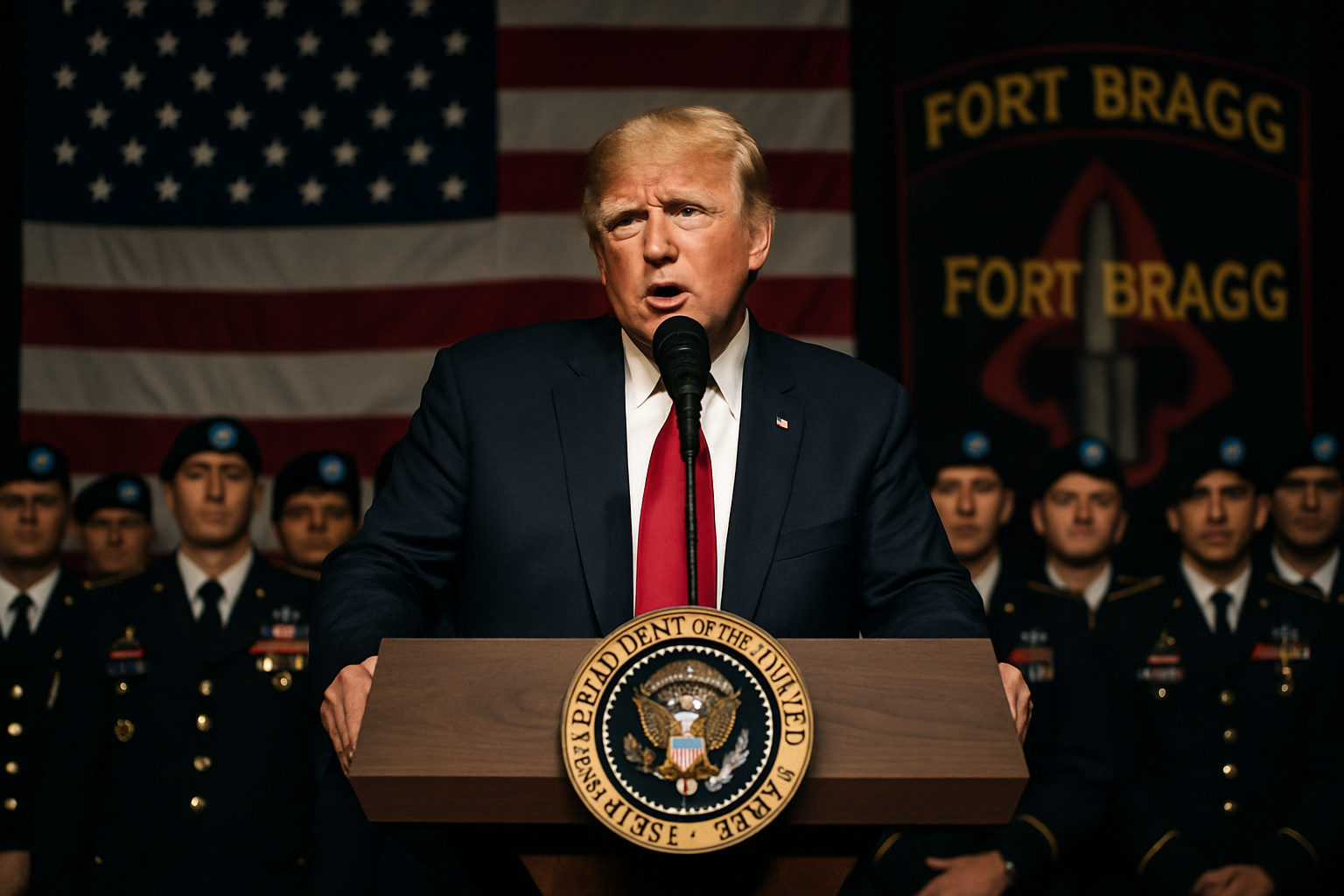
President Donald Trump delivered a scathing assessment of the Biden administration's 2021 Afghanistan withdrawal during a military address at Fort Bragg, North Carolina, calling the operation "humiliating" and declaring the United States "looked like we were running" from the country.
Speaking to active-duty soldiers at the Army base on Friday, Trump characterized the withdrawal as a catastrophic failure that left behind U.S. military equipment and severely damaged America's global reputation. The remarks represent some of Trump's harshest criticism of his predecessor's foreign policy decisions since returning to office.
Military Equipment Abandonment and Strategic Failure
"We wouldn't have left anything. We would have left with dignity, strength and respect. We looked like we were running. We don't run from anybody," Trump told the assembled troops. "That was a Biden embarrassment. What a terrible president."
The President's comments focused particularly on the billions of dollars worth of military equipment left behind during the chaotic final days of the U.S. military presence in Afghanistan. According to multiple reports, the abandoned equipment included aircraft, vehicles, weapons systems, and other military hardware that subsequently fell into Taliban hands.
Trump emphasized that under his leadership, such strategic failures would not occur again, pledging what he termed "stronger military leadership" and comprehensive reforms to prevent similar situations in future military operations.
Historical Context and Ongoing Consequences
The August 2021 withdrawal from Afghanistan marked the end of America's longest war, spanning nearly two decades following the September 11, 2001 attacks. The operation faced widespread criticism for its execution, particularly following a suicide bombing at Kabul airport that killed 13 U.S. service members and over 100 Afghan civilians.
The withdrawal's aftermath continues to reverberate through current U.S. foreign policy considerations. Recent developments have highlighted ongoing challenges in the region, including concerns about ISIS-K operations and the Taliban's governance of Afghanistan.
"This represents a critical moment for reassessing American military strategy and ensuring our forces maintain the respect and capabilities they deserve on the global stage."
— Defense Policy Expert, speaking on condition of anonymity
Military Reform and Future Strategy
During his Fort Bragg address, Trump outlined his vision for military reform, emphasizing the need for clear strategic objectives and comprehensive planning for all future operations. The President stressed that American military forces must operate from a position of strength and maintain the respect of both allies and adversaries.
The remarks come as the Trump administration conducts broader reviews of military operations worldwide, including ongoing conflicts and strategic partnerships. Military officials present at the address confirmed that the President's comments reflect a more aggressive posture toward military planning and execution standards.
Trump's criticism extends beyond the operational failures to encompass broader questions about American credibility and deterrence capabilities. The President argued that the perception of American weakness following the Afghanistan withdrawal has emboldened adversaries and complicated diplomatic efforts globally.
Regional and Global Implications
The Afghanistan withdrawal criticism occurs against the backdrop of multiple global challenges facing the Trump administration, including ongoing tensions with Iran, evolving situations in Ukraine, and broader strategic competition with China and Russia.
Military analysts note that Trump's emphasis on strength and deterrence reflects a broader strategic philosophy aimed at preventing conflicts through demonstrated capability and resolve. This approach contrasts sharply with what Trump characterized as the previous administration's weakness and indecision.
The President's remarks also touched on the impact of the withdrawal on military families, particularly those who lost loved ones during the final phases of the Afghanistan conflict. Trump pledged that such sacrifices would be honored through improved strategic planning and military leadership.
Congressional and Political Response
The Afghanistan withdrawal remains a contentious political issue, with congressional Republicans continuing to demand accountability for the operation's failures. Trump's renewed criticism provides momentum for ongoing investigations and reform efforts aimed at preventing similar strategic disasters.
Democratic lawmakers have defended the withdrawal as necessary to end an endless war, though they acknowledge implementation challenges. The political divisions over Afghanistan policy reflect broader disagreements about American military engagement and strategic priorities.
The Fort Bragg address represents Trump's most comprehensive public assessment of the Afghanistan withdrawal since taking office, signaling that accountability for the operation will remain a priority for his administration.
Military Readiness and Capability Enhancement
Beyond criticizing past failures, Trump used the military address to outline positive initiatives for enhancing American military capabilities. The President emphasized investments in advanced weaponry, improved training programs, and enhanced support for military families.
Military officials confirmed that the administration is conducting comprehensive reviews of all major military operations and strategic commitments, with particular attention to ensuring that American forces maintain technological and tactical advantages over potential adversaries.
The President's remarks at Fort Bragg underscore his administration's commitment to what he terms "peace through strength" - the belief that demonstrated military capability and resolve serve as the most effective deterrent to conflicts and challenges to American interests.
As the Trump administration continues to reshape American foreign policy and military strategy, the Afghanistan withdrawal critique serves as a defining example of the strategic approach and leadership standards the President expects from military and civilian officials responsible for national security decisions.