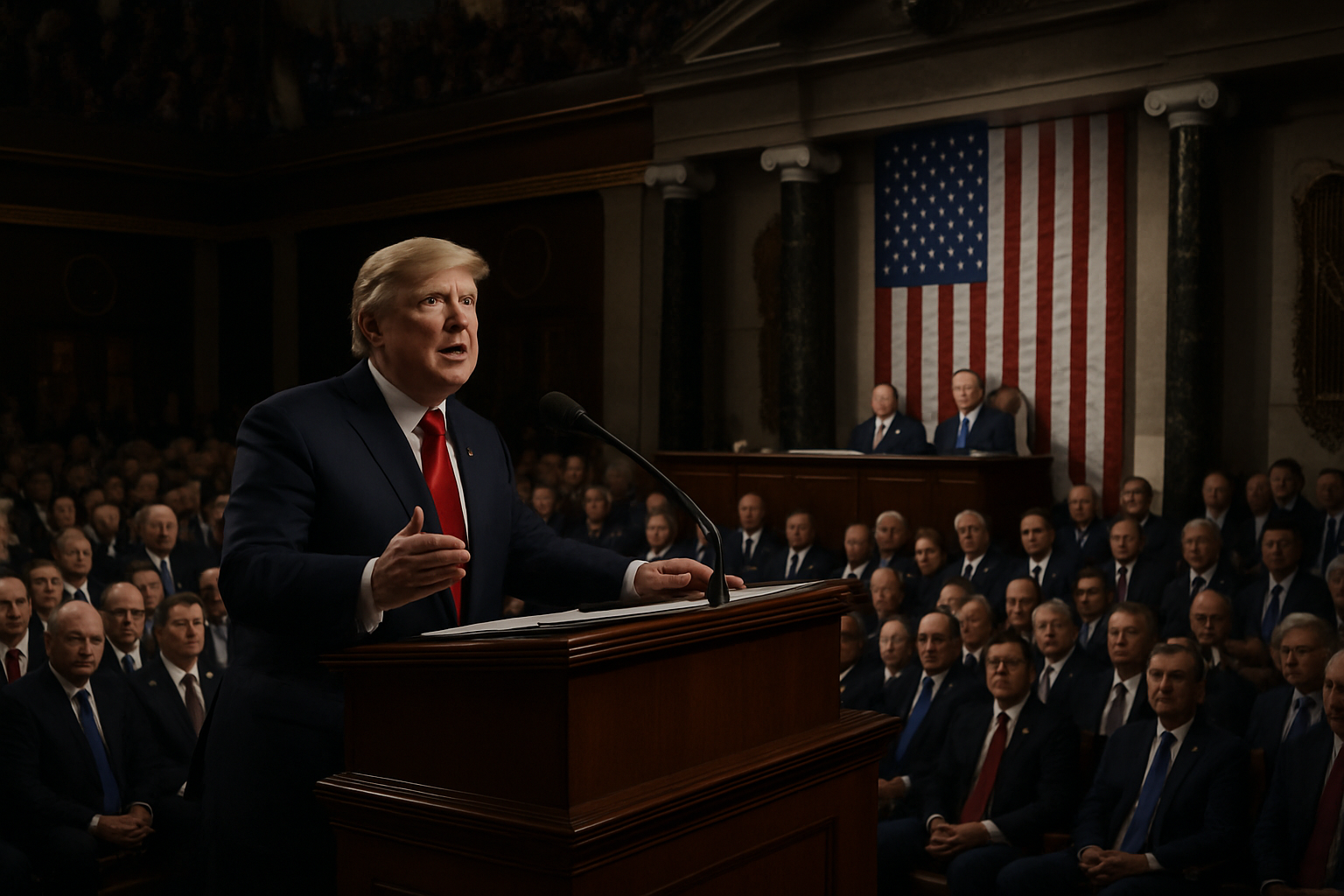
President Donald Trump delivered the longest State of the Union address in American history on Tuesday night, speaking for 108 minutes in a sprawling, combative speech that mixed economic self-congratulation with sharp attacks on Democrats and strong foreign policy rhetoric before a joint session of Congress.
"Our nation is back — bigger, better, richer and stronger than ever before," Trump declared at the outset, framing his presidency as the dawn of what he called "the golden age of America." The address carried a strong midterm election feel throughout, with the president clearly focused on making the case to voters ahead of November's congressional contests.
A Record-Breaking Performance
The 108-minute address surpassed Bill Clinton's previous record of 89 minutes set in 2000, marking Trump's most ambitious attempt to burnish his achievements during what has been a difficult period for his administration. The president used the opportunity to tout his economic record while defending his policies on immigration, Iran, and other key issues.
The speech's unprecedented length reflected the administration's determination to present a comprehensive defense of Trump's agenda amid declining approval ratings and increasing congressional resistance. According to polling experts, Trump has been "underwater on all top ten issues except border security," making this address a crucial opportunity for political reset.
Congressional Drama and Disruptions
The evening was marked by extraordinary scenes of congressional confrontation. Democratic Representative Al Green was ejected from the chamber for displaying a sign reading "Black People Aren't Apes," referencing Trump's controversial February social media post that depicted Barack and Michelle Obama with monkey imagery.
"You have killed Americans!"
— Rep. Ilhan Omar, during Trump's immigration section
Multiple Democratic walkouts occurred throughout the evening, with some 30 empty seats visible as Republicans gave repeated standing ovations while Democrats remained seated. The partisan divide was on full display as Trump's supporters cheered his proclamations while opposition members expressed vocal protests.
Foreign Policy and Iran Warning
Trump delivered some of his most explicit anti-Iran rhetoric yet, calling Iran the "world's number one sponsor of terror" while vowing the United States will "never allow" Iran to acquire nuclear weapons. This warning came as the administration maintains dual-carrier naval deployment in the Arabian Sea and pursues concurrent diplomatic negotiations in Geneva.
The president also made his most direct comments supporting regime change in Iran, calling the overthrow of the Iranian government the "best thing that could happen" for global stability. These remarks represented a significant escalation from previous diplomatic language, occurring amid ongoing nuclear talks mediated by Switzerland and Oman.
Immigration and Border Security
Immigration dominated a significant portion of the address, with Trump defending his administration's enforcement policies despite federal court challenges. The president characterized his approach as necessary for national security, even as multiple federal judges have blocked various immigration measures citing constitutional concerns.
Trump praised National Guard members wounded in recent enforcement operations, though his comments drew sharp reactions from Democratic members who have criticized administration tactics. The immigration section prompted some of the evening's most heated exchanges between the president and congressional Democrats.
Economic Claims and Fact-Checking
The president made sweeping economic claims throughout the address, asserting record stock market performance and reduced inflation. However, fact-checkers noted numerous inaccuracies in Trump's statistics, with international media describing "familiar falsehoods and inaccurate claims" about jobs and energy prices.
Swedish analysis noted Trump "doesn't keep exact with truth, especially numbers extremely creative," while Canadian outlets reported "numerous false claims" throughout the economic portions of the speech. Despite these concerns, Trump's supporters viewed the economic messaging as central to his political revival strategy.
Protests Outside the Capitol
As Trump delivered his address, demonstrators dressed in frog costumes protested in the streets surrounding the Capitol. The unusual protest represented opposition activists' attempt to reclaim the frog symbol traditionally associated with Trump supporters, in what observers described as symbolic resistance to the administration's policies.
The protests remained largely peaceful, contrasting with the heated exchanges inside the congressional chamber. The demonstrations reflected broader opposition mobilization against Trump's second-term agenda across multiple policy areas.
International Reactions
International coverage of the address was extensive, with observers from 17 countries analyzing Trump's rhetoric and policy positions. European officials expressed particular concern about American institutional stability during ongoing diplomatic negotiations on Ukraine, Iran, and other global challenges.
France 24 characterized the speech as "classic Trump" with "bullying and taunting" rather than a unifying approach, while other international outlets noted the stark partisan polarization evident throughout the evening. These reactions highlighted global concerns about American leadership during complex international crises.
Constitutional Crisis Context
The address occurred amid what many observers describe as the most serious executive-judicial confrontation since Watergate. Just days before the speech, the Supreme Court delivered a devastating 6-3 ruling striking down Trump's global tariff program, prompting the president to immediately escalate to 15% worldwide tariffs using alternative legal authority.
This constitutional tension provided crucial backdrop for Trump's congressional appearance, as he sought to demonstrate political strength while facing unprecedented institutional challenges to his economic agenda.
Political Implications Moving Forward
The record-breaking address represented Trump's most comprehensive effort to reverse declining approval ratings and position his administration for the upcoming midterm elections. With congressional resistance mounting and federal courts pushing back against multiple policies, the speech served as a crucial test of the president's ability to maintain political momentum.
The evening's confrontational atmosphere and unprecedented length reflected the high stakes facing the administration. Success or failure in translating the address into concrete political gains will likely determine Trump's strategic position heading into the critical months ahead.
Historical Significance
Beyond its record-breaking length, the address will be remembered for its extraordinary partisan tensions and institutional confrontations. The combination of congressional ejections, vocal protests, and sharp policy rhetoric represented one of the most polarized State of the Union addresses in recent memory.
As international observers noted, the evening highlighted fundamental questions about American democratic resilience during periods of intense political division. The address served as both a demonstration of institutional continuity and a stark illustration of contemporary governance challenges facing the United States.