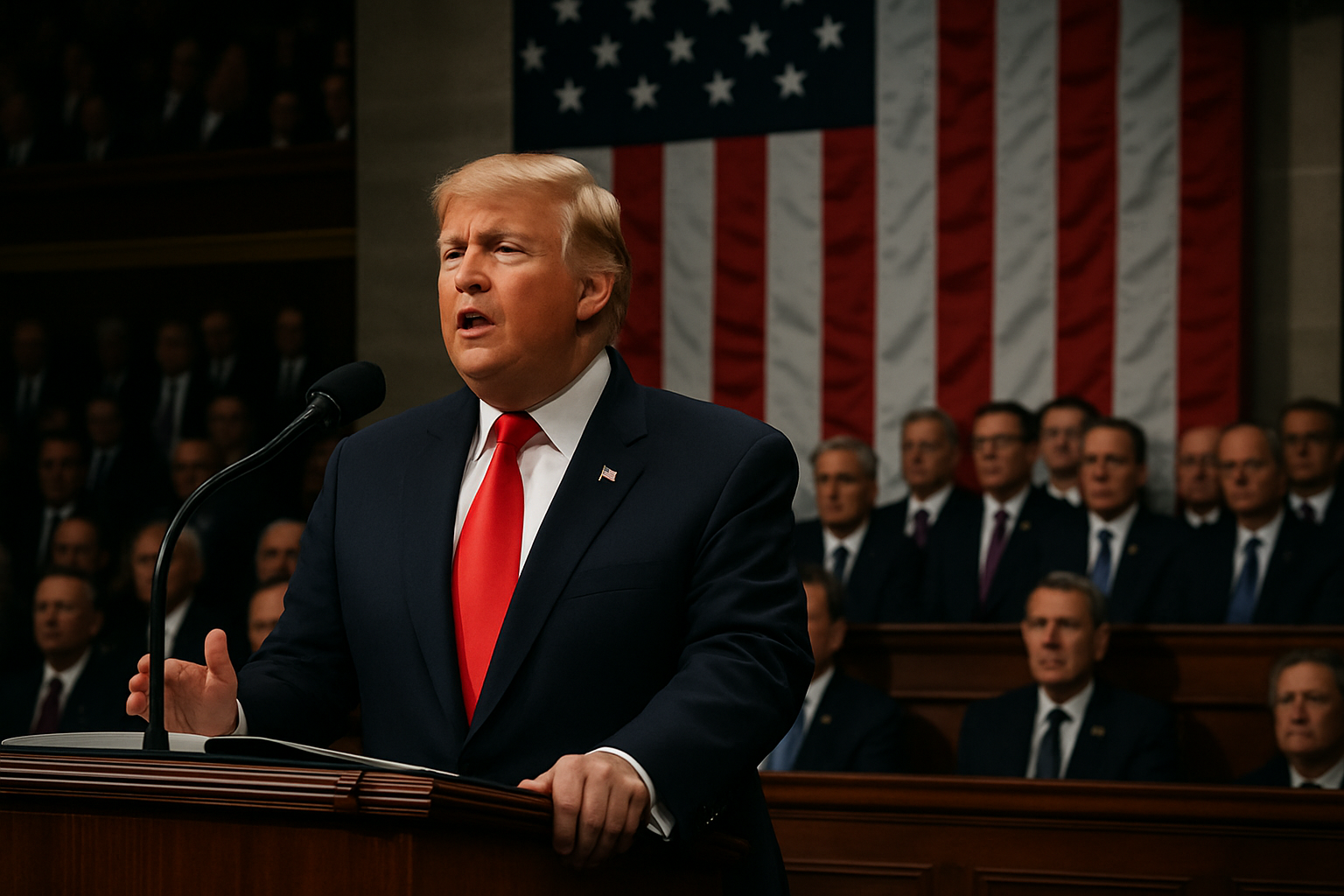
President Donald Trump delivered the longest State of the Union address in United States history on Tuesday, speaking for 105 minutes before a joint session of Congress in a record-breaking speech that surpassed his own 100-minute address from 2025.
The primetime address, which far exceeded the previous modern record held by Bill Clinton at 89 minutes in 2000, saw Trump declare that America had entered a "Golden Age" while touting his administration's achievements and launching sharp attacks against Democratic opponents and the Supreme Court.
A Nation "Bigger, Better, Richer and Stronger"
Opening with an optimistic tone, Trump declared the United States was "bigger, better, richer and stronger than ever before," crediting his administration with delivering what he called a "turnaround for the ages." The president framed his remarks around the upcoming 250th anniversary of the Declaration of Independence, telling lawmakers the nation was "respected again – perhaps like never before."
However, the speech came amid what political analysts describe as the most challenging period of Trump's second presidency. The president is facing declining approval ratings, with the University of Virginia's Larry Sabato reporting Trump "has lost a great deal" of popularity since his inauguration and is now "underwater on all top ten issues except border security."
Congressional Divisions on Full Display
The deep political divisions that define Washington were evident throughout the address. Trump was greeted with repeated standing ovations from Republican lawmakers, while many Democrats remained seated in protest. Some Democratic members boycotted the address altogether.
The most dramatic moment came when Democratic Representative Ilhan Omar shouted "You have killed Americans!" as Trump praised his immigration enforcement policies. Additionally, Representative Al Green was ejected from the chamber before the speech began after holding up a sign reading "Black people aren't apes," referencing a controversial racist video Trump had posted and later deleted from Truth Social earlier in February.
"We're winning so much. Our country can't stop winning."
— Donald Trump, President of the United States
Supreme Court Criticism and Constitutional Crisis
In an unprecedented move for a sitting president, Trump directly criticized the Supreme Court's recent 6-3 ruling that struck down his global tariff program. He called the decision "totally wrong" and accused the justices of being "disloyal to the Constitution" – representing the most severe attack on the judiciary by a president in modern history.
The Supreme Court had applied the "major questions doctrine" in its February 20 ruling, requiring congressional authorization for executive actions of "vast economic and political significance." Trump's immediate escalation to 15% tariffs using alternative legal authority has created what constitutional experts describe as the most serious executive-judicial confrontation since Watergate.
International Focus and Foreign Policy Claims
Trump dedicated significant portions of his address to foreign policy, making several controversial claims. He asserted that the Ukraine war "wouldn't have occurred under his presidency" and warned Iran that the United States would "never allow the world's number one sponsor of terror" to acquire nuclear weapons.
The president also praised two National Guard members wounded in a Washington D.C. shooting, incorporating the incident into his broader narrative about domestic security and immigration enforcement.
Notably, Trump claimed credit for economic achievements despite facing congressional resistance. The House recently voted 219-211 to end Canada tariffs, with six GOP defections representing the first bipartisan rebuke of his trade authority in his second term.
Economic Claims Under Scrutiny
Much of Trump's speech focused on economic messaging, with the president claiming to have driven the stock market to record heights and slowed inflation. However, fact-checkers and economic analysts have questioned many of these assertions.
The president's economic claims came as multiple countries have issued travel advisories due to concerns about U.S. policy predictability, and the European Union is preparing to suspend the EU-US trade agreement for the first time due to institutional concerns.
International Reactions and Coverage
The speech drew extensive international coverage, with 17+ countries providing analysis. French outlet Le Monde used stark terminology in its coverage, while Swedish and German outlets characterized aspects of Trump's approach as problematic. Norwegian experts described the political atmosphere as highly polarized.
European officials have privately expressed concerns about the impact on U.S. credibility in leading on democratic values, particularly given the timing during ongoing Ukraine peace talks and Iran nuclear negotiations.
Political Stakes and Midterm Context
The address comes just nine months before crucial midterm elections, with Trump facing what polls describe as unfavorable prospects for his party. The 79-year-old president used the platform to attempt a political reset, though critics argue his combative approach may have further polarized an already divided political landscape.
Democratic Senator Chuck Schumer dismissed the speech as "detached from the reality of ordinary Americans," while multiple Democratic representatives demonstrated their opposition through various protests during the address.
Historical Significance
Beyond its record length, the speech represents a critical moment in American political history. The combination of direct judicial attacks, unprecedented congressional resistance, and declining approval ratings has created what some analysts describe as a fundamental test of democratic institutional resilience.
The address also occurred during a complex international diplomatic period, with ongoing negotiations on multiple fronts and the recent expiration of the New START nuclear treaty with Russia – the first time in over 50 years without such US-Russia nuclear constraints.
As Trump continues to face mounting challenges both domestically and internationally, Tuesday's marathon address will be remembered as either a successful attempt to regain political momentum or a reflection of an administration increasingly isolated from both its own party members and traditional allies.