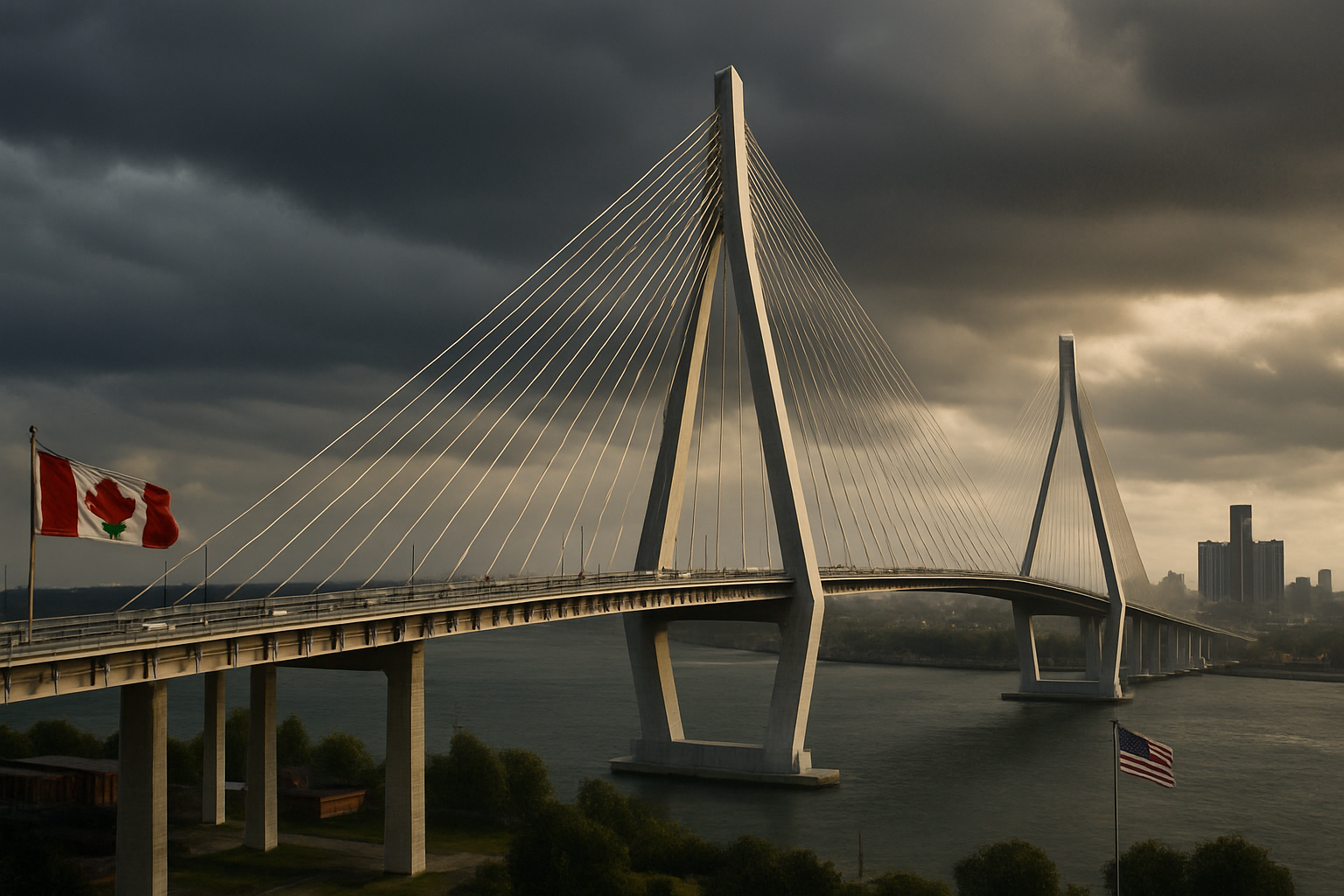
President Donald Trump has threatened to block the opening of the $4.6 billion Gordie Howe International Bridge connecting Windsor, Ontario and Detroit, Michigan, unless the United States receives what he calls "full compensation" and at least partial ownership of the Canadian-funded project.
In a lengthy post on his Truth Social platform Monday, Trump declared he would not allow the bridge to open until Canada treats the United States with what he described as "fairness and respect." The bridge, scheduled to open in early 2026, was entirely paid for and constructed by Canada but crosses into American territory.
"With all that we have given them, we should own, perhaps, at least one half of this asset," Trump wrote, demanding that the US receive compensation before allowing the crossing to become operational.
Canadian-Funded Infrastructure Project
The Gordie Howe International Bridge represents one of North America's most significant infrastructure investments in recent decades. Built entirely with Canadian funding, the crossing spans the Detroit River and connects Windsor, Ontario with Detroit, Michigan, creating a vital new link in the continent's transportation network.
The bridge is named after Detroit Red Wings legend Gordie Howe and features modern cable-stayed architecture designed to facilitate both passenger and commercial traffic between the two nations. Upon completion, it will serve as a critical trade route handling thousands of vehicles daily and millions of dollars in cross-border commerce.
Norwegian media reports confirm that "Canada has paid for and built" the entire project without American financial contribution, making Trump's ownership demands particularly controversial. The project has been under construction for several years and represents a significant achievement in Canadian infrastructure development.
Trump's Ownership Demands
The President's demands center on his assertion that the United States deserves ownership of "at least half" of the bridge infrastructure due to unspecified contributions America has made to Canada over time. Trump has indicated he will begin negotiations immediately to secure what he considers fair compensation.
Romanian media coverage describes Trump's position as expecting Canada to provide compensation to America rather than the reverse, despite Canada bearing the entire construction cost. The President's Truth Social post suggested that Canada has benefited disproportionately from the relationship and should acknowledge American contributions through partial bridge ownership.
According to multiple international sources, Trump's administration argues that American territory and regulatory cooperation in the project justify ownership claims, even without direct financial investment in construction or planning.
International Response and Analysis
The threat has generated significant international attention, with European media characterizing it as part of Trump's broader pattern of challenging traditional alliance relationships through economic pressure. Greek sources indicate the bridge connects "Windsor, Ontario and Detroit, Michigan" and represents a crucial cross-border infrastructure achievement now threatened by diplomatic disputes.
Polish media reports emphasize that "Canada almost completed construction of the bridge" and that Trump's intervention comes just as the project nears its successful conclusion after years of planning and construction. The timing has raised questions about the precedent such demands might set for other cross-border infrastructure projects.
Several international observers note that the demand comes amid Trump's broader pattern of renegotiating international agreements and seeking more favorable terms for American interests, consistent with his administration's approach to trade relationships and bilateral partnerships.
Strategic and Economic Implications
The Gordie Howe International Bridge is designed to handle significant commercial traffic between the United States and Canada, two of the world's largest trading partners. Any delay in its opening would affect businesses on both sides of the border that have planned logistics around the new crossing's capacity and strategic location.
The bridge was specifically designed to ease congestion at existing border crossings and facilitate the substantial trade relationship between Michigan and Ontario. Commercial interests in both Detroit and Windsor have invested in infrastructure and planning based on the bridge's anticipated opening schedule.
Transportation analysts note that the crossing represents critical infrastructure for North American supply chains, particularly in the automotive industry where parts and vehicles frequently cross the border during manufacturing processes. Extended delays could create significant economic disruptions.
Precedent for Infrastructure Disputes
Trump's bridge demands represent a novel approach to cross-border infrastructure disputes, where one nation funds and constructs a project entirely but the other nation claims ownership rights based on territorial and regulatory considerations rather than financial contribution.
The situation bears some similarity to Trump's broader trade negotiation strategy, where he has sought to renegotiate existing agreements to secure more favorable terms for American interests. However, the bridge dispute involves completed infrastructure rather than future trade arrangements.
International law experts are closely watching how this dispute develops, as it could establish precedents for how cross-border infrastructure projects are governed when one nation funds construction but another nation controls territory necessary for operation.
Broader Context of US-Canada Relations
The bridge dispute emerges within the broader context of Trump's approach to traditional alliances and trade relationships. Throughout his presidency, Trump has consistently argued that the United States has been disadvantaged in various international arrangements and has sought to renegotiate terms more favorable to American interests.
This pattern has extended to various bilateral relationships, where Trump has demanded changes to existing agreements or threatened consequences unless terms are modified. The bridge dispute represents an application of this approach to physical infrastructure crossing national boundaries.
The situation also reflects Trump's preference for direct, bilateral negotiations rather than multilateral frameworks, seeking to leverage American positions to secure concessions from individual partner nations rather than working through established international mechanisms.
Next Steps and Timeline
Trump has indicated that negotiations will begin immediately to resolve the ownership dispute, though specific timelines or frameworks for these discussions have not been announced. The bridge's original opening schedule remains uncertain pending resolution of the ownership claims.
Canadian officials have not yet responded publicly to Trump's demands, though the situation will likely require high-level diplomatic engagement between the two nations to resolve. The complexity of the ownership claims may necessitate detailed legal review of the project's structure and bilateral agreements governing cross-border infrastructure.
Both nations face pressure to resolve the dispute quickly given the economic importance of the crossing and the investments businesses have made based on its anticipated opening. Extended uncertainty could affect commercial planning and cross-border trade relationships that depend on efficient transportation infrastructure.
The resolution of this dispute will likely establish important precedents for future cross-border infrastructure projects and may influence how nations approach shared infrastructure investments in the context of evolving trade relationships and diplomatic priorities.