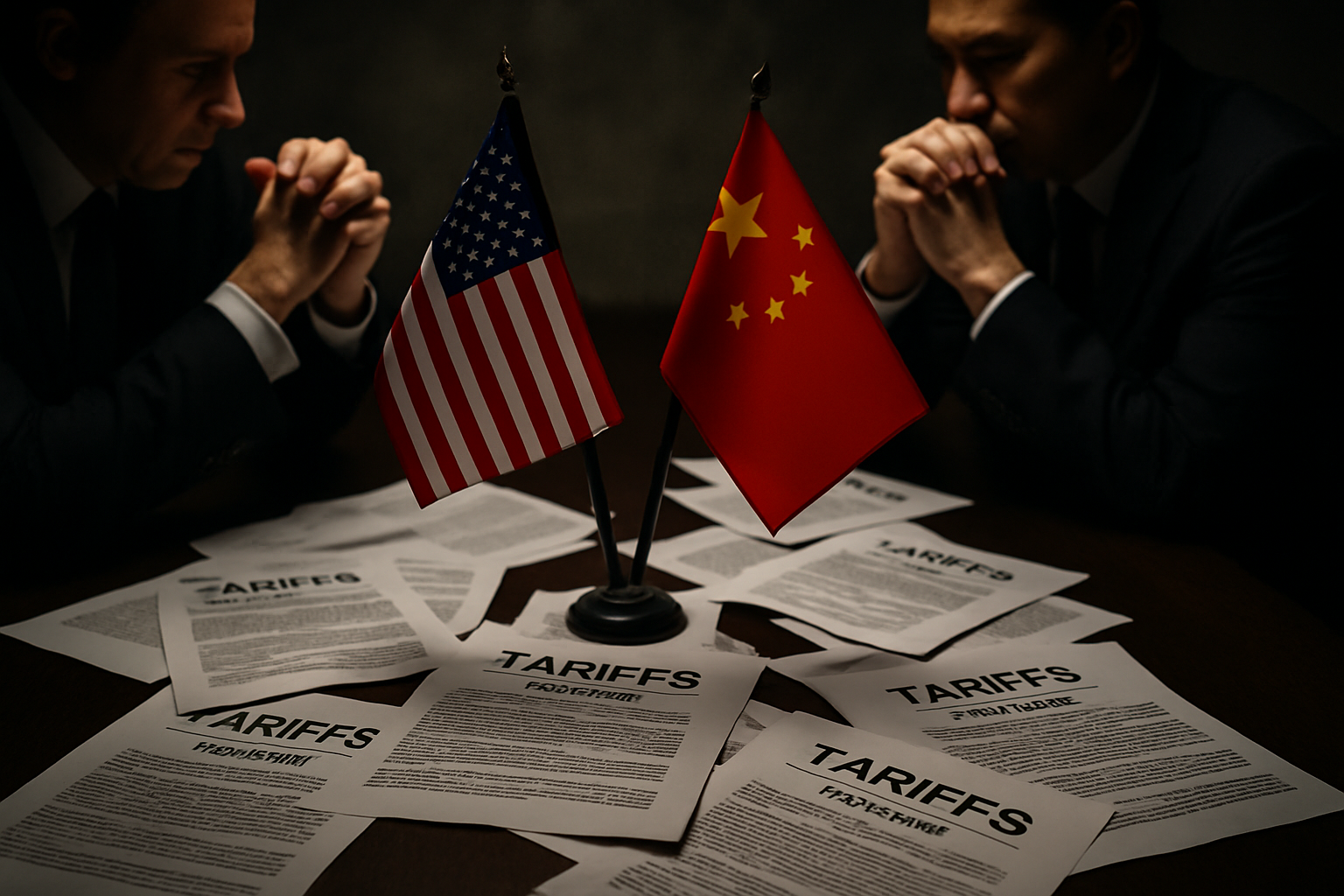
US President Donald Trump has issued his second warning to China in two days, threatening 50% tariffs on all Chinese goods if Beijing provides military assistance to Iran amid escalating Middle East tensions and the collapse of nuclear diplomacy.
Speaking on Sunday, Trump declared his doubts about Chinese military aid to Iran while making clear the consequences: "I doubt they would do that... but if we catch them doing that, we will impose 50% tariffs on them," according to multiple international reports from Romania and Italy.
The stark ultimatum comes as the Trump administration grapples with the complete breakdown of nuclear negotiations with Iran, despite achieving what Iranian Foreign Minister Abbas Araghchi called "broad agreement on guiding principles" in Geneva talks—the most significant diplomatic progress since the 2018 JCPOA collapse.
Escalating Trade War Rhetoric
The 50% tariff threat represents a dramatic escalation in US-China trade tensions, significantly higher than previous tariff rates and targeting one of America's largest trading partners. China's potential involvement in Iranian military affairs has emerged as a new flashpoint amid the broader Middle East crisis.
This warning follows a pattern of Trump administration pressure on allies and rivals alike regarding Iran policy. The administration has previously threatened 25% tariffs on countries trading with Iran, demonstrating a dual-track approach combining economic coercion with diplomatic engagement.
"We doubt China would take such action, but the consequences would be severe if they cross that red line."
— Senior US Official
Context of Middle East Crisis
The Chinese warning emerges from the most dangerous international crisis since the Cold War, following the catastrophic breakdown of US-Iran nuclear negotiations and subsequent military confrontation. Despite Geneva talks achieving "broad agreement on guiding principles"—the most substantial progress since the 2018 JCPOA collapse—fundamental scope disagreements proved insurmountable.
Iran maintained its position excluding ballistic missiles and regional proxies as "red lines" from nuclear-only talks, while US Secretary Marco Rubio insisted on comprehensive agreements including missiles, armed groups, and human rights. This decade-old structural obstacle ultimately led to the collapse of diplomatic efforts and military escalation.
The crisis reached unprecedented levels with Operation Epic Fury, the largest US-Israeli coordinated military campaign since 2003, featuring dual-carrier deployment of USS Gerald R. Ford and Abraham Lincoln representing approximately one-third of the active US Navy fleet positioned 800 kilometers from Iran's coast.
Global Economic Implications
The threat of 50% tariffs on Chinese goods would have massive implications for global trade and supply chains. China remains one of the world's largest economies and a crucial manufacturing hub for consumer goods, electronics, and industrial materials.
Current Middle East tensions have already created severe economic disruptions, with oil prices surging past $100 per barrel and the closure of the Strait of Hormuz affecting 40% of global oil transit. Additional trade tensions with China would compound these challenges, potentially affecting global supply chains dependent on Chinese manufacturing.

Strategic Calculations
The timing of Trump's Chinese warning appears calculated to prevent Beijing from exploiting US military engagement in the Middle East. With American naval forces concentrated in the Persian Gulf and military resources committed to Iran operations, the administration may be concerned about Chinese opportunism in supporting Iranian resistance.
China has historically maintained complex relationships with both Iran and the United States, often serving as a crucial intermediary in regional diplomacy. The explicit warning suggests intelligence indicating potential Chinese consideration of military support to Iran during the current crisis.
Regional coalition dynamics have been severely strained, with unprecedented Saudi, UAE, Qatari, and Egyptian consensus supporting diplomacy now threatened by Iranian retaliation targeting Gulf territories. The administration may view Chinese involvement as potentially tipping regional balance of power.
Nuclear Governance Crisis Context
The Chinese tariff threat occurs within a broader nuclear governance crisis. The New START treaty expired in February 2026—the first time in over 50 years without US-Russia nuclear constraints—while China expands its nuclear arsenal and Iran continues uranium enrichment at 60% purity, approaching weapons-grade levels.
Iran possesses over 400 kilograms of uranium enriched to 60%, which former IAEA inspector Dr. Yusri Abu Shadi confirms makes nuclear weapons "easily achievable." Despite Iranian President Pezeshkian declaring Iran "open to verification"—a major policy shift—fundamental disagreements about scope prevented diplomatic breakthrough.
Domestic Political Pressures
The Trump administration faces intense Congressional scrutiny over Iran strategy, with bipartisan lawmakers demanding answers about costs, exit plans, and potential ground troop deployment. Senator Richard Blumenthal expressed being "more concerned than ever" about boots on the ground, reflecting widespread opposition to expanded military engagement.
Public support for Iran operations stands at approximately 25%, described as "almost unprecedented" unpopularity for early-stage military operations. Financial markets have emerged as the "ultimate constraint" on prolonged conflict, with global stock market crashes and energy price volatility creating economic pressure for resolution.
International Reactions and Alliance Dynamics
European allies have expressed concerns about American policy predictability during multiple simultaneous crises. The threat to impose massive tariffs on China while managing Middle East military operations demonstrates the administration's willingness to escalate on multiple fronts simultaneously.
The warning to China also comes as Trump postponed a planned summit with Chinese President Xi Jinping, originally scheduled for March 31-April 2, citing the need to focus on Iran crisis management. This diplomatic setback represents significant complications for US-China relations during the most dangerous international crisis in decades.
"The administration's multi-front approach creates unprecedented complexity in international relations at a critical moment."
— European Diplomatic Source
Historical Precedent and Implications
The 50% tariff threat represents one of the highest trade penalty rates threatened in modern US history, surpassing previous trade war measures. If implemented, such tariffs would fundamentally alter global trade relationships and potentially accelerate economic decoupling between the world's two largest economies.
The warning also establishes a template for using trade policy as leverage in security crises, potentially encouraging similar approaches in future international disputes. This precedent could reshape how great powers interact during regional conflicts, combining economic and military pressure tools.
Looking Forward
The effectiveness of Trump's warning depends largely on Chinese calculations about Iranian support versus trade relationship preservation with the United States. China's response will indicate whether economic leverage remains effective in deterring security policy decisions during active military crises.
The threat also represents a test of US credibility in enforcing economic consequences for security policy disagreements. Failure to follow through if China provides Iranian military support could undermine future economic deterrence efforts.
As the Middle East crisis continues with no clear resolution pathway, the administration's willingness to escalate trade tensions with China demonstrates the global implications of regional conflicts in an interconnected world economy. The outcome of this threat may influence international approaches to crisis management and economic warfare for years to come.
The situation represents a critical moment where trade policy, regional security, and nuclear governance intersect, creating precedents that will shape international relations well beyond the current administration. Success or failure in managing these interconnected challenges will influence global governance mechanisms and conflict resolution approaches in the multipolar era.