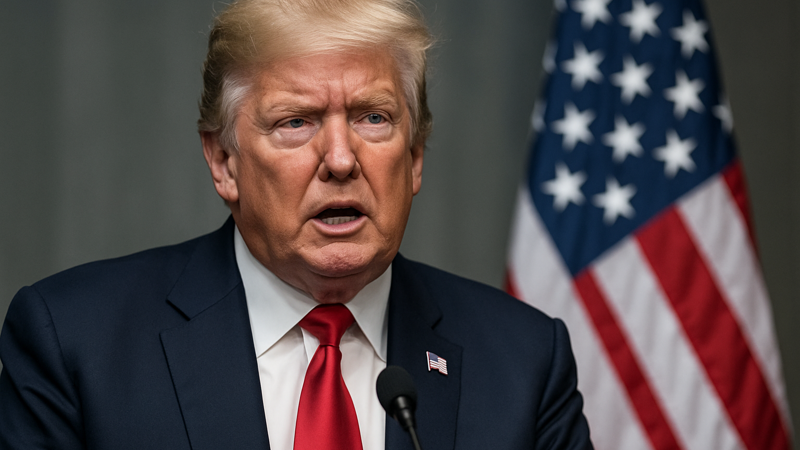
President Donald Trump delivered his most explicit warnings yet to Iran regarding nuclear negotiations, stating Tehran should not "want the consequences of not making a deal" as second-round talks resumed in Geneva with fundamental disagreements persisting over uranium enrichment and ballistic missile programs.
Speaking aboard Air Force One on Monday, Trump declared he would be "indirectly" involved in the Geneva negotiations between Iranian Foreign Minister Abbas Araghchi and US representatives. "I'll be involved in those talks, indirectly. And they'll be very important," the President told reporters while traveling to Washington.
The warning comes as Switzerland officially hosts the second round of nuclear negotiations with Oman facilitating, representing a significant diplomatic evolution from the February 7 Muscat venue to European neutral territory. The venue change signals growing international momentum behind efforts to prevent military confrontation through diplomatic engagement.
Fundamental Scope Disagreements Persist
Despite Trump's characterization of Iran as "very eager to make a deal," profound disagreements remain over the scope and substance of any potential agreement. Iran continues enriching uranium at 60% purity - far exceeding the 3.67% limit established under the original Joint Comprehensive Plan of Action (JCPOA) and approaching the 90% threshold considered weapons-grade.
Iranian Foreign Minister Araghchi has maintained that Iran will "never abandon uranium enrichment even if war is imposed," representing a significant hardening of Tehran's position despite ongoing diplomatic engagement. Iran explicitly excludes ballistic missiles and regional proxy activities as "red lines" from nuclear-only discussions.
"They want to make a deal... I don't think they want the consequences of not making a deal."
— President Donald Trump
In stark contrast, US Secretary of State Marco Rubio insists that any comprehensive agreement must address Iran's ballistic missile capabilities, support for armed groups including Hezbollah and Hamas, and human rights violations. This fundamental scope disagreement represents the same structural obstacle that has prevented agreements for over a decade since the JCPOA's collapse in 2018.
Unprecedented Military Escalation
The diplomatic engagement occurs against a backdrop of unprecedented military tensions. Trump has deployed dual aircraft carriers - USS Gerald R. Ford and USS Abraham Lincoln - creating the largest US naval presence in the Middle East in years, positioned approximately 800 kilometers from Iran's coast.
Recent military incidents have further escalated tensions, including a US F-35C fighter jet shooting down an Iranian Shahed-139 drone that approached the USS Abraham Lincoln in the Arabian Sea. Additionally, Iranian Revolutionary Guard Corps (IRGC) vessels have harassed US-flagged tankers in the strategically vital Strait of Hormuz, through which 40% of global oil transit passes.
These incidents have contributed to oil price volatility, with crude prices rising over $1 per barrel during periods of heightened tension, demonstrating the global economic stakes involved in the negotiations.
Regional Coalition Support
Perhaps most remarkably, an unprecedented coalition of Middle Eastern powers - Saudi Arabia, UAE, Qatar, and Egypt - are actively supporting the diplomatic process. This represents extraordinary regional consensus for preventing military confrontation, reflecting shared concerns about energy market disruption and maritime security in the Persian Gulf.
Oman's neutral mediation role has proven essential, leveraging the sultanate's historical success in facilitating the original 2015 JCPOA negotiations. The evolution from Gulf-based talks in Muscat to European territory in Geneva signals the international community's growing investment in a diplomatic resolution.
Nuclear Status and Verification Challenges
Intelligence assessments confirm that Iran possesses sufficient enriched uranium for multiple nuclear weapons if weaponized, creating urgent timeline pressures for any diplomatic breakthrough. Iran's advanced centrifuge technology and expanded nuclear infrastructure represent capabilities that far exceed those existing during the original JCPOA framework.
Potential Iranian concessions reportedly under consideration include a three-year uranium enrichment halt and transferring existing stockpiles to Russia for storage. However, hardline statements from Iranian leadership suggest such compromises remain uncertain without corresponding US concessions addressing the scope disagreements.
Any future agreement would require unprecedented verification mechanisms exceeding the original JCPOA's complexity, given Iran's sophisticated nuclear advancement since 2018. Technical implementation challenges include monitoring dispersed facilities, advanced centrifuges, and expanded enrichment capabilities.
Domestic Pressures on Both Sides
Iran faces severe domestic pressures that complicate negotiations. The Islamic Republic has arrested over 42,000 protesters since the 2022 uprising, with Nobel Peace Prize laureate Narges Mohammadi recently sentenced to an additional 7.5 years in prison. Economic sanctions have created regime survival pressures, yet Iranian leadership appears to prioritize nuclear capabilities over potential sanctions relief.
Trump administration officials face their own political calculations, balancing Republican hawks who view diplomatic engagement as appeasement against the potential for a significant foreign policy victory. The President continues implementing "maximum pressure" tactics, including threatening 25% tariffs on countries trading with Iran, even while pursuing negotiations.
Israeli Security Concerns
Israeli Prime Minister Netanyahu's coordination with Trump has emphasized that any nuclear agreement must be comprehensive, including "limiting ballistic missiles and ending Iranian axis support." Israeli officials view nuclear-only agreements as insufficient for addressing existential security threats from Iran's integrated missile and proxy network.
This Israeli position aligns with US comprehensive demands but conflicts directly with Iran's nuclear-only negotiating framework, creating an additional layer of complexity for diplomatic resolution.
International Nuclear Governance Crisis
The Iran nuclear negotiations occur within a broader nuclear governance crisis. The New START treaty between the US and Russia expired on February 5, 2026, marking the first time in over 50 years without bilateral nuclear constraints between the superpowers. China's nuclear expansion from approximately 350 warheads in 2020 to over 500 currently further complicates multilateral arms control frameworks.
UN Secretary-General António Guterres has warned that nuclear risks are "higher than they have been in decades," making successful resolution of the Iran nuclear crisis a potential template for 21st-century nuclear diplomacy.
Stakes and Strategic Implications
The Geneva talks represent a critical test of diplomatic innovation versus military confrontation in modern nuclear crisis resolution. Success could prevent a regional war that would destabilize Persian Gulf energy markets, provide a diplomatic template for nuclear disputes globally, and strengthen non-proliferation norms.
Conversely, failure might accelerate military solutions that could reshape Middle Eastern geopolitics for decades, encourage nuclear proliferation elsewhere, and undermine diplomatic credibility for resolving territorial and security disputes worldwide.
The negotiations also test whether sustained regional engagement and international support can produce innovative compromises bridging deadlocked positions that have persisted for over a decade since the original JCPOA framework.
Coming Weeks Decisive
Trump's warnings to Iran coincide with the most significant US-Iran diplomatic engagement since the JCPOA collapse. Both sides have demonstrated willingness for structured dialogue despite profound trust deficits and continuing military tensions.
The framework establishment represents measurable progress, but fundamental positions remain unchanged from decade-old challenges. The coming weeks will determine whether diplomatic innovation can bridge uranium enrichment disagreements and comprehensive security arrangements, or whether core disagreements prove insurmountable.
With regional war prevention, nuclear governance credibility, and Middle East stability architecture evolution all at stake, the Geneva talks serve as a decisive test for international conflict resolution mechanisms in an era of great power competition and nuclear proliferation concerns.