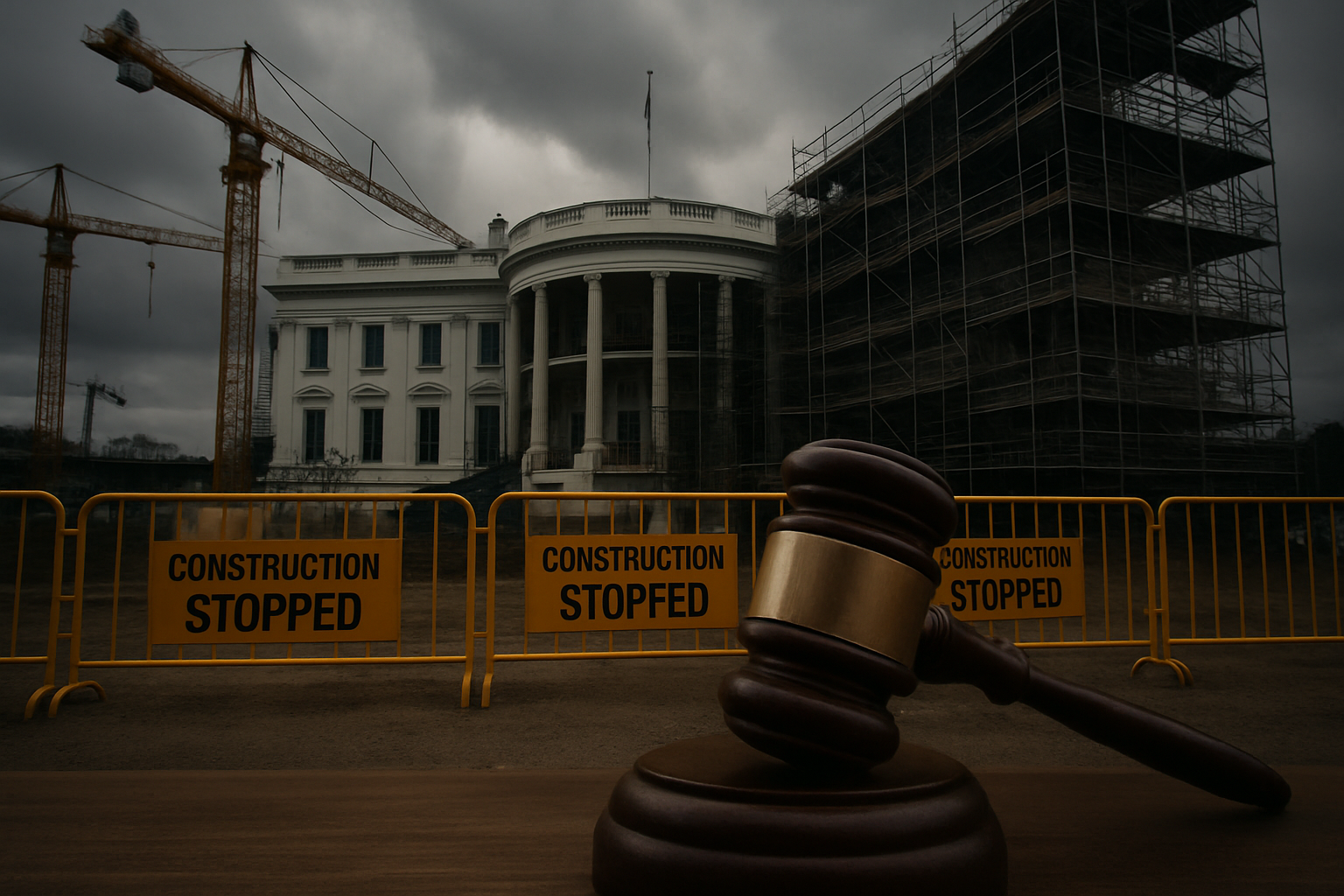
A federal judge has ordered President Donald Trump to immediately halt construction of his controversial $400 million ballroom project at the White House, ruling that the massive renovation cannot proceed without explicit Congressional authorization.
U.S. District Judge Richard Leon granted a preliminary injunction Tuesday evening, bringing construction of the ambitious 86,000-square-foot ballroom to an abrupt stop. The project had involved demolishing significant portions of the White House East Wing to make way for what would have been one of the world's largest and most opulent ballrooms.
Presidential Authority Questioned
In his 47-page decision, Judge Leon delivered a stinging rebuke to the Trump administration's claims of executive authority over White House renovations. "The president of the United States is the guardian of the White House for future generations of presidential families. He is not, however, its owner," Leon wrote in the ruling.
The judge determined that no existing regulation grants the president unilateral authority to undertake construction projects of this magnitude without Congressional oversight. The ruling establishes that major modifications to the White House exceeding certain cost thresholds require legislative approval, particularly when they involve the historic fabric of the building.
"No regulation gives the president authority for such construction without Congressional approval."
— U.S. District Judge Richard Leon
The legal challenge was brought by the National Trust for Historic Preservation, which argued that the project violated both historical preservation requirements and constitutional principles of separation of powers. The organization cited the White House's status as a National Historic Landmark as requiring legislative approval for major modifications.
The Ballroom Project Scope
Trump's vision for the White House ballroom was nothing short of extraordinary. Plans called for an 8,000-square-meter (86,000-square-foot) space that would have been constructed with gold and marble finishes, making it one of the most elaborate entertainment venues in any world capital.
The project required demolishing portions of the East Wing, a decision that sparked immediate controversy among preservationists and constitutional scholars. The East Wing, which houses the First Lady's offices and serves ceremonial functions, has been an integral part of the White House complex since its construction in the early 20th century.
Construction had been underway for several weeks, with cranes visible from the Washington Monument and construction workers reportedly working around-the-clock shifts. The project was being funded through a complex arrangement involving private donations and federal appropriations, raising additional questions about financial oversight.
Constitutional and Historical Implications
The ruling represents a significant test of executive authority limits and Congressional oversight of major federal construction projects during a period of broader legal challenges to the Trump administration. Legal experts view the case as establishing important precedents regarding presidential authority over federal property modifications.
The decision comes at a particularly sensitive time, as the Trump administration faces mounting legal challenges across multiple fronts. The ballroom project had become a symbol of what critics characterized as presidential overreach, while supporters argued it would enhance America's ability to host world leaders and conduct diplomacy.
International media coverage has emphasized the importance of preserving democratic symbols and institutional continuity. The White House's status as both a working residence and a symbol of American democracy creates unique preservation challenges that balance modern needs with historical integrity.
Legal and Political Ramifications
The immediate impact of Judge Leon's ruling was the suspension of all construction activities on the ballroom project. Workers were ordered to stop work immediately, and the site was secured pending legal resolution of the dispute.
The Trump administration is expected to appeal the decision while exploring alternative approaches to the project. Legal sources suggest the administration may seek to modify the scope of the project to fall within existing presidential authorities or pursue Congressional authorization through the legislative process.
The case has attracted attention from Congressional leaders, with both Democratic and Republican members expressing interest in the constitutional questions raised by the dispute. The ruling may prompt broader discussions about the appropriate role of Congress in overseeing executive branch facilities and operations.
Preservation vs. Modernization
At the heart of the legal dispute lies a fundamental tension between historical preservation and the practical needs of a modern presidency. Supporters of the ballroom project argued that the White House needed enhanced entertainment facilities to properly host state dinners and diplomatic events befitting America's global role.
Critics countered that the project represented an inappropriate use of taxpayer resources and a violation of the White House's historical character. The National Trust for Historic Preservation argued that such massive alterations to the building's structure could irreversibly damage its historical integrity.
The project's $400 million price tag also drew scrutiny from fiscal conservatives and government watchdog groups, who questioned whether such an expenditure was justified given other pressing national priorities.
International Precedents
The White House renovation controversy has drawn comparisons to similar projects at other world capitals, where leaders have faced criticism for lavish building projects. The case highlights unique American constitutional constraints on executive power that distinguish the U.S. system from other forms of government.
European diplomatic observers have noted the case as an example of American institutional checks and balances in action. The judicial intervention demonstrates the independence of the American court system and the practical application of separation of powers principles.
Looking Forward
Judge Leon's ruling creates a pathway for the project to potentially move forward if proper Congressional authorization is obtained. The decision does not permanently block the ballroom construction but establishes the procedural requirements that must be met for it to proceed legally.
The case is likely to have lasting implications for future presidential building projects and the balance between executive authority and legislative oversight. It establishes important precedents for how major federal construction projects must be approved and funded.
As the legal process continues, the halted construction site serves as a visible reminder of the constitutional limits on presidential power, even in matters as seemingly mundane as building renovation. The ultimate resolution of this case will help define the boundaries of executive authority for future administrations and establish important principles for preserving America's most important historical buildings while meeting the practical needs of modern governance.