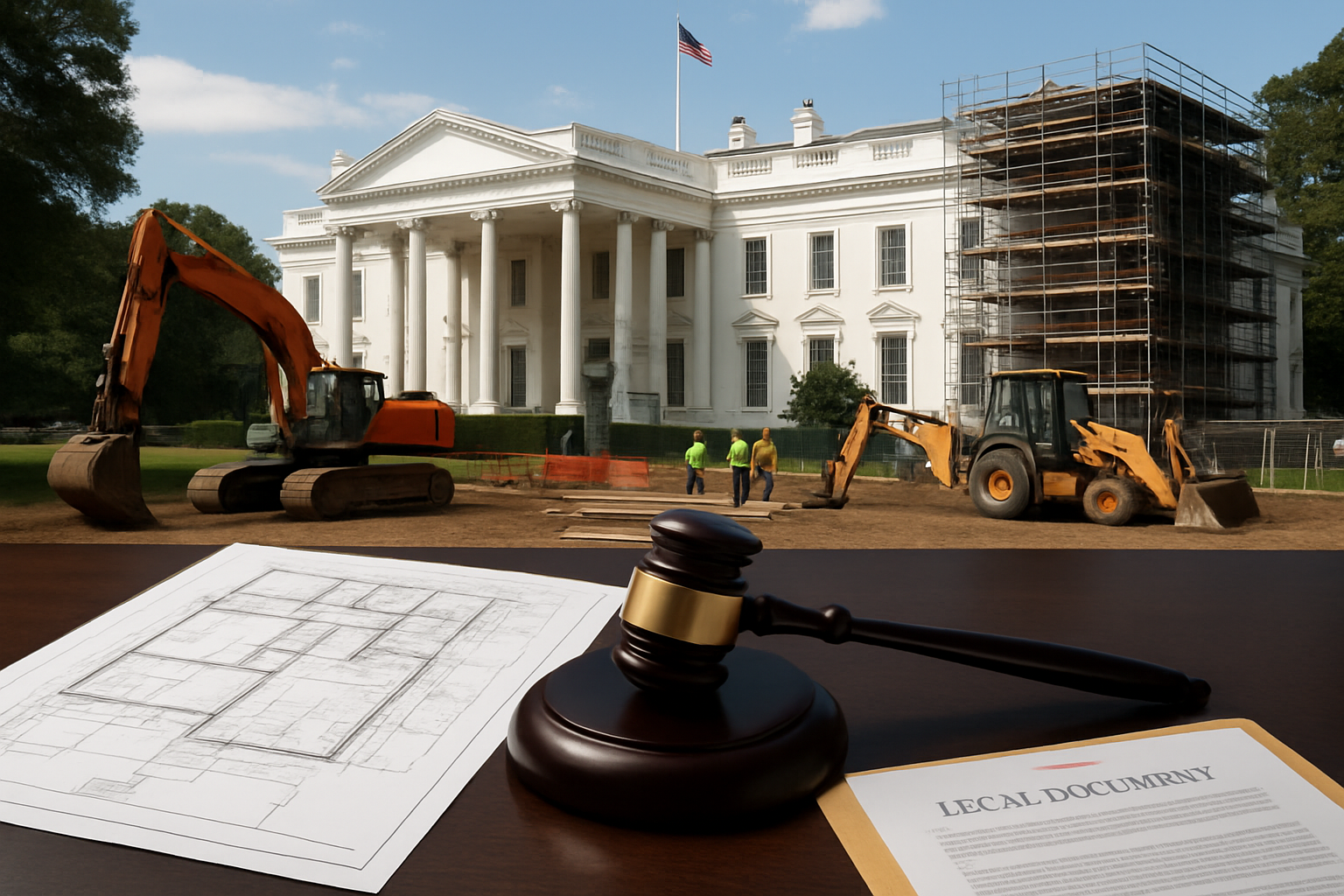
A federal judge has issued a temporary restraining order blocking President Donald Trump's ambitious plans to construct a massive ballroom at the White House, ruling that such a significant alteration to the presidential residence requires Congressional approval before proceeding.
The ruling, delivered Tuesday by U.S. District Judge Richard Leon, represents a significant legal setback for Trump's $400 million renovation project, which would have involved demolishing portions of the East Wing to make way for what the administration described as one of the world's most magnificent ballrooms.
Judge Leon's 47-page decision stated that "no regulation gives the president the authority to undertake the construction project that Trump has envisioned" without explicit congressional authorization, citing the historical preservation requirements and constitutional separation of powers.
Project Details and Scope
The controversial project, which Trump has championed since returning to office, involves constructing an 8,000-square-meter (86,000-square-foot) ballroom in the East Wing of the White House. According to Austrian media reports, Trump had already ordered the demolition of significant portions of the East Wing to accelerate construction.
The ballroom, with an estimated cost of $400 million, would represent one of the most dramatic alterations to the White House complex since its reconstruction following the War of 1812. The project includes not only the massive entertainment space but also supporting infrastructure, security systems, and ceremonial facilities.
Spanish media outlets report that Trump envisioned the ballroom as "the finest of its kind," capable of hosting state dinners and diplomatic receptions on an unprecedented scale. The project has been a personal priority for the president, who has frequently criticized the existing White House facilities as inadequate for modern diplomatic entertaining.
Legal Opposition and Heritage Concerns
The legal challenge was brought by the National Trust for Historic Preservation, a prominent conservation organization that argued the construction would irreversibly damage one of America's most important historical landmarks. The organization successfully argued that such extensive modifications require Congressional oversight due to the White House's status as both a residence and a symbol of American democracy.
Judge Leon's ruling specifically addressed concerns about the project's impact on the building's historical integrity. The White House, designated as a National Historic Landmark, has been subject to strict preservation guidelines since the 1960s. The court found that Trump's planned alterations would constitute a fundamental change to the structure's character and historical significance.
The ruling also cited precedent requiring legislative approval for major federal construction projects exceeding certain cost thresholds. At $400 million, Trump's ballroom project far exceeds the limits for presidential discretionary spending on federal facilities.
International Reaction and Context
European media outlets have provided extensive coverage of the controversy, with many expressing concerns about the precedent of significantly altering such an iconic democratic symbol. German publications noted the stark contrast between American democratic preservation efforts and the project's scope, while Nordic outlets emphasized the importance of maintaining institutional continuity.
The project has also faced criticism in the context of Trump's broader renovation agenda. Finnish sources reported that the ballroom construction was part of a larger plan to modernize White House facilities, including updates to security systems and diplomatic reception areas.
Several international preservation organizations have expressed support for the court's decision, viewing it as an important precedent for protecting historically significant government buildings worldwide.
Congressional Response and Political Implications
The ruling comes amid broader tensions between the Trump administration and Congress over executive authority and spending priorities. Democratic lawmakers have consistently argued that such a massive expenditure requires legislative approval, particularly given ongoing budget constraints and competing national priorities.
Republican supporters of the project have argued that updating White House facilities is essential for modern diplomacy and national prestige. However, even some GOP members have privately expressed concerns about the project's cost and scope, according to sources familiar with congressional discussions.
The timing of the ruling is particularly significant as it occurs during a period when Trump has faced multiple legal challenges to his executive authority, including recent Supreme Court decisions limiting presidential powers in other areas.
Administrative Response and Next Steps
The Trump administration has yet to formally respond to the court's ruling, though sources close to the White House indicate the president is "extremely frustrated" with what he views as judicial overreach. The administration is expected to appeal the decision while simultaneously exploring whether alternative approaches might satisfy the court's requirements.
Construction work at the White House has been immediately suspended pending the legal resolution. Contractors and workers who had been preparing the site have been directed to halt all activities related to the ballroom project, though routine maintenance and security upgrades continue.
The ruling allows for the possibility that Congressional approval could still enable the project to proceed, though the timeline for such approval remains uncertain given the current political climate and competing legislative priorities.
Historical Precedent and Preservation
The White House has undergone significant renovations throughout its history, most notably the complete reconstruction during the Truman administration in the 1950s. However, that project was undertaken with full Congressional support and oversight, maintaining the building's historical facade while updating its internal structure.
Trump's ballroom project represents a different category of alteration, involving the addition of entirely new space that would fundamentally change the building's footprint and character. Preservation experts have noted that such additions require careful consideration of their impact on the site's historical significance.
The National Trust for Historic Preservation has argued that the White House serves not just as a residence and office, but as a symbol of American democratic continuity. The organization contends that major alterations should reflect broad national consensus rather than individual presidential preferences.
Economic and Practical Considerations
Beyond the legal and historical concerns, critics have raised questions about the project's practical necessity and cost-effectiveness. At $400 million, the ballroom would represent one of the most expensive single rooms ever constructed for a government facility.
Supporters argue that enhanced entertainment facilities are essential for modern diplomatic engagement, pointing to similar investments by other world leaders in their official residences. They contend that the ballroom would serve as a valuable asset for state functions and international relations for decades to come.
The project's suspension also raises questions about the funds already committed to planning and early construction activities. While specific figures have not been disclosed, sources suggest that several million dollars have already been spent on architectural planning, engineering studies, and site preparation.
Future Implications
Judge Leon's ruling establishes important precedent regarding presidential authority over federal property modifications. Legal experts suggest the decision could influence future disputes over executive branch construction projects and spending authority.
The case also highlights broader questions about the balance between preserving historical landmarks and adapting them for contemporary needs. The White House, like many historic government buildings worldwide, faces ongoing challenges in maintaining its historical character while serving modern functional requirements.
As the legal process continues, the ultimate fate of Trump's ballroom project will depend on both judicial review and potential Congressional action. The controversy underscores the complex intersection of law, politics, and preservation that surrounds one of America's most significant buildings.
The temporary restraining order will remain in effect pending further legal proceedings, with both sides expected to present additional arguments in the coming weeks. The case represents a significant test of the limits of presidential authority and the role of Congress in overseeing major federal construction projects.