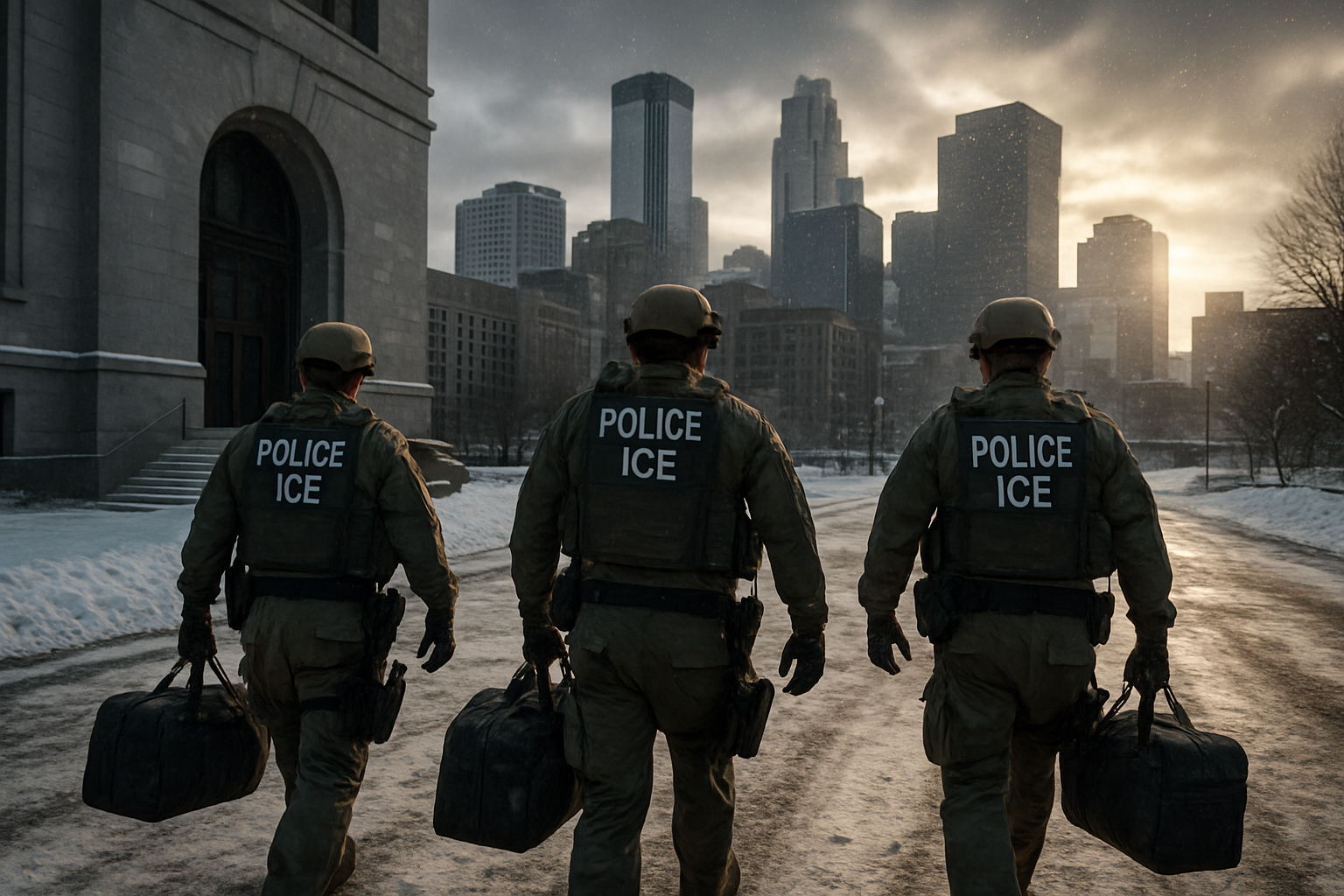
The Trump administration announced the immediate withdrawal of 700 federal immigration enforcement officers from Minnesota on Wednesday, representing approximately a quarter of the 2,700-3,000 agents deployed in the Minneapolis area since the launch of intensified immigration operations in early December 2025.
Border czar Tom Homan made the announcement during a press conference in Minneapolis, citing improved cooperation from state and local authorities as the primary reason for the reduction. The move comes after weeks of escalating tensions following the fatal shootings of two U.S. citizens by federal immigration agents in January 2026.
Fatal Shootings Spark National Crisis
The decision to reduce the federal immigration presence follows the controversial deaths of Alex Pretti and Renee Nicole Good, both U.S. citizens who were fatally shot by ICE agents during enforcement operations in Minneapolis. These incidents sparked widespread protests, memorial sites with candles and flowers throughout the city, and contributed to a three-day partial federal government shutdown in early February.
The shootings prompted congressional Democrats to demand accountability measures, including requirements for visible ID badges, prohibitions on face coverings for federal agents, and the implementation of body cameras. DHS Secretary Kristi Noem subsequently announced mandatory body camera requirements for all ICE agents operating in Minneapolis, effective February 2, 2026.
"There's been a better cooperation, a better collaboration with state and local authorities, which means there's less need for the federal officers that are there right now."
— Tom Homan, Border Czar
Scale of Federal Operation
The withdrawal represents a significant reduction in what was described as one of the most intensive immigration enforcement operations in recent memory. At its peak, the operation involved between 2,700 and 3,000 federal agents, including personnel from Immigration and Customs Enforcement (ICE) and Customs and Border Protection (CBP). Following the announced reduction, approximately 2,000 agents will remain in Minnesota.
The operation, which began in early December 2025, was part of the Trump administration's broader immigration enforcement strategy targeting what officials described as individuals residing in the United States illegally. The massive deployment of federal agents made Minneapolis one of the most heavily policed areas for immigration enforcement in the country.
Political Ramifications
The fatal shootings and subsequent enforcement controversies became a central issue in the federal government shutdown that lasted from January 31 to February 3, 2026. Congressional Democrats refused to pass funding legislation without accountability measures for federal immigration agents, while Republicans initially resisted additional oversight requirements.
The crisis was ultimately resolved when the House of Representatives passed a $1.2 trillion spending package in a bipartisan 217-214 vote, with 21 Republicans voting against and 21 Democrats supporting the measure. The legislation funded most government operations through September 2026, though the Department of Homeland Security received funding only through February 13, setting up potential future battles over immigration enforcement policies.
Community Impact and Protests
The intensive federal immigration operations generated significant community resistance in Minneapolis, a city with large immigrant and refugee populations. Local residents organized protests and created memorial sites for the two U.S. citizens killed by federal agents. The operations also sparked concerns about constitutional protections and the appropriate use of federal enforcement powers within local communities.
The tensions were further heightened by other controversial cases, including the detention of five-year-old Liam Conejo Ramos and his father Adrian Conejo Arias on January 20, 2026. The Ecuadorian asylum seekers were held at the South Texas Family Residential Centre in Dilley, Texas, until Federal Judge Fred Biery ordered their release on January 31, with a scathing ruling criticizing the Trump administration. The judge notably included a photo of the young boy in his Spider-Man backpack in the court order.
Local Government Cooperation
Homan's announcement emphasized that the reduction in federal agents was made possible by increased cooperation from Minnesota state and local authorities in turning over arrested immigrants to federal custody. This represents a significant shift from the previous resistance by local officials to immigration enforcement operations.
However, Homan did not provide a timeline for when the federal operation might end entirely in Minnesota. The remaining 2,000 agents will continue immigration enforcement activities, though presumably with reduced visibility and community disruption compared to the peak deployment.
Broader Immigration Enforcement Context
The Minneapolis operation and its subsequent reduction occur within the broader context of the Trump administration's renewed immigration enforcement priorities. The administration has implemented various measures including expanded ICE raids, increased detention capacity, and challenges to programs like Temporary Protected Status (TPS) for certain populations.
The February announcement also coincides with other significant immigration policy developments, including a federal judge's blocking of the administration's attempt to terminate TPS for approximately 350,000 Haitians, citing discriminatory motivations behind the decision.
International Coverage and Criticism
The Minneapolis immigration enforcement operations and their aftermath have drawn extensive international media attention. European outlets have covered the events as indicative of broader tensions within U.S. immigration policy and democratic institutions. The fatal shootings of U.S. citizens by federal agents have been particularly scrutinized by international observers as raising questions about accountability in federal law enforcement.
Future Implications
While the reduction in federal agents represents a de-escalation of the immediate crisis in Minneapolis, significant questions remain about the long-term trajectory of immigration enforcement under the Trump administration. The upcoming February 13 deadline for DHS funding could trigger renewed political battles over immigration policies and federal enforcement oversight.
The Minneapolis case may also serve as a precedent for how immigration enforcement operations are conducted in other cities with significant immigrant populations. The implementation of body cameras and other accountability measures could influence federal law enforcement practices nationwide.
As the remaining 2,000 federal agents continue operations in Minnesota, community organizations and local officials will likely maintain heightened scrutiny of immigration enforcement activities. The balance between federal immigration priorities and community safety concerns remains a central challenge for policymakers as the Trump administration continues its immigration agenda.