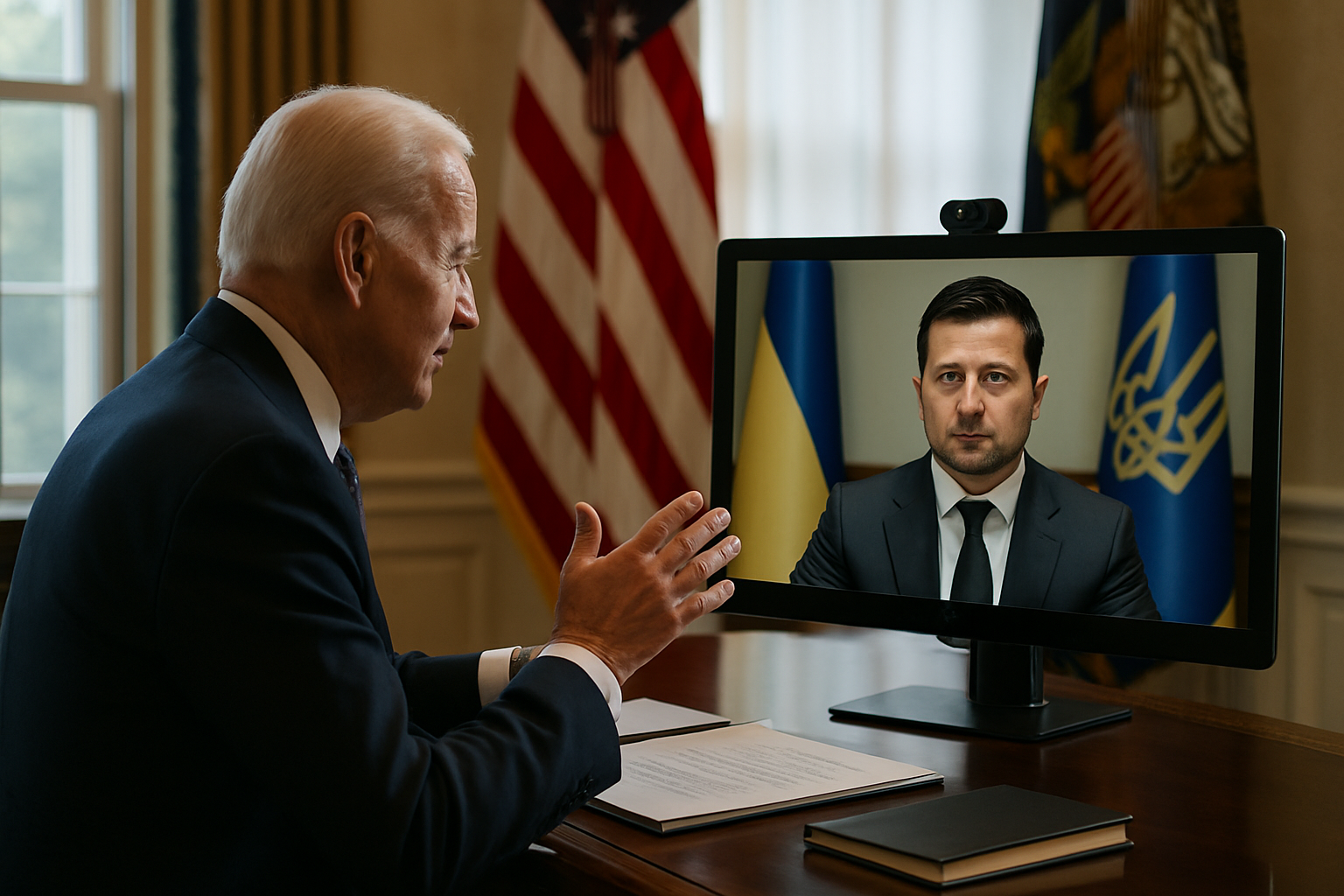
Ukrainian President Volodymyr Zelensky and U.S. President Donald Trump held a phone conversation discussing future peace negotiations with Russia, with American negotiators Steve Witkoff and Jared Kushner participating in the call, as trilateral talks are expected to proceed in March following recent diplomatic momentum.
The phone conversation, reported by multiple international sources including Bulgarian and Chinese media, comes amid significant diplomatic activity surrounding the ongoing Ukraine-Russia conflict. According to Ukrainian official sources, the call involved discussions about issues that would be addressed by delegations during upcoming bilateral meetings and preparations for the next round of trilateral negotiations.
The conversation took place against the backdrop of considerable diplomatic progress achieved through the Geneva peace talks held February 17-18, which marked a significant evolution in the peace process. Those talks achieved what U.S. Special Envoy Steve Witkoff described as "significant progress" on ceasefire monitoring mechanisms, though fundamental territorial disputes remain unresolved.
Building on Geneva Breakthrough
The upcoming March negotiations represent a continuation of the diplomatic framework that has produced concrete humanitarian results in recent months. The most significant breakthrough came through the Abu Dhabi trilateral talks, which achieved a historic 314-prisoner exchange - the first such swap in five months - and restored U.S.-Russia military communications after a four-year suspension.
Ukrainian Defense Minister Rustem Umerov, who has been leading Ukraine's delegation in these negotiations, previously described the Abu Dhabi talks as "substantial and productive." The framework established there included detailed discussions on ceasefire monitoring and verification procedures, which became the foundation for the technical progress achieved in Geneva.
The Pentagon confirmed that the restoration of military communications includes deconfliction protocols covering operations globally, from Syria to the Arctic and Africa. This represents the most significant U.S.-Russia military agreement since the conflict began and provides the only remaining formal diplomatic channel between the nuclear superpowers.
Territorial Disputes Remain Central Challenge
Despite the diplomatic progress, the fundamental sticking point remains unchanged: the status of eastern Ukrainian territories currently under Russian control. Russia continues to demand territorial recognition and insists that any Putin-Zelensky meeting must occur in Moscow. Ukraine maintains its position on territorial integrity while seeking comprehensive long-term security guarantees.
The military situation on the ground continues to influence these negotiations. Russian forces captured 481 square kilometers in January 2026 compared to 260 square kilometers in December 2025, representing a dramatic acceleration in territorial gains. Over 10,000 Russian drones and bombs were launched in January 2026 alone, demonstrating the continued intensity of military operations alongside diplomatic efforts.
President Zelensky has firmly rejected any territorial concessions, stating that the Ukrainian people would view "handing over territories" as a "failure story." He has also criticized what he perceives as disproportionate pressure on Ukraine rather than Russia, stating it's "not fair that Trump keeps calling on Ukraine, not Russia, to make concessions."
Humanitarian Crisis Intensifies
The ongoing conflict continues to extract a devastating humanitarian toll. Zelensky disclosed that 55,000 Ukrainian soldiers have been officially killed, with a "large number" still missing. International estimates suggest actual casualties could be two to three times higher when including undocumented deaths and missing personnel.
Systematic civilian targeting has been a persistent feature of the conflict, with what Ukrainian officials describe as "energy terrorism" leaving over 1,170 buildings in Kyiv without heating during minus-30°C temperatures. The February 11 Bohodukhiv drone strike exemplified this pattern, killing four civilians including three children - two one-year-olds and one two-year-old - plus their father, marking the second deadly attack on the same town within days.
"We expect this meeting to create an opportunity for meaningful dialogue that can lead to sustainable peace."
— Ukrainian Presidential Office Statement
Over 17.8 million Ukrainians are currently accessing winter support programs, highlighting the massive scale of humanitarian needs. Ukrainian nuclear plants were forced to halt electricity production for the first time in the conflict, with officials warning that continued attacks on energy infrastructure put "Europe at risk of a nuclear incident."
International Support and Nuclear Context
The diplomatic efforts are taking place against an unprecedented nuclear governance crisis. The New START treaty between the United States and Russia expired on February 5, 2026, marking the first time in over 50 years without bilateral nuclear constraints between the superpowers. Both nations control 80% of the world's nuclear weapons, with Russia possessing approximately 4,380 warheads and the U.S. approximately 3,708.
UN Secretary-General António Guterres has called the expiration a "grave turning point," warning that nuclear risks are at their "highest in decades." This context adds extraordinary urgency to the diplomatic process, as the restored military communications represent the only remaining major diplomatic channel between the nuclear superpowers.
International support for Ukraine has reached historic levels, with the European Union approving a €90 billion loan package - the largest ever for a single nation. However, this support shows some divisions, with Slovakia, the Czech Republic, and Hungary refusing to participate. Sweden and Denmark have announced a €246 million air defense package, while Germany has provided 35 Patriot missiles.
June Deadline and Presidential Engagement
The Trump administration has established a June 2026 deadline for comprehensive peace negotiations, with the potential for talks to move to Washington and involve presidential-level engagement. The evolution from Abu Dhabi to Geneva to potentially Washington suggests a deliberate diplomatic escalation designed to create unprecedented pressure for territorial compromise solutions.
The upcoming March talks will test whether the humanitarian breakthroughs achieved through structured engagement can translate into progress on the core territorial disputes. The framework has proven successful in producing concrete results - the 71st prisoner exchange since the invasion began demonstrates that sustained diplomatic engagement can yield humanitarian benefits even amid continued military operations.
European observers participated in the Geneva talks for the first time, with representatives from the "Big 5" nations (Germany, France, Italy, the United Kingdom, and Poland) adding institutional weight while maintaining the proven trilateral structure. This expansion reflects growing international commitment to finding a peaceful resolution.
Strategic Stakes and Global Implications
The stakes of these negotiations extend far beyond Ukraine and Russia. Success could end Europe's deadliest conflict since World War II and provide a template for 21st-century conflict resolution. Failure could intensify military operations globally and undermine diplomatic credibility for resolving territorial disputes worldwide.
The negotiations represent a critical test of whether diplomatic innovation can overcome military escalation. The framework has demonstrated that concrete humanitarian results can be achieved despite fundamental disagreements, but translating this success to territorial and political arrangements represents the ultimate challenge.
As these diplomatic efforts continue, the international community is watching closely to see whether innovative territorial dispute resolution can bridge positions that have remained far apart for nearly four years. The success or failure of these negotiations will likely determine the trajectory of European security architecture and international law enforcement for decades to come.
The upcoming March talks represent the most significant diplomatic opportunity since the conflict began, with global implications for conflict prevention, territorial sovereignty principles, and the effectiveness of multilateral diplomacy in resolving complex international disputes. The phone conversation between Trump and Zelensky suggests continued high-level engagement in pursuing what all sides acknowledge is an extraordinarily challenging but critically important diplomatic process.