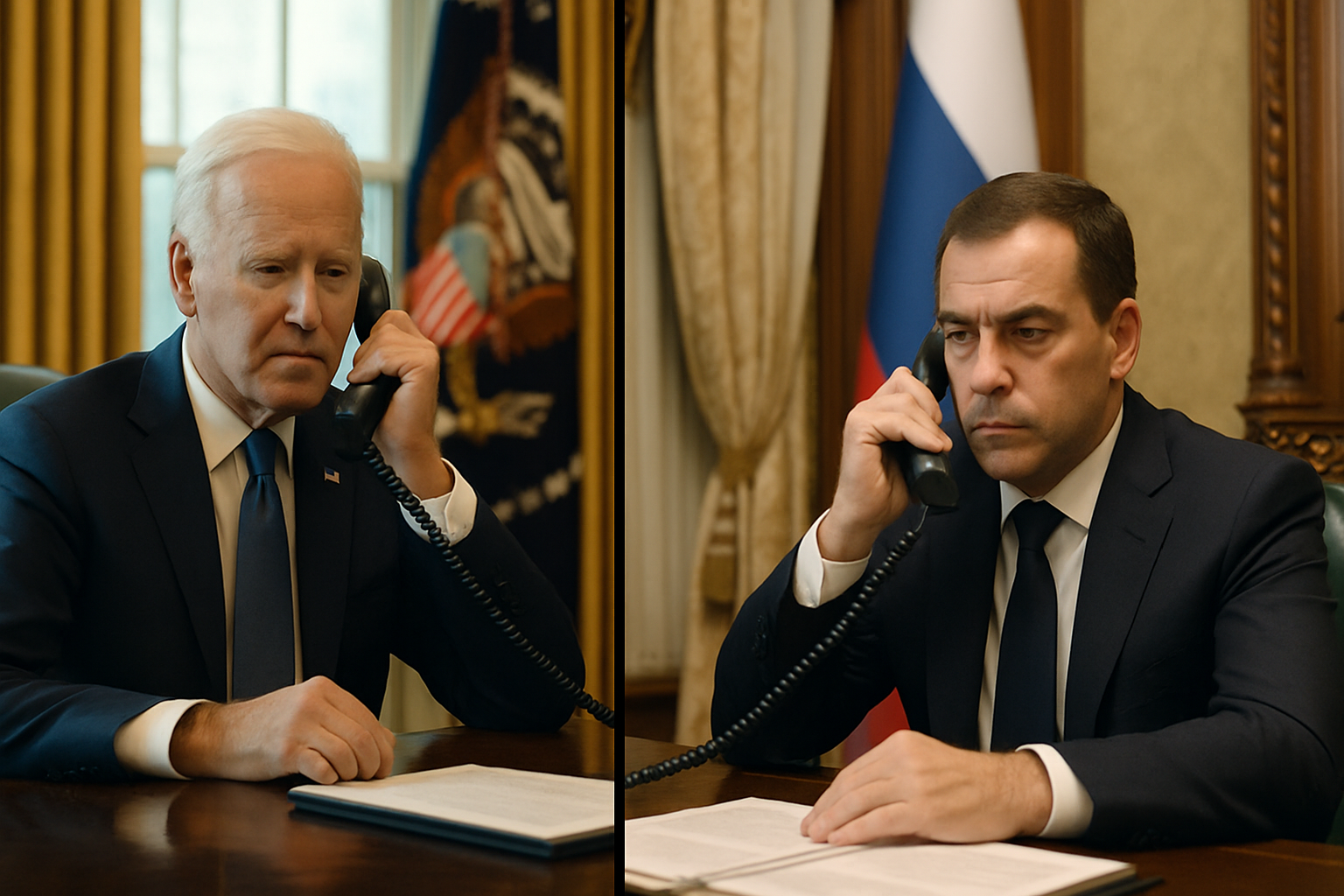
President Donald Trump and Ukrainian President Volodymyr Zelensky engaged in a lengthy phone conversation Wednesday, marking a significant diplomatic development as peace negotiations show unprecedented progress after nearly four years of devastating conflict.
According to Axios reports and confirmed by multiple international media outlets, the phone call lasted approximately 30 minutes and comes at a critical juncture as trilateral peace talks involving Ukraine, Russia, and the United States have achieved historic breakthroughs in recent weeks.
Diplomatic Context and Geneva Talks Momentum
The conversation occurs against the backdrop of significant diplomatic progress following the Geneva peace talks on February 17-18, which marked the first time European "Big 5" nations - Germany, France, Italy, the United Kingdom, and Poland - participated as observers in the trilateral format. US Special Envoy Steve Witkoff reported "significant progress" on ceasefire monitoring mechanisms, building on the foundation established during the Abu Dhabi breakthrough.
The February Abu Dhabi talks achieved a historic 314-prisoner exchange - the first in five months - and restored US-Russia military communications after a four-year suspension since autumn 2021. These developments represent the most substantial US-Russia agreements since the conflict began and have created the only remaining formal diplomatic channel between the nuclear superpowers.
Nuclear Crisis Backdrop
The Trump-Zelensky conversation takes place amid an unprecedented nuclear governance crisis. The New START treaty between the United States and Russia expired on February 5, 2026, marking the first time in over 50 years that the two nations have no bilateral nuclear constraints. With both countries controlling approximately 80% of global nuclear weapons - Russia possessing 4,380 warheads and the US holding 3,708 - UN Secretary-General António Guterres has warned of a "grave turning point" with nuclear risks at their "highest in decades."
Territorial Disputes Remain Central Challenge
Despite diplomatic progress, fundamental disagreements persist over eastern Ukrainian territories currently under Russian control. Russian forces have accelerated territorial gains, capturing 481 square kilometers in January 2026 compared to 260 square kilometers in December 2025 - representing an 85% increase in the fastest months of recent advances.
"Russia is trying to drag out negotiations that could already have reached the final stage."
— President Volodymyr Zelensky, Ukrainian President
Russia demands territorial recognition and insists that any Putin-Zelensky summit must occur in Moscow, while Ukraine maintains its territorial integrity position and seeks 20-30 year security guarantees from the United States. Reports suggest the US has proposed 15-year guarantees, creating an additional sticking point in negotiations.
Humanitarian Crisis Continues
The diplomatic engagement occurs amid ongoing systematic civilian targeting that has left over 1,170 buildings in Kyiv without heating during minus-30°C temperatures. This "energy terrorism" strategy violates Geneva Conventions protections for civilians and has forced Ukrainian nuclear plants to halt electricity production for the first time in the conflict.
Recent attacks demonstrate the calculated nature of civilian targeting. A February 11 drone strike in Bohodukhiv killed four civilians, including three young children - two one-year-old boys and one two-year-old girl - plus their 34-year-old father. This marked the second deadly attack on the same town within three days, highlighting systematic patterns that violate international humanitarian law.
Zelensky has disclosed that 55,000 Ukrainian soldiers have been officially confirmed killed, with a "large number" still classified as missing in action. International estimates suggest actual casualties could be 2-3 times higher when including missing personnel and undocumented deaths.
International Support at Historic Levels
The phone call comes as international support for Ukraine reaches unprecedented levels. The European Parliament has approved a historic €90 billion loan package - the largest EU financial assistance ever provided to a single nation - though Slovakia, Czech Republic, and Hungary have refused participation, exposing persistent European divisions.
Additional support includes Sweden and Denmark's €246 million air defense package featuring Tridon Mk2 systems, Germany's provision of 35 Patriot missiles, and World Bank funding of $40 million for energy restoration. Over 17.8 million Ukrainians are currently accessing winter support programs.
June 2026 Deadline Creates Unprecedented Pressure
The Trump administration has established a June 2026 deadline for a comprehensive peace agreement, with talks potentially moving to Washington venue suggesting presidential-level engagement. This evolution from Abu Dhabi to Geneva to Washington represents deliberate diplomatic escalation designed to create pressure for territorial compromise innovation.
The timeline coincides with pressure on Ukraine to announce presidential elections by May 15, 2026, which would end the martial law period in place since February 2022 and mark the first national elections since 2019. Ukrainian Presidential Office sources emphasize that elections are only possible "when appropriate security guarantees" are achieved.
Russian Response and Kremlin Position
According to Italian sources citing the Kremlin, any meeting between the three presidents would "only make sense to finalize an agreement." This suggests Russia views the current diplomatic track as potentially leading to concrete outcomes, though significant obstacles remain regarding territorial control and security arrangements.
The Kremlin has consistently demanded that direct Putin-Zelensky talks must occur in Moscow, while Zelensky has indicated future meetings would "most likely" take place in the United States, highlighting venue disagreements that mirror broader sovereignty and recognition issues.
European Security Architecture Implications
The Trump-Zelensky conversation occurs as European leaders grapple with fundamental questions about post-war security architecture. The Munich Security Conference in February, themed "Era of Disruptive Politics," represented the most sobering assessment in the conference's 62-year history, with German Chancellor Friedrich Merz declaring that the "post-war order no longer exists."
European strategic autonomy discussions have reached unprecedented levels, including conversations about expanding France's nuclear deterrent beyond national scope - the first such discussions since the Cold War's end. These developments reflect concerns about the reliability of traditional security guarantees in an era of great power competition.
Stakes for Global Conflict Resolution
The success or failure of the current diplomatic track carries implications far beyond Ukraine and Russia. As the deadliest European conflict since World War II approaches its fourth anniversary on February 24, the international community is watching whether innovative territorial dispute resolution can provide a template for 21st-century conflict prevention.
Success could establish new frameworks for managing territorial disputes in an era of great power competition, while failure might embolden aggressive actions elsewhere and undermine confidence in diplomatic solutions to complex international crises.
Coming Phase Decisive
The Trump-Zelensky phone call represents a critical moment in what many analysts consider the most significant diplomatic opportunity since the conflict began. The restoration of US-Russia military communications and successful prisoner exchanges have proven that sustained diplomatic engagement can produce concrete humanitarian results even amid ongoing military operations.
However, bridging the fundamental gap between Ukraine's territorial integrity position and Russia's territorial recognition demands will require unprecedented diplomatic innovation. The June 2026 deadline creates both opportunity and pressure for breakthrough solutions that could reshape European security for decades to come.
As the conversation concludes, international observers will be monitoring for any signals about potential compromises or new frameworks that might emerge from continued high-level diplomatic engagement. The stakes extend beyond ending a single conflict to establishing credible mechanisms for territorial sovereignty enforcement and conflict prevention in the 21st century.