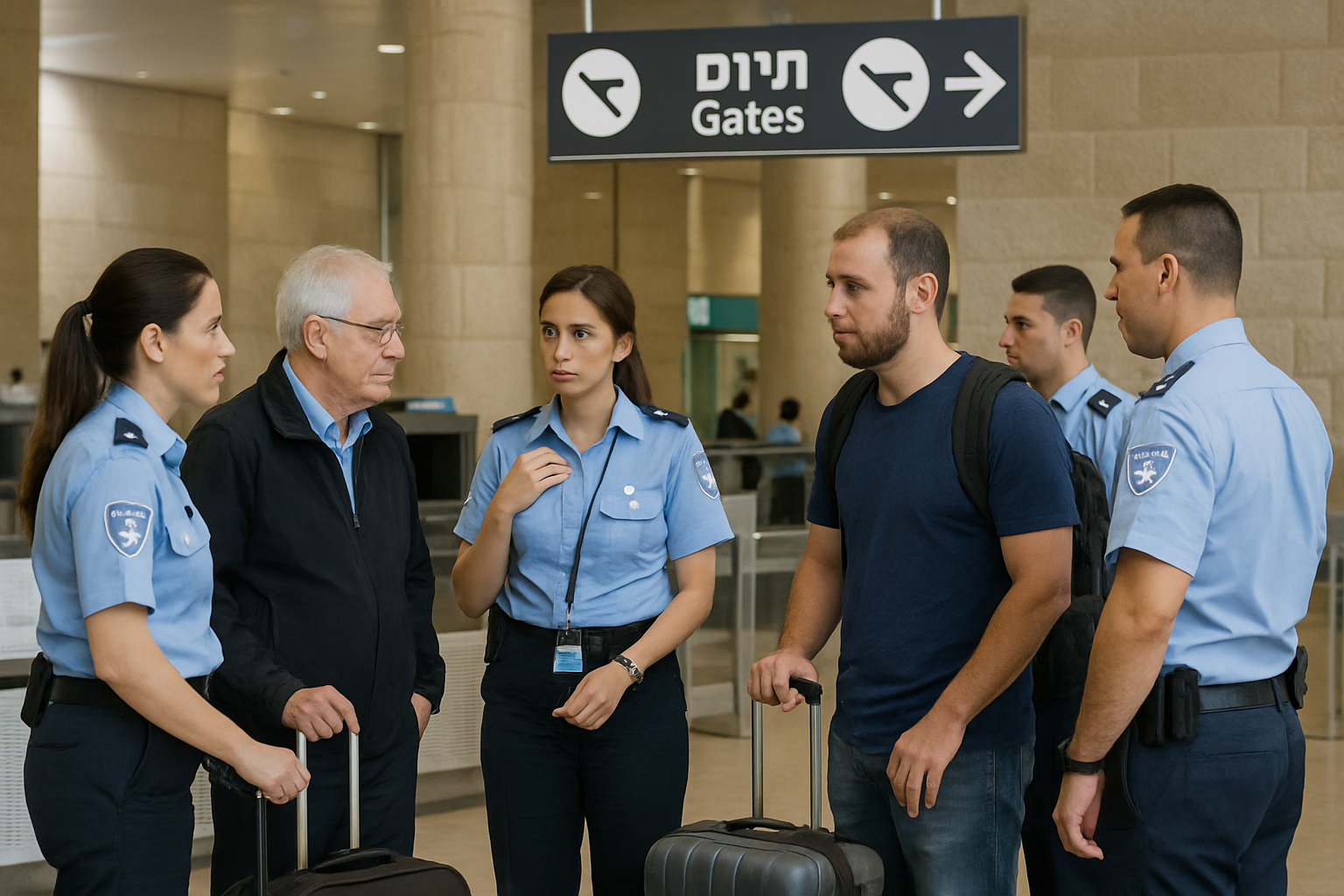
American conservative commentator Tucker Carlson has claimed he was detained and interrogated at an Israeli airport during a recent visit, allegations that have been categorically denied by both Israeli authorities and the U.S. ambassador to Israel.
The controversy emerged as Carlson, a prominent anti-Israel critic, made a brief visit to the country to interview U.S. Ambassador Mike Huckabee. However, his claims about his treatment at the airport have sparked a diplomatic dispute over what actually transpired.
Carlson's Claims Versus Official Denials
According to sources familiar with the matter, Carlson alleged that his departure from Israel involved unusual questioning and detention procedures. The journalist described the experience as "bizarre," though specific details of his claims have not been fully disclosed publicly.
However, Israeli officials have firmly rejected these assertions. The Israel Airports Authority issued a statement clarifying that "Tucker Carlson and his party were politely asked a few routine questions, in accordance with standard procedures applied to many travelers." The statement emphasized that no detention or unusual interrogation occurred.
Ambassador Huckabee also contradicted Carlson's account, stating that the former Fox News host underwent only "routine checks at the airport" and nothing more. Italian news sources reported Huckabee's denial, with headlines describing the ambassador's rejection of Carlson's "arrest" claims.
Context of the Visit
Carlson's trip to Israel was reportedly brief and focused on interviewing Ambassador Huckabee. The visit comes at a time of heightened tensions in the region, with ongoing conflicts and complex diplomatic relationships affecting how journalists and public figures are received.
A friend who was present during the interview between Carlson and Huckabee revealed an interesting political dimension to the visit. According to this source, Carlson mentioned that President Trump wants to see Republican Party infighting over Israel policy "reined in," suggesting the visit may have had broader political implications beyond journalism.
Background on Airport Security Procedures
Israel's Ben Gurion Airport is renowned for having some of the world's most stringent security procedures. All travelers, regardless of nationality or status, undergo comprehensive security screening that can include detailed questioning about travel purposes, contacts in Israel, and personal background.
These procedures are applied systematically to ensure aviation security and are not typically based on individual targeting. Security personnel are trained to conduct professional interviews that may seem intensive to travelers unfamiliar with Israeli security protocols, but are considered standard operating procedure.
Diplomatic Implications
The disagreement over what occurred has created an unusual diplomatic situation where a prominent American media figure's account is being directly contradicted by both Israeli authorities and the U.S. ambassador. This type of public dispute is relatively rare in U.S.-Israel relations.
Carlson's reputation as a critic of certain Israeli policies may have influenced his interpretation of routine security procedures, though officials maintain that no special treatment or unusual measures were applied during his departure.
"Tucker Carlson and his party were politely asked a few routine questions, in accordance with standard procedures applied to many travelers."
— Israel Airports Authority Statement
Media Coverage and International Attention
The incident has attracted international media coverage, with outlets across Europe and the Middle East reporting on the conflicting accounts. The story highlights the challenges faced by controversial public figures when traveling internationally, particularly to regions experiencing political tensions.
Russian and Italian news sources have covered the story extensively, focusing on the discrepancy between Carlson's claims and official denials. The coverage reflects broader interest in how American political figures navigate international travel during periods of domestic and foreign policy controversy.
Broader Context of U.S.-Israel Relations
This incident occurs against the backdrop of complex U.S.-Israel relations under the current administration. While the United States maintains its status as Israel's strongest ally, individual American political figures may experience varying receptions based on their public positions on Middle East policy.
Carlson's anti-Israel commentary on his media platforms may have influenced his expectations and interpretation of standard security procedures. However, Israeli officials emphasize that security protocols are applied consistently regardless of an individual's political positions or media commentary.
Questions About Journalistic Accuracy
The dispute raises questions about journalistic accuracy and the responsibility of media figures to report events accurately. When public figures make claims about their treatment by foreign governments, the potential for misunderstanding or misrepresentation can have diplomatic consequences.
The incident also highlights the importance of corroborating accounts of international incidents, particularly when they involve allegations of mistreatment by foreign authorities. In this case, multiple official sources have provided consistent contradictory accounts to Carlson's claims.
Conclusion
The Tucker Carlson airport incident illustrates the complexities that can arise when prominent American political figures travel internationally during periods of heightened political tension. While Carlson maintains that he experienced unusual treatment, Israeli authorities and U.S. diplomatic representatives have provided a clear alternative account describing routine security procedures.
The incident serves as a reminder of the importance of accurate reporting in international affairs and the potential for misunderstandings when individuals are unfamiliar with foreign security protocols. As diplomatic relations continue to evolve, such incidents underscore the need for clear communication and factual accuracy in describing international encounters.