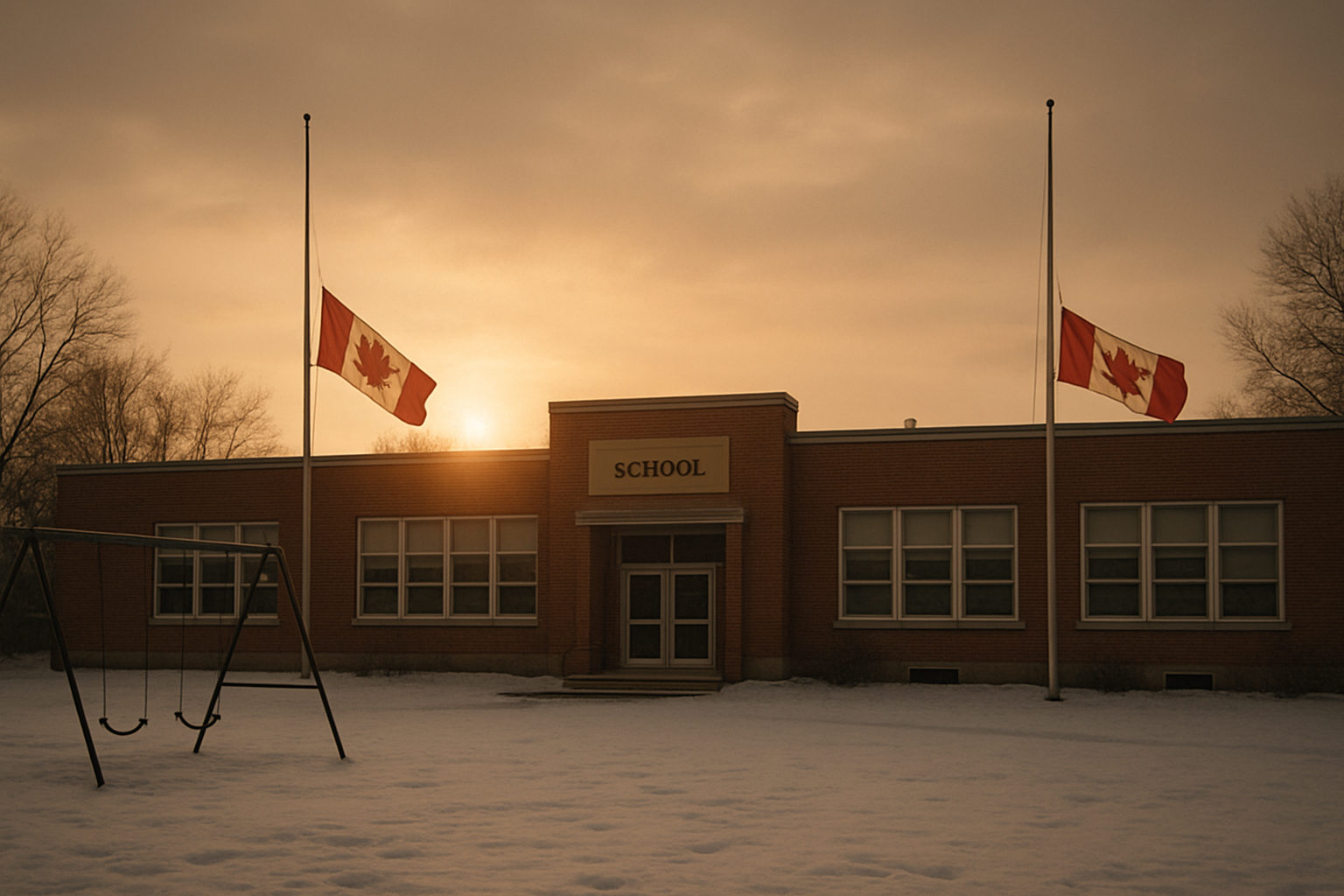
A 12-year-old girl is fighting for her life after heroically attempting to protect her classmates during the devastating mass shooting at Tumbler Ridge Secondary School, while another young victim, Paige Hoekstra, recovers well from surgery following the February 10-11 attack that shocked Canada.
The unnamed 12-year-old was gravely injured during the shooting while trying to shield other students from harm, according to family members who spoke to media outlets. She remains in critical condition as medical teams work around the clock to save her life. Her brave actions during the chaos exemplify the courage displayed by young people in the face of unthinkable horror.
"She was trying to protect her classmates," a relative told reporters, describing the girl's selfless actions during the attack that claimed eight lives before the shooter, 18-year-old Jesse Van Rootselaar, took her own life.
Victims and Recovery Updates
Another victim, Paige Hoekstra, is doing well after undergoing surgery and has issued a statement of resilience to her community. "I want to tell everyone that I am okay and I am recovering," she said, providing a ray of hope amid the overwhelming grief that has engulfed the small Peace River Regional District community of 2,400 residents.
The attack claimed the lives of five children aged 12 and 13 at the school, along with an educator. Two additional family members were killed at a nearby home before Van Rootselaar proceeded to the school. The sequence of events began at the family residence where the shooter killed her mother Jennifer Strang, 39, and an 11-year-old stepbrother.
Questions About Firearm Access
Disturbing revelations have emerged about the shooter's access to firearms, raising serious questions about Canada's "Red Flag" laws and their implementation. In August 2024, Van Rootselaar's mother posted a Facebook photo of rifles in a gun cabinet with the caption "Think it's time to take them out for some target practice."
Investigators are now examining why firearms that had been previously seized by police were returned to a household where someone with a documented history of mental illness lived. RCMP Deputy Commissioner Dwayne McDonald confirmed that Van Rootselaar had been apprehended "more than once" under the provincial Mental Health Act for psychiatric assessments.
"Many are asking why guns were returned to the home of someone with a history of mental illness, whom police apprehended multiple times as a potential threat to themselves or others."
— Investigation sources
Police had attended the family residence "on multiple occasions over the past several years" dealing with mental health concerns, yet despite these interventions, no clear motive has been established for the attack.
Community Response and Provincial Mourning
British Columbia Lieutenant-Governor Wendy Cocchia addressed the devastating impact during a somber Throne Speech dedicated to those "suffering unimaginable pain." The province has declared a day of mourning for the victims of what officials describe as one of the worst mass tragedies in Canadian history.
The remote mining community of Tumbler Ridge, known for its peaceful atmosphere in the heart of British Columbia's energy sector, has been forever changed by the violence. Memorial gatherings have begun across the town as residents struggle to comprehend how such horror could visit their tight-knit community.
RCMP response was swift, with officers arriving within minutes of the first reports. Van Rootselaar took her own life before police could apprehend her, ending the attack but leaving behind devastation that will take years to heal.
National Implications for Mental Health Policy
The tragedy has sparked urgent discussions about the effectiveness of Mental Health Act interventions when they lack long-term follow-up care. The case highlights the complex challenges faced by authorities in preventing violence by individuals known to police but not under active supervision.
Mental health experts point to systemic gaps in the transition from crisis intervention to sustained community-based care. While the Mental Health Act provides tools for emergency assessment and short-term intervention, critics argue the system lacks the resources and authority for effective long-term monitoring and support.
The incident demonstrates the need for comprehensive reforms that go beyond crisis response to include sustained mental health support, enhanced threat assessment protocols, and better coordination between educational institutions and law enforcement agencies.
Preventing Copycat Incidents
Authorities have issued warnings against the spread of misinformation in the aftermath of the attack, particularly false claims targeting the transgender community. Officials emphasize the importance of focusing on mental health system gaps rather than engaging in demographic targeting that could fuel further violence.
The RCMP has confirmed that Van Rootselaar acted alone and that there is no ongoing public threat to the community. A comprehensive investigation continues, involving forensic specialists and mental health experts examining potential systemic failures in the intervention process.
A Community's Path to Healing
The attack has left the nation "in shock" and is expected to prompt renewed examination of Canada's mental health intervention systems, particularly the critical transition from crisis care to long-term community support. The tragedy demonstrates the urgent need for comprehensive, community-based mental health support systems that extend far beyond emergency intervention capabilities.
As the 12-year-old hero continues her fight for life and the community begins the long process of healing, her courage serves as a powerful reminder of the resilience and selflessness that can emerge even in humanity's darkest moments. Her story, along with Paige Hoekstra's recovery, provides threads of hope that will help bind this shattered community back together.
The lasting impact of this tragedy will require years of counseling, trauma therapy, and sustained community commitment to healing. But the bravery shown by young people like the critically injured 12-year-old demonstrates that even in the face of unspeakable evil, the human spirit's capacity for protection and love endures.