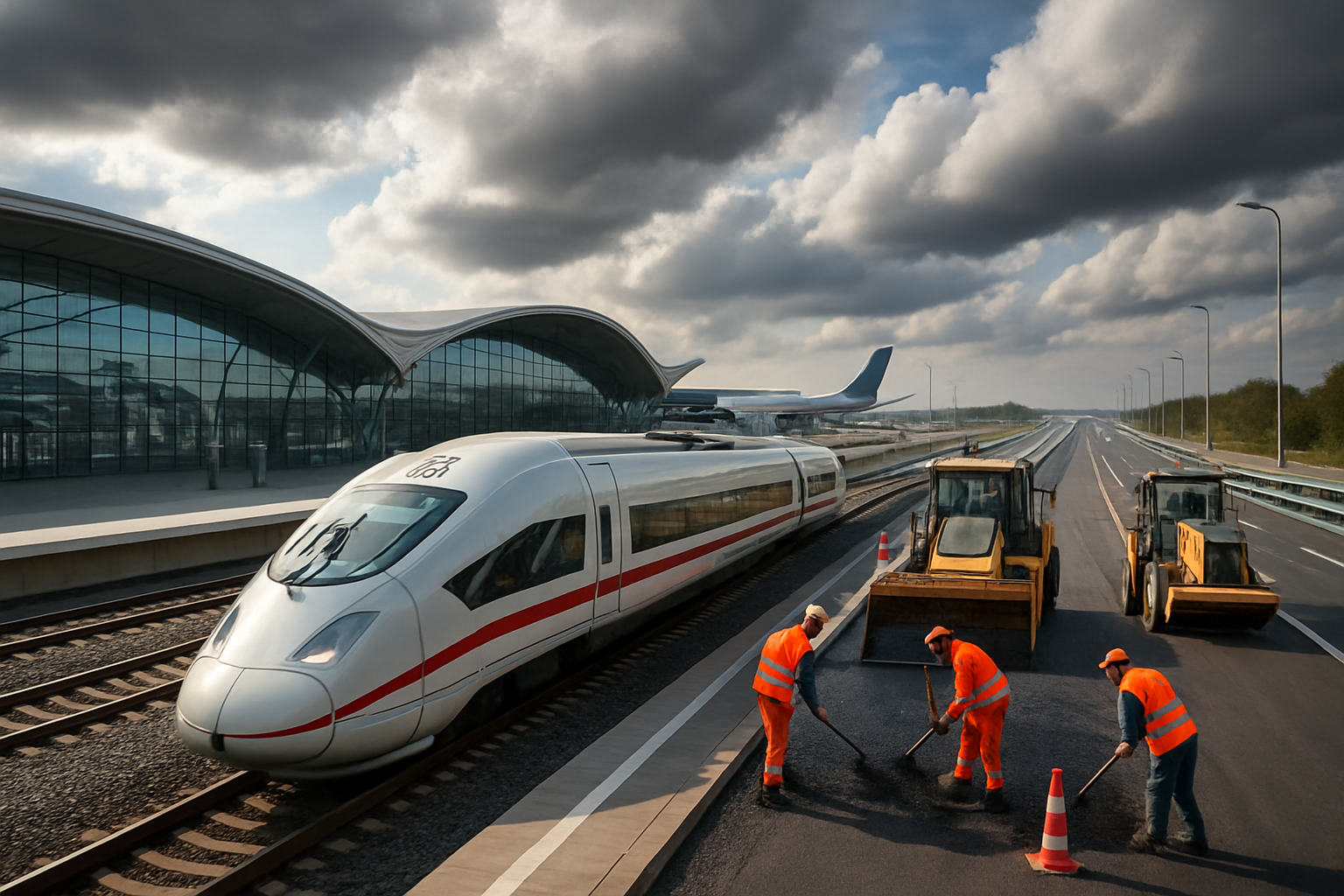
Transportation infrastructure across multiple continents is experiencing an unprecedented transformation as nations invest in high-speed rail networks, airport modernization, and automated passenger services that promise to revolutionize regional connectivity and economic development.
Major announcements from Turkey, Colombia, Latvia, and Slovakia this week underscore the global scope of transportation infrastructure investment, part of what analysts estimate as a $570+ billion worldwide infrastructure surge aimed at enhancing regional integration, climate resilience, and economic competitiveness.
Turkey Advances High-Speed Rail Revolution
Turkey unveiled ambitious plans for the Samsun-Trabzon high-speed rail project, a transformative infrastructure initiative that will dramatically reduce travel times across the country's Black Sea region. The project represents a significant expansion of Turkey's growing high-speed rail network, which has become a cornerstone of the nation's transportation modernization strategy.
The high-speed line will connect major population centers along Turkey's northern coast, supporting both domestic connectivity and broader regional integration objectives. Modern high-speed rail technology incorporates sophisticated digital monitoring systems, climate-resilient design elements, and energy-efficient operations that align with global sustainability standards.
Colombia Expands Aviation Connectivity
Colombia's aviation sector received a major boost with JetSMART's announcement of new operations in Bucaramanga, establishing the "city of parks" as a key regional aviation hub with enhanced connections to Bogotá. The new airline service, scheduled to begin June 4, 2026, represents growing confidence in Colombia's aviation market and commitment to expanding regional connectivity.
Bucaramanga's strategic positioning supports Colombia's broader objectives of strengthening domestic air transport networks and improving accessibility between major urban centers. The expansion aligns with Latin American aviation recovery trends and demonstrates the region's continued investment in transportation infrastructure despite global economic uncertainties.
Baltic Excellence in Airport Customer Experience
RIX Riga Airport achieved international recognition by receiving the 2025 ASQ Customer Experience Award from the Airports Council International (ACI), earning the designation as "Best Airport at Departures" in its category. The award reflects Latvia's commitment to operational excellence and passenger service innovation in the highly competitive European aviation market.
Riga Airport's recognition demonstrates how focused investment in customer experience technologies, streamlined operations, and staff training can differentiate airports in an increasingly connected world. The achievement positions Latvia as a model for airport management excellence within the broader European aviation ecosystem.
Slovakia Modernizes Transportation Infrastructure
Slovakia announced comprehensive transportation improvements across multiple fronts, with Bratislava's main railway station receiving a long-awaited overhaul that includes new facilities, modernized amenities, and enhanced passenger services. The reconstruction plan encompasses toilets, commercial spaces, and a modern glass façade as part of delayed but strategically important station improvements.
Simultaneously, Bratislava's M. R. Štefánik Airport introduced self-service baggage kiosks for Ryanair passengers, streamlining check-in processes and reducing wait times. These automated systems represent the aviation industry's broader trend toward digitization and passenger self-service technologies that improve operational efficiency while enhancing customer experience.

Technology Integration and Smart Infrastructure
The latest developments reflect sophisticated integration of digital technologies from initial design phases, incorporating real-time monitoring, predictive maintenance capabilities, and automated passenger services. Modern transportation projects increasingly emphasize smart infrastructure elements that enable adaptive management and operational optimization.
Self-service baggage systems, automated check-in processes, and digital passenger information networks represent the evolution toward seamless travel experiences that reduce human touchpoints while maintaining service quality. These technological advances particularly gained importance during post-pandemic recovery as airports and railways adapt to changing passenger expectations and operational requirements.
Regional Integration and Economic Impact
Transportation infrastructure investments create substantial economic multiplier effects through enhanced connectivity, reduced logistics costs, and improved market access. High-speed rail networks support regional economic integration by connecting business centers, while airport improvements attract tourism and business travel that stimulate local economies.
The projects demonstrate nations' recognition of transportation infrastructure as strategic assets for international competitiveness rather than simple physical facilities. Modern connectivity requirements demand sophisticated planning that addresses climate adaptation, technological integration, and long-term sustainability alongside immediate mobility needs.
"These infrastructure developments represent fundamental shifts toward viewing transportation networks as strategic foundations for economic competitiveness, climate adaptation, and international cooperation."
— Infrastructure Development Analysis, February 2026
Climate Adaptation and Sustainability
Contemporary transportation infrastructure incorporates climate resilience as a central design requirement, reflecting lessons learned from extreme weather events that have tested European transportation networks throughout 2026. Projects include enhanced drainage systems, weather-resistant materials, and backup power capabilities designed for future climate conditions rather than historical patterns.
Sustainable transportation initiatives emphasize environmental protection alongside economic development, incorporating renewable energy systems, energy recovery technologies, and emissions reduction measures. The integration of environmental sustainability with operational efficiency demonstrates the evolution of infrastructure planning toward comprehensive approaches that balance multiple objectives.
International Cooperation and Financing Models
Modern infrastructure projects increasingly rely on sophisticated financing approaches combining public investment, private sector expertise, and international cooperation. The diversity of funding mechanisms enables developing and developed nations to undertake previously impossible projects while maintaining local ownership and control.
Cross-border transportation initiatives require enhanced coordination between national transportation authorities, standardized safety protocols, and compatible technical systems. Success depends on diplomatic cooperation, shared standards, and mutual recognition of safety and operational certifications across jurisdictions.
Future Development Trends
February 2026 transportation developments establish important precedents for global infrastructure policy that will influence transportation strategies for decades ahead. The convergence of technological advancement, environmental awareness, and international cooperation creates new development models that prioritize sustainability alongside economic growth.
Implementation challenges include workforce coordination, environmental compliance, and maintaining existing services during construction phases. Success factors encompass comprehensive planning, international cooperation frameworks, adaptive management approaches, and balanced consideration of immediate needs with long-term sustainability objectives.
The unprecedented scale of global transportation infrastructure investment represents a watershed moment in international development cooperation, demonstrating coordinated recognition of connectivity as essential for post-pandemic recovery, climate adaptation, and sustainable economic development in an increasingly interconnected world.