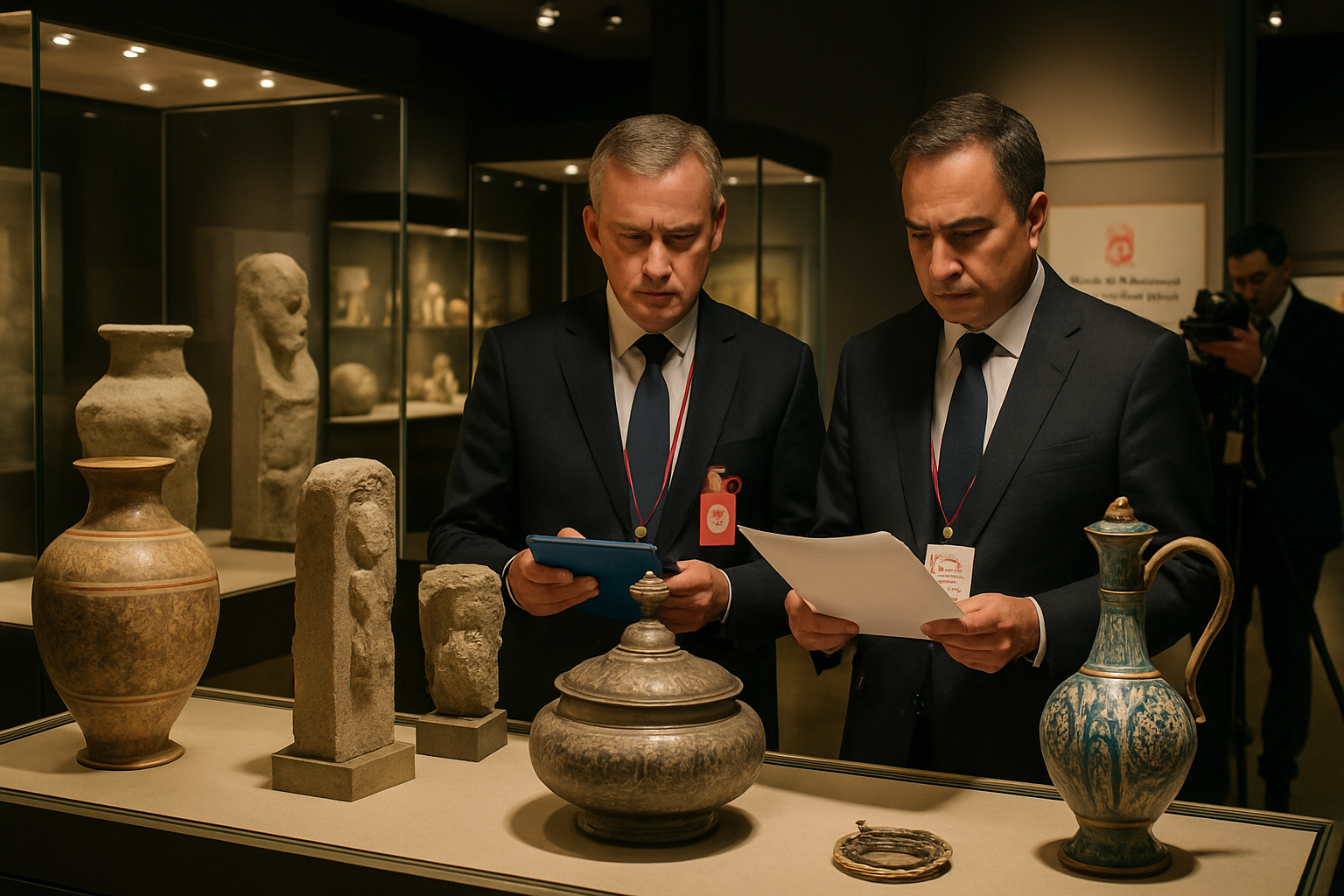
Turkey achieved a remarkable milestone in cultural heritage recovery in 2025, successfully repatriating 180 artifacts that were pillaged from the country over decades, utilizing cutting-edge artificial intelligence technology to accelerate the identification and recovery process despite resistance from some foreign museums and authorities.
Zeynep Boz, a key figure in Turkey's heritage recovery efforts, recalls the pivotal moment when years of dedicated work culminated in the digital confirmation of another precious artifact's return to Turkish soil. This achievement represents not just a numerical victory, but a fundamental shift in how nations approach the recovery of their stolen cultural patrimony in an increasingly interconnected world.
Revolutionary AI Integration in Heritage Recovery
Turkey's 2025 success story is particularly significant for its integration of artificial intelligence into the traditionally painstaking process of cultural heritage recovery. The country has developed sophisticated digital tracking systems that can identify Turkish artifacts in international auction houses, private collections, and museums worldwide with unprecedented accuracy and speed.
This technological approach represents a maturation of heritage recovery methods, moving beyond the traditional diplomatic channels that often took decades to yield results. The AI systems can analyze visual patterns, historical documentation, and provenance records to establish clear ownership claims, providing Turkish authorities with compelling evidence to support repatriation demands.
The success comes amid what experts have termed the "February 2026 Cultural Renaissance" – an unprecedented period of international coordination in cultural preservation activities. This broader movement has seen major institutions like the Metropolitan Museum voluntarily returning artifacts, France repatriating sacred items to Ivory Coast, and the Netherlands proactively investigating and returning looted pieces to Egypt.
Global Context of Cultural Repatriation
Turkey's achievements align with a remarkable transformation in international museum ethics and cultural diplomacy. The past two years have witnessed an extraordinary shift from acquisition-based museum approaches to partnership-based cultural stewardship, with institutions worldwide recognizing that ethical practices strengthen rather than weaken international cultural relationships.
The Metropolitan Museum of Art's 2024 repatriation of 16 ancient Khmer sculptures to Cambodia and Thailand, including the famous "Golden Boy" Standing Shiva, established new protocols that museums globally are now adopting. Similarly, the Vatican's recent return of five sacred cultural items to First Nations communities after over 100 years represents the growing momentum behind voluntary cultural restitution.
These developments demonstrate that Turkey's success is part of a broader paradigm shift where cultural heritage is increasingly viewed as shared human patrimony requiring collaborative stewardship rather than individual ownership. The technology-enhanced approach pioneered by Turkey provides a template for other nations seeking to recover their cultural treasures.
Overcoming Institutional Resistance
Despite the growing international consensus around cultural repatriation, Turkey's efforts have encountered significant resistance from certain museums and authorities abroad. This resistance often stems from concerns about setting precedents that could lead to widespread demands for artifact returns, potentially emptying Western museums of their most prized collections.
However, Turkey's approach demonstrates that cultural repatriation can be the beginning of enhanced international partnerships rather than the end of museum involvement. The country has pioneered collaborative models where returned artifacts become the foundation for ongoing cultural exchanges, joint research projects, and educational partnerships that benefit both the source country and the former holding institution.
The AI-enhanced documentation process has proven particularly effective in addressing institutional concerns about provenance and authenticity. By providing comprehensive digital records and scientific analysis, Turkey can offer irrefutable evidence of ownership claims while simultaneously creating permanent archives that enable global access to cultural knowledge.
Economic and Diplomatic Impact
The successful repatriation of 180 artifacts has generated substantial economic benefits for Turkey through enhanced cultural tourism, international media attention, and strengthened diplomatic relationships. Countries that pursue proactive restitution policies consistently report improved international standing and increased tourism revenue.
The returned artifacts have been integrated into Turkey's cultural institutions using sophisticated conservation techniques that ensure their preservation while maximizing public accessibility. Advanced climate control systems, digital documentation, and virtual reality applications enable broader engagement while protecting the physical artifacts from environmental damage.
This comprehensive approach positions Turkey as a leader in 21st-century cultural stewardship, demonstrating how nations can balance heritage preservation with contemporary presentation methods. The success has attracted international attention from other countries seeking to recover their own cultural patrimony, positioning Turkey as a knowledge-sharing partner in global heritage protection efforts.
Technology-Tradition Synthesis
Turkey's heritage recovery program exemplifies the successful integration of cutting-edge technology with traditional cultural values. The AI systems enhance rather than replace human expertise, combining sophisticated analytical capabilities with deep knowledge of Turkish cultural history and artistic traditions.
The technological approach has enabled Turkey to scale its recovery efforts beyond what would be possible through purely diplomatic channels. Where traditional methods might take years to identify and pursue individual artifacts, the AI systems can process vast databases of international auction records, museum catalogs, and private collection inventories to identify potential Turkish cultural property.
This efficiency gain has practical implications for the broader cultural heritage protection movement, as it demonstrates how technology can democratize access to sophisticated investigative tools previously available only to the wealthiest institutions. The Turkish model provides a blueprint for developing nations seeking to recover their cultural patrimony without relying solely on expensive legal proceedings.
International Cooperation Framework
Turkey's success has been facilitated by growing international cooperation in cultural heritage protection. The country has developed strong working relationships with law enforcement agencies, auction houses, and cultural institutions worldwide, creating networks that facilitate rapid response to suspected trafficking of Turkish cultural property.
The collaborative approach extends beyond simple artifact recovery to encompass capacity building, knowledge sharing, and joint research initiatives. Turkey has begun offering training programs to other nations seeking to develop their own heritage recovery capabilities, contributing to a global network of expertise in cultural protection.
This international dimension is particularly important given that cultural trafficking networks operate across borders, requiring coordinated response mechanisms that transcend individual national efforts. Turkey's experience demonstrates that successful heritage recovery requires sustained engagement with international partners and a willingness to share both successes and challenges.
Future Implications and Challenges
The 180 artifacts recovered in 2025 represent just the beginning of Turkey's enhanced heritage recovery efforts. The AI systems continue to evolve, incorporating new analytical capabilities and expanding their coverage of international cultural markets. The success has also generated increased funding for heritage protection, enabling Turkey to expand both its technological capabilities and its diplomatic outreach.
However, significant challenges remain. Climate change poses increasing threats to cultural heritage sites and artifacts, requiring adaptive conservation strategies that can respond to rapidly changing environmental conditions. The ongoing global conflicts have created new opportunities for cultural trafficking, as instability often leads to increased looting and illegal export of cultural property.
The success of Turkey's program also raises important questions about the future of international cultural collections. As more nations develop sophisticated recovery capabilities, the traditional model of encyclopedic museums may need to evolve toward more collaborative approaches that balance global accessibility with respect for cultural ownership rights.
Building Sustainable Cultural Diplomacy
Turkey's approach to heritage recovery emphasizes long-term relationship building rather than adversarial confrontation. The country has worked to position cultural repatriation as an opportunity for enhanced cooperation, offering partner institutions opportunities for ongoing collaboration, joint exhibitions, and scholarly exchange programs.
This diplomatic approach has proven more effective than purely legal strategies, as it addresses the underlying concerns of holding institutions while providing face-saving mechanisms that encourage voluntary cooperation. The success has generated goodwill that extends beyond cultural affairs to broader diplomatic and economic relationships.
The model demonstrates that cultural heritage protection can serve as a bridge between nations, creating shared interests in preservation and education that transcend political boundaries. As global challenges like climate change and technological disruption require unprecedented international cooperation, cultural heritage provides a foundation for building the trust and collaboration necessary for effective collective action.