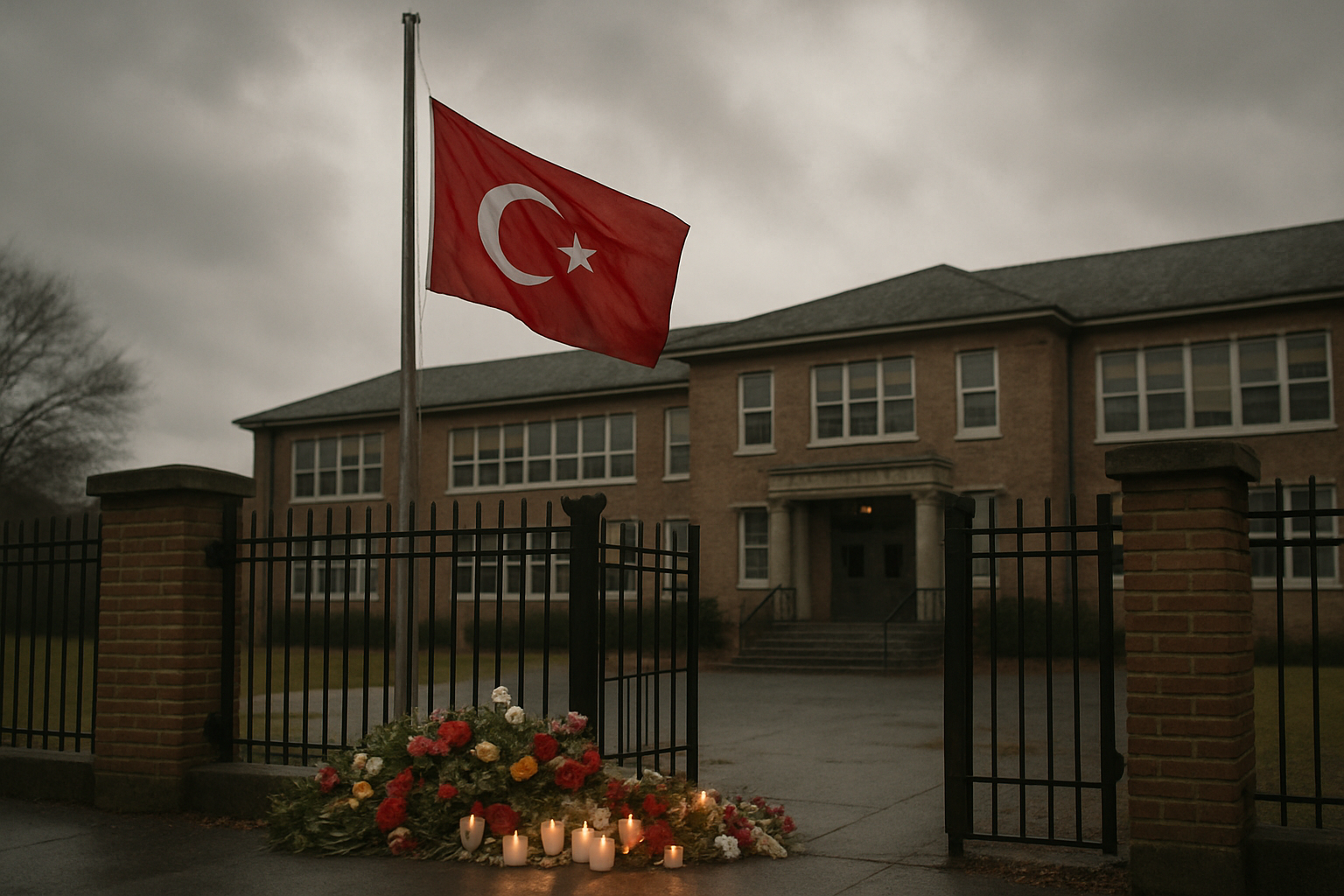
Turkey has been shaken by two devastating school shootings occurring within 48 hours, the latest claiming four lives at a middle school in the southeastern province of Kahramanmaras on Wednesday, April 15, 2026.
The attack at Ayşer Çalık Middle School began when an eighth-grade student, approximately 13-14 years old, opened fire on two classrooms filled with fifth-grade students aged 10-11. The assault left three students and one teacher dead, while at least 20 others were wounded, with four victims in critical condition requiring emergency surgery.
Governor Mükerrem Ünlüer confirmed that the shooter arrived at school with five firearms and seven magazines, believed to belong to his father, a retired police officer. The student targeted younger children in what officials described as indiscriminate shooting before taking his own life as law enforcement arrived.
Second Tragedy in Two Days
This horrific incident occurred just one day after another school shooting rocked Turkey. On Tuesday, April 14, 2026, a 19-year-old former student named Ömer Ket opened fire at Ahmet Koyuncu Vocational and Technical Anatolian High School in Siverek district, Şanlıurfa province. That attack wounded at least 16 people, including 10 students, 4 teachers, 1 police officer, and 1 school employee, before the gunman killed himself.
The back-to-back shootings represent an unprecedented crisis for Turkey, where such incidents have historically been extremely rare. Until this week, school shootings were virtually unknown in the country, making these tragedies particularly shocking for Turkish society.
The Kahramanmaras Attack
Eyewitness accounts describe scenes of chaos as the attack unfolded at Ayşer Çalık Middle School. Students fled the building in terror, with some jumping from windows to escape the violence. The shooter, described as an eighth-grade student, had concealed the weapons in his backpack before systematically targeting two classrooms where younger students were attending classes.
"An eighth-grade student came with five weapons and seven magazines – which we believe to be his former police officer father's – in his bag, entered two classrooms where fifth grade students were, causing deaths and injuries indiscriminately," Governor Ünlüer told reporters at the scene.
The age gap between the perpetrator and his victims – with the shooter being 13-14 years old targeting children aged 10-11 – has particularly disturbed investigators and the public alike. The deliberate targeting of younger, more vulnerable students suggests a level of premeditation that authorities are still working to understand.
Emergency Response and Investigation
Turkish security forces responded swiftly to the emergency, establishing a security perimeter around the school and evacuating remaining students and staff. Emergency medical teams transported the wounded to local hospitals, where medical professionals worked frantically to save lives.
The investigation has focused on how the teenager gained access to multiple firearms despite being a minor. The weapons are believed to have belonged to his father, a retired police officer, raising questions about firearm storage protocols in households with documented access to weapons.
Psychological support teams have been mobilized to assist the traumatized school community, recognizing that the impact of such violence extends far beyond the immediate victims to affect entire families and neighborhoods.
Global Context of School Violence
These tragic events occur against the backdrop of a broader global crisis in educational safety. Throughout 2026, schools worldwide have faced an unprecedented wave of violence, from the devastating Tumbler Ridge shooting in Canada that killed eight people in February, to multiple knife attacks in French schools, and various incidents across Europe, Asia, and the Americas.
International experts have identified what they term a "2026 Educational Safety Crisis," with research showing that 96% of children aged 10-15 use social media, with 70% exposed to harmful content and over 50% experiencing cyberbullying. These digital influences, combined with inadequate mental health support systems and various social stressors, have created a perfect storm affecting young people globally.
Turkey's Response
The Turkish government has promised a comprehensive investigation into both incidents, with particular attention to understanding how such attacks could occur in a country where school violence has been virtually unknown. Education Minister officials are reviewing security protocols across all educational institutions and examining the adequacy of mental health support systems for students.
Enhanced security measures are being implemented at schools nationwide, though officials emphasize the need to balance safety concerns with maintaining an educational environment conducive to learning and development.
Mental Health Implications
Mental health professionals are highlighting the critical importance of early intervention and support systems for young people showing signs of distress or behavioral changes. The fact that both perpetrators were students – one current, one former – has raised questions about the adequacy of school-based mental health resources and the ability of educational institutions to identify and assist troubled youth.
The involvement of a 13-14 year old in such extreme violence has particularly concerned child psychologists, who note that this age group is typically still developing emotional regulation skills and understanding of consequences. The systematic nature of the planning – bringing multiple weapons and targeting specific classrooms – suggests a level of premeditation that experts say requires urgent study.
Community Impact
Both affected communities are grappling with profound trauma and loss. In Kahramanmaras, families are mourning the loss of young children who left home for what should have been a normal school day. The teacher who died was remembered as a dedicated educator who had devoted their life to nurturing young minds.
The broader Turkish society is also struggling to comprehend how such violence could occur in their schools. Many families are reconsidering their sense of security and questioning whether adequate protections exist for their children in educational settings.
International Solidarity and Lessons
The international community has expressed solidarity with Turkey during this difficult time, with many nations sharing their own experiences in dealing with school violence prevention and response. Countries that have faced similar tragedies are offering expertise in areas such as threat assessment, crisis intervention, and community healing.
Educational experts emphasize that effective prevention requires comprehensive approaches that address multiple factors simultaneously: enhanced mental health support, early intervention programs, improved threat assessment capabilities, and community engagement initiatives that can identify and assist at-risk individuals before violence occurs.
Path Forward
As Turkey grapples with these unprecedented tragedies, authorities and communities are focused on both immediate needs – supporting survivors and families while conducting thorough investigations – and longer-term prevention strategies. This includes examining international best practices for school safety, mental health support, and violence prevention.
The coming weeks and months will be crucial for Turkey as it works to understand how these attacks occurred and implements measures to prevent similar tragedies. The focus remains on healing the affected communities while building systems that can better protect all students in their educational environments.
These tragic events serve as a stark reminder of the importance of comprehensive approaches to youth mental health, school safety, and violence prevention. As Turkey joins the unfortunate ranks of nations that have experienced school shootings, the international community continues to search for effective solutions to protect the most vulnerable members of society – children in their places of learning.