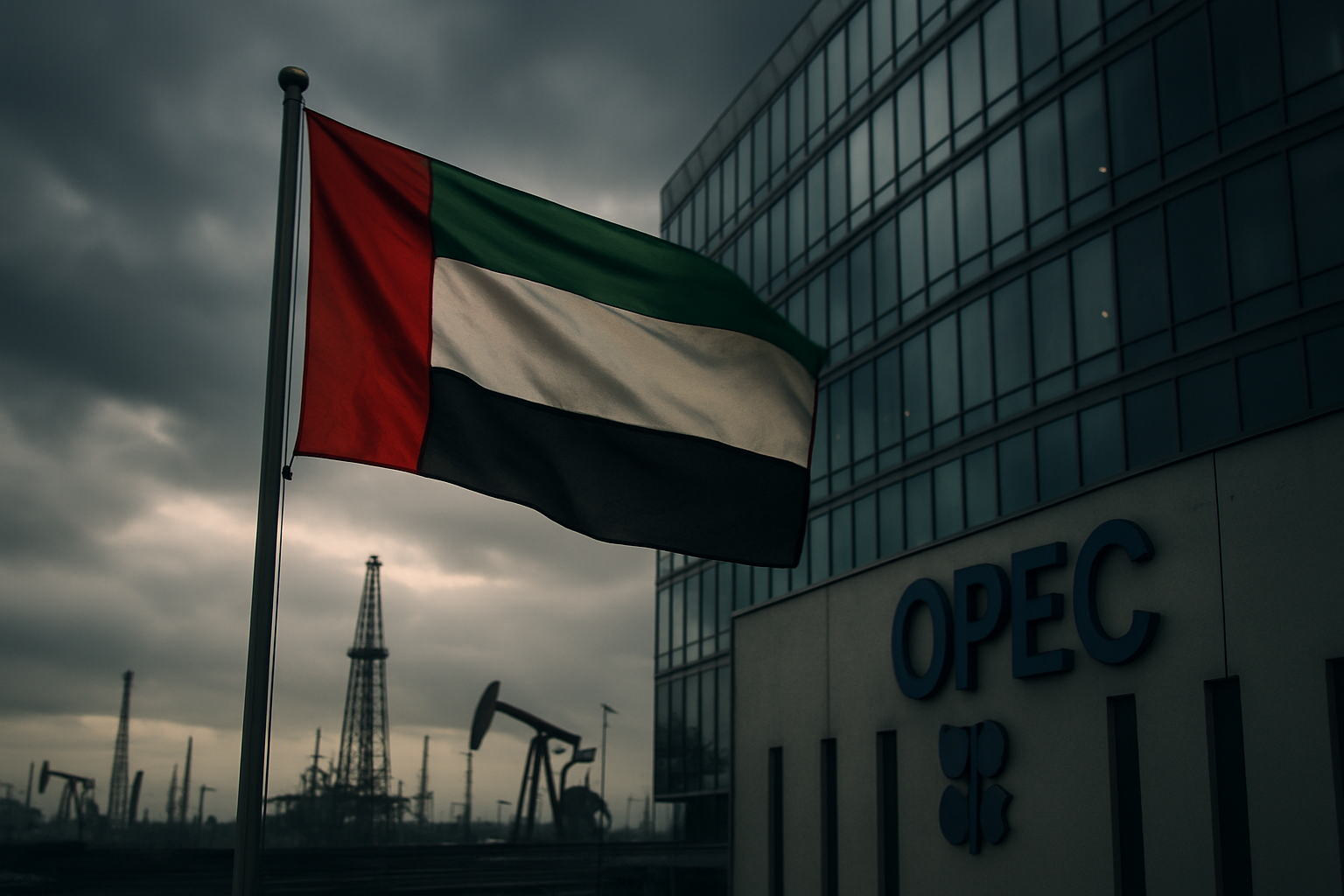
The United Arab Emirates delivered a historic blow to the global oil industry on Tuesday, announcing its withdrawal from OPEC and OPEC+ effective May 1, 2026, ending nearly six decades of membership in the influential energy cartel.
The shocking decision comes at a critical moment as the Middle East faces its worst energy crisis in decades, with Iran's blockade of the Strait of Hormuz affecting 40% of global oil transit and oil prices surging past $100 per barrel.
UAE Energy Minister Suhail Mohamed al-Mazrouei confirmed the decision follows "a comprehensive review" of the country's production policy and capacity, emphasizing that the move was based on "national interests and a commitment to help meet global market demand."
Strategic Independence Amid Crisis
The UAE's exit represents the third-largest oil producer leaving OPEC, fundamentally altering the organization's dynamics. According to multiple sources, the UAE did not consult with other OPEC members, including Saudi Arabia, before making the announcement.
"This is a policy decision, it has been done after a careful look at current and future policies related to level of production," al-Mazrouei told Reuters, emphasizing the UAE's desire for greater autonomy over its energy strategy.
The timing is particularly significant given the ongoing regional tensions. The UAE has faced direct attacks from Iran during the current Middle East crisis, with one civilian killed in Abu Dhabi from missile debris and operational disruptions at Dubai's international hub.
OPEC's Fracturing Unity
The decision severely weakens OPEC, which has traditionally maintained a united front despite internal disagreements over production quotas and geopolitical issues. The UAE joined OPEC in 1967 through Abu Dhabi and remained when the federation was formed in 1971.
"The loss of the UAE, a longstanding OPEC member, could create disarray and weaken the group, which has usually sought to show a united front despite internal disagreements."
— CBC News Analysis
The withdrawal comes as OPEC+ members have struggled to coordinate responses to the current energy crisis. Despite recent production increases of 206,000 barrels per day, the measures have proven insufficient to offset the massive shipping disruptions caused by Iran's Strait of Hormuz closure.
Regional Coalition Under Strain
The UAE's decision reflects broader strains within the unprecedented Middle Eastern coalition that had supported diplomatic solutions to the Iran crisis. The country has been particularly vocal in criticizing the lack of coordinated responses to Iranian attacks on Gulf energy infrastructure.
As reported in Spanish media, the UAE has accused neighboring Arab states of failing to coordinate positions toward Iran's attacks on regional energy infrastructure, leading to tensions within the previously unified regional approach.
Egyptian President Abdel Fattah al-Sisi had previously condemned attacks on "sisterly Arab countries," warning of "comprehensive chaos" spreading throughout the region. The UAE's OPEC exit suggests these concerns have not been adequately addressed through existing multilateral frameworks.
Global Energy Market Impact
The announcement immediately impacted global energy markets, which are already experiencing severe volatility due to the ongoing Iran crisis. Oil prices have reached historic levels, with Brent crude peaking at $119.50 and WTI jumping 18.98% in single-day trading.
The International Energy Agency has deployed its largest strategic petroleum reserve release in 50 years, releasing 400 million barrels from 32 countries to stabilize markets. However, with major shipping companies like Maersk and MSC suspending Persian Gulf operations, over 150 tankers remain stranded with billions of dollars in cargo.
Qatar's Energy Minister Saad Al Kaabi has warned that Gulf states may be forced to declare force majeure "within weeks" if oil approaches $150 per barrel, which could "bring down the economies of the world."
Production Flexibility Goals
The UAE's Ministry of Infrastructure stated that the withdrawal "aligns with the UAE's long-term strategic and economic vision and the development of its energy sector, including accelerating investment in local energy production."
Industry analysts suggest the UAE has long expressed frustration with OPEC production quotas that limited its ability to capitalize on expanded production capacity. Having invested heavily in expanding energy production in recent years, the UAE now seeks greater flexibility to respond to market conditions independently.
The decision represents a fundamental shift toward market-driven production policies rather than cartel coordination, potentially inspiring similar moves by other producers facing domestic economic pressures.
Geopolitical Implications
The withdrawal occurs against the backdrop of the most dangerous international crisis since the Cold War, with the collapse of US-Iran nuclear diplomacy leading to military confrontation and regional instability.
Despite Geneva talks achieving "broad agreement on guiding principles" earlier this year, fundamental disagreements over Iran's ballistic missiles and regional proxy support proved insurmountable. The subsequent outbreak of conflict has seen Iran's Revolutionary Guard declare "no red lines remain" in targeting Gulf energy infrastructure.
The UAE has been directly affected by this escalation, facing over 1,400 missiles and drones and suffering civilian casualties. The country's OPEC exit may reflect broader frustration with multilateral organizations' inability to provide effective security frameworks during the crisis.
Historical Context and Precedent
This marks the most significant departure from OPEC since Qatar's 2019 withdrawal, but the UAE's exit carries far greater implications given its position as the cartel's third-largest producer. The move follows years of tension over production policies and represents the culmination of growing assertiveness in UAE energy policy.
The decision comes as the global energy architecture faces fundamental transformation, with the current crisis exposing dangerous over-dependence on strategic chokepoints like the Strait of Hormuz. The UAE's independent approach may signal broader shifts toward supply diversification and reduced reliance on multilateral energy coordination mechanisms.
Industry Response and Future Outlook
Energy analyst Samuel Ciszuk described the current situation as "the most severe energy security crisis in decades, with single-chokepoint vulnerabilities completely exposed." The UAE's decision to pursue independent production policies amid this crisis suggests a strategic calculation that national interests supersede collective cartel coordination.
The withdrawal becomes effective just as the region faces continued instability. Aviation networks remain severely disrupted with over 18,000 flights cancelled worldwide, Dubai International Airport shut down from missile damage, and natural gas prices exploding 24% in Europe and 78% in the US.
For Saudi Arabia, OPEC's de facto leader, the UAE's departure represents a significant challenge to the organization's influence and cohesion. The Kingdom now faces the prospect of maintaining cartel discipline with reduced collective production capacity and a crucial regional partner operating outside OPEC frameworks.
Long-term Strategic Transformation
The UAE's exit reflects broader themes in 21st-century energy security, where traditional multilateral frameworks face challenges from rapid geopolitical changes and supply chain vulnerabilities. The current crisis has demonstrated how quickly regional conflicts can disrupt global energy markets, encouraging individual producers to prioritize flexibility over coordination.
This template-setting decision may influence other OPEC members facing domestic economic pressures or security concerns about regional stability. The move represents a fundamental shift toward market-driven energy policies and away from cartel-coordinated production strategies that have defined global oil markets for decades.
As the Middle East crisis continues to unfold, with nuclear diplomacy collapsed and military confrontation ongoing, the UAE's independent energy strategy positions the country to respond more nimbly to rapidly changing market conditions and regional security challenges that traditional multilateral frameworks have struggled to address effectively.