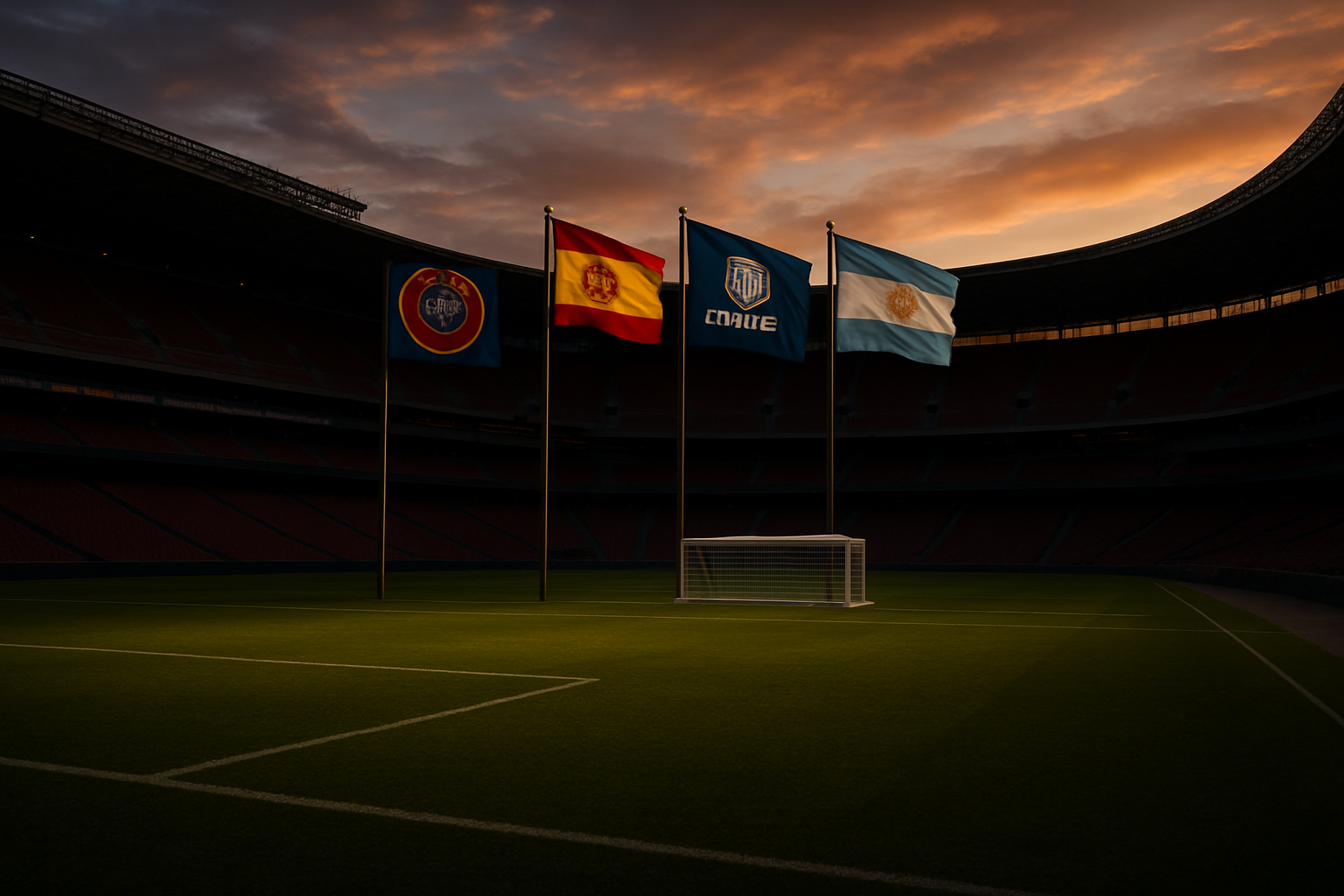
UEFA announced the official cancellation of the Finalissima match between Spain and Argentina, scheduled for March 27 in Qatar, citing the escalating Middle East conflict and security concerns that have gripped the region since early March 2026.
The prestigious match between the European champions Spain and Copa América winners Argentina was set to take place at Lusail Stadium, near Doha, offering football fans worldwide the opportunity to witness a clash between superstars Lionel Messi and Lamine Yamal.
Security Concerns Force Historic Cancellation
UEFA's decision comes amid the most dangerous international crisis since the Cold War, with ongoing conflicts affecting countries throughout the Gulf region. The organization held extensive discussions with Qatari authorities before concluding that the match could not proceed due to the "current political situation" in the region.
"With a firm determination to save this important encounter, and despite the understandable difficulties of relocating a party of such importance with an extremely reduced deadline, UEFA explored other viable alternatives, but finally each one of them resulted unacceptable for the Argentine Football Association," UEFA stated in their official announcement.
The cancellation represents an unprecedented disruption to international football, highlighting how rapidly regional conflicts can affect global sporting events. The U.S.-Israeli strikes on Iran have affected countries throughout the Gulf, disrupting travel in some of the world's busiest transit hubs and forcing several sporting events to be cancelled due to safety concerns.
Failed Attempts to Relocate
UEFA explored three alternative options to salvage the marquee fixture, but each proposal was ultimately rejected by the Argentine Football Association. The confederation made significant efforts to find suitable alternative venues, recognizing the global significance of bringing together the champions of Europe and South America.
The inability to reach consensus on alternative arrangements underscores the complex logistical challenges facing international sporting events during periods of geopolitical instability. With Qatar's status as a major aviation hub compromised by regional conflicts, organizing a match of this caliber became increasingly difficult.
Broader Impact on Regional Sports
The Finalissima cancellation is part of a wider disruption to sporting events across the Middle East. The Asian Football Confederation has suspended multiple Gulf region matches due to security concerns, while Formula 1 has cancelled both the Bahrain Grand Prix and Saudi Arabian Grand Prix - marking the first race cancellations due to regional conflict in F1's modern history.
Football superstar Cristiano Ronaldo left Saudi Arabia for Madrid after the AFC suspended Gulf matches, demonstrating how the crisis has forced even high-profile athletes to evacuate the region. These developments highlight the vulnerability of international sporting investments during regional instability.
Aviation Crisis Compounds Challenges
The sports cancellations occur against the backdrop of an unprecedented global aviation crisis, with over 18,000 flights cancelled worldwide - the most extensive disruption since COVID-19. Eight Middle Eastern countries have simultaneously closed their airspace, including Iran, Iraq, Israel, UAE, Qatar, Syria, Kuwait, and Bahrain.
Dubai International Airport, the world's busiest with over 86 million passengers annually, remains shut down due to missile damage. Major carriers including Emirates, Air France-KLM, and Wizz Air have suspended operations indefinitely, affecting hundreds of thousands of passengers globally and making international travel to the region virtually impossible.
Economic and Diplomatic Context
The sporting disruptions reflect broader economic turmoil caused by the Middle East crisis. Oil prices have surged past $80 per barrel as Iran declared the Strait of Hormuz "unsafe," effectively blocking 40% of global oil transit. Natural gas prices have increased by 24% in Europe and 78% in the United States.
The crisis stems from the complete collapse of U.S.-Iran nuclear negotiations despite achieving a "broad agreement on guiding principles" - the most progress since the JCPOA collapse in 2018. Iran maintained ballistic missiles and regional proxies as "red lines" while the U.S. demanded comprehensive agreements including arms control and human rights provisions.
Historical Significance for Football
The Finalissima represents one of football's most prestigious friendly matches, traditionally pitting the champions of UEFA and CONMEBOL against each other. The cancellation marks the first time in the competition's modern format that geopolitical events have prevented the match from taking place.
For Spain, the defending European champions, the match represented an opportunity to further establish their dominance on the international stage. Argentina, fresh from their Copa América triumph, would have provided a formidable test featuring captain Lionel Messi in what could have been one of his final appearances in such a high-profile friendly.
Wider Implications for International Sport
The cancellation sets a concerning precedent for international sporting events in an increasingly unstable geopolitical environment. With Qatar having successfully hosted the 2022 World Cup and preparing for future major tournaments, the inability to guarantee safety for even a single match raises questions about the vulnerability of sport to regional conflicts.
The decision also demonstrates the complex relationship between sports organizations, host nations, and participating countries when it comes to risk assessment. UEFA's willingness to explore alternatives shows the commercial and sporting value of such matches, while the Argentine Football Association's rejection of alternative venues highlights the specific requirements and standards expected for elite international football.
Looking Forward
UEFA has not announced plans to reschedule the Finalissima, and with the ongoing nature of the Middle East crisis, the future of international sporting events in the region remains uncertain. The organization expressed "great disappointment" that circumstances and timing denied fans the opportunity to witness this prestigious encounter.
The cancellation serves as a stark reminder that even the most anticipated sporting events are not immune to the realities of international relations and regional security concerns. As the situation in the Middle East continues to evolve, the sporting world watches carefully to understand how future events may be affected by geopolitical instability.
The unprecedented nature of these cancellations - from football's Finalissima to Formula 1's Gulf races - may establish new frameworks for how international sports organizations assess and respond to security risks in volatile regions. This crisis represents a template-setting moment that could influence sporting event planning and risk management for decades to come.