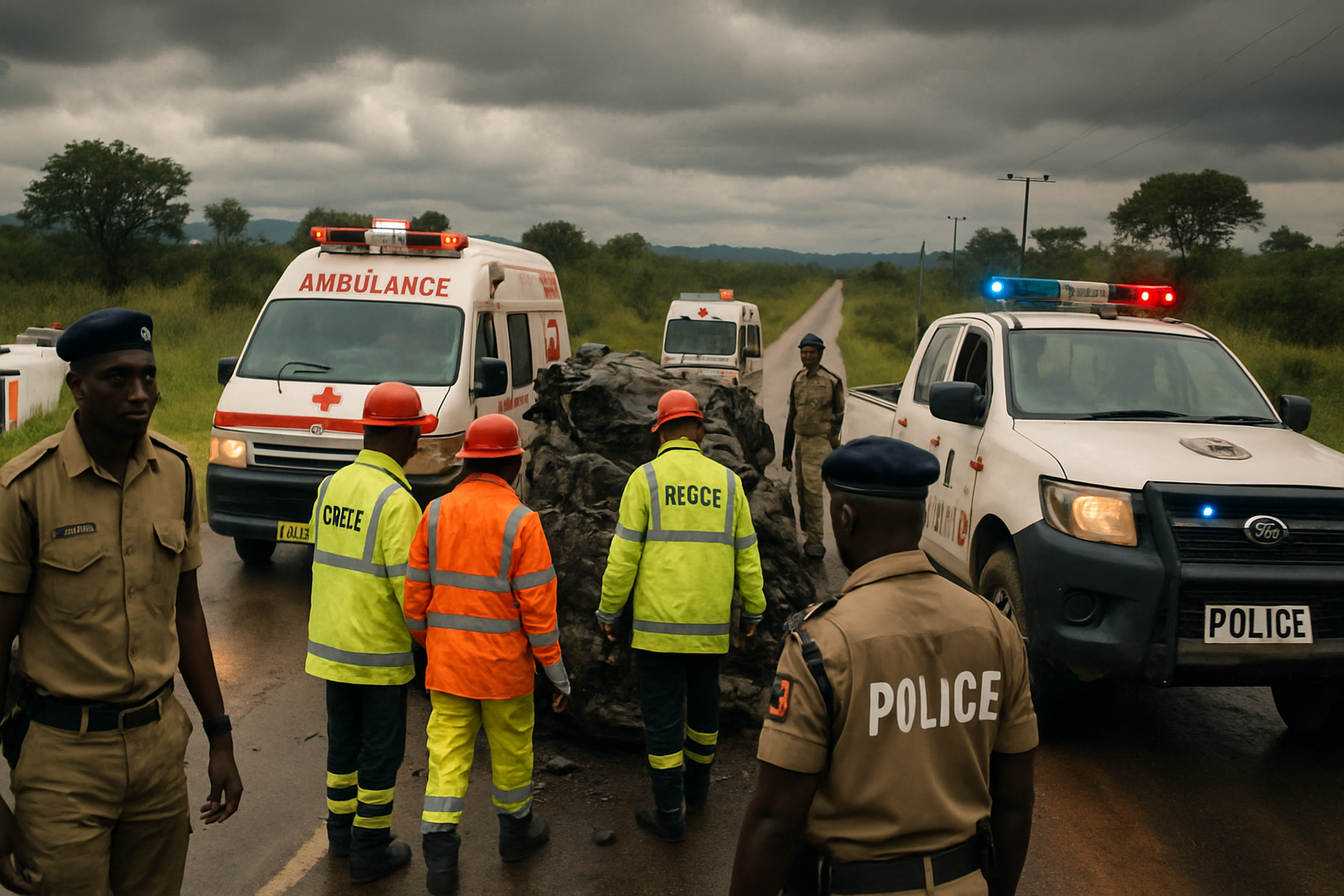
Six people were killed and seven others critically injured in a head-on collision that occurred early Sunday morning in Kyankwanzi District, central Uganda, according to police reports.
The fatal accident represents the latest in a concerning pattern of road safety incidents across Uganda, highlighting persistent challenges in the country's transportation infrastructure and safety protocols. Police have launched a comprehensive investigation into the circumstances surrounding the crash, which occurred during the early morning hours when visibility conditions can be particularly challenging for drivers.
Accident Details and Emergency Response
The head-on collision involved multiple vehicles in the central Uganda district, though specific details about the types of vehicles involved and the exact cause of the accident remain under investigation. All seven critically injured victims have been transported to medical facilities for urgent treatment, with their conditions being closely monitored by healthcare professionals.
Emergency services responded swiftly to the scene, coordinating rescue operations and providing immediate medical assistance to survivors. The tragic incident adds to Uganda's growing road safety concerns, as the country continues to grapple with traffic accidents that claim hundreds of lives annually.
Uganda's Road Safety Crisis in Context
This latest tragedy comes amid a broader pattern of transportation safety challenges across East Africa and globally. According to recent data analyzed by transportation safety experts, road accidents remain a leading cause of preventable deaths in developing nations, with factors including inadequate infrastructure, enforcement gaps, and challenging weather conditions contributing to the crisis.
The incident echoes similar challenges documented across multiple countries throughout 2026, including recent major accidents in Egypt where 18 fishermen were killed in a multi-vehicle crash, and various incidents across European networks affected by extreme weather conditions. Motorcyclists represent a particularly vulnerable group, accounting for 41% of all traffic fatalities despite comprising a smaller percentage of road users.
Government Response and Separate Security Advisory
While authorities focus on investigating the Kyankwanzi accident, the Ugandan government has separately issued a significant security advisory concerning its citizens abroad. The government has urged Ugandans currently in Iran to evacuate "through any means possible" following escalating military tensions in the Middle East.
The evacuation recommendation comes as part of a broader international response to deteriorating security conditions in the region, with multiple nations advising their citizens to leave Iran due to safety concerns. This advisory is unrelated to the domestic road safety incident but represents another pressing concern for Ugandan authorities managing multiple simultaneous challenges.
Infrastructure and Safety Challenges
Uganda's road infrastructure faces ongoing development challenges, with many highways and rural roads requiring significant upgrades to meet modern safety standards. The country has been investing in transportation infrastructure improvements, but the scale of needed enhancements continues to outpace available resources.
Transportation safety experts emphasize that preventing such tragedies requires a comprehensive approach including improved road design, enhanced vehicle safety standards, better driver education programs, and more rigorous enforcement of traffic regulations. The economic impact of road accidents extends far beyond the immediate human cost, affecting families, communities, and national productivity.
Regional Transportation Safety Patterns
The Kyankwanzi accident occurs within a broader context of transportation safety challenges affecting multiple African nations. Recent incidents across the continent have highlighted common challenges including inadequate emergency response infrastructure, limited access to trauma care in rural areas, and the need for enhanced cooperation between regional governments on safety standards.
Success models from countries like Sweden, which has implemented comprehensive "Vision Zero" approaches to eliminate traffic deaths, demonstrate that significant improvements are possible through sustained political commitment and comprehensive safety system reforms. These approaches emphasize infrastructure design that accounts for human error, rather than expecting perfect driver behavior.
Moving Forward: Prevention and Response
As investigators work to determine the specific factors that contributed to Sunday's tragic collision, the incident serves as a stark reminder of the urgent need for continued investment in road safety measures. This includes not only physical infrastructure improvements but also enhanced emergency response capabilities, driver education initiatives, and evidence-based policy reforms.
The families of the six victims will receive support from local authorities and community organizations as they cope with this devastating loss. The seven individuals currently receiving critical care represent the immediate priority for medical professionals working to prevent additional fatalities from this single incident.
The investigation into the Kyankwanzi collision is expected to provide valuable insights that could help prevent similar tragedies in the future. Meanwhile, the government's separate advisory regarding Iran demonstrates the complex range of safety concerns that national authorities must address simultaneously in an increasingly interconnected world.