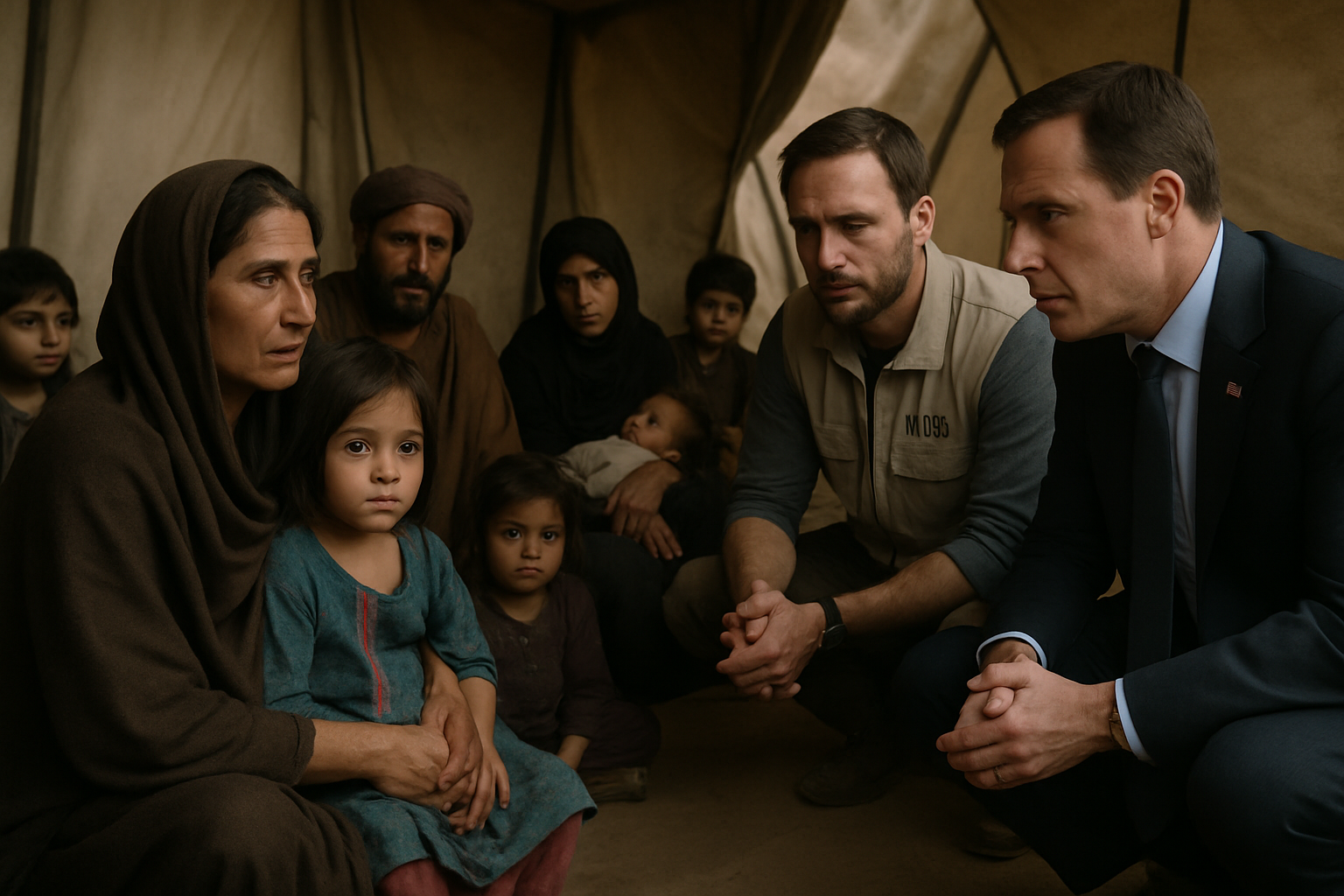
The UK is considering the possibility of returning rejected Afghan asylum seekers to Taliban-controlled Afghanistan, while reports emerge of potential US-linked arrangements to relocate Afghan nationals from Qatar to the Democratic Republic of Congo, marking a critical juncture in global refugee policy amid mounting international pressure to resolve the Afghan displacement crisis.
UK Interior Minister Yvette Cooper has not ruled out the possibility of returning rejected Afghan asylum seekers to Afghanistan under Taliban control, stating the issue is under review. Cooper indicated that London is closely monitoring discussions between Taliban officials and other international actors regarding the safe return of Afghan nationals.
The statement comes as the UK has implemented increasingly restrictive immigration policies, including the first-ever "emergency brake" visa restrictions in March 2026 that suspended study visas for Afghanistan, Cameroon, Myanmar, and Sudan nationals. The policy cited a 470% surge in asylum applications from students of these countries between 2021-2025, with government data showing 39% of the UK's 100,000 asylum claimers in 2025 initially arriving via legal routes.
Taliban Response to Congo Relocation Reports
Simultaneously, Afghanistan's Taliban-led foreign ministry has responded to reports that Afghan nationals in Qatar could be relocated to the Democratic Republic of Congo as part of US-linked arrangements. Taliban spokesman Abdul Qahar Balkhi emphasized that Afghans in Qatar can return home safely or travel through legal channels, rejecting the necessity for third-country relocations.
The response highlights the complex diplomatic dynamics surrounding Afghan refugees, as the Taliban seeks to position itself as capable of ensuring the safe return of its nationals while international partners remain skeptical about security guarantees under Taliban governance.
"Afghan nationals have the option to return home safely through proper procedures or continue their journey through legal migration channels,"
— Abdul Qahar Balkhi, Taliban Foreign Ministry Spokesman
Broader Context of Afghan Displacement Crisis
The developments occur against the backdrop of a massive displacement crisis affecting millions of Afghans since the Taliban's return to power in August 2021. According to UN data, 88% of Afghan female-headed households are unable to meet minimum living requirements, creating desperate conditions that drive continued migration attempts.
The situation has been further complicated by the ongoing Pakistan-Afghanistan border crisis, which has intensified since February 2026. The conflict has resulted in 289 civilian casualties and displaced over 16,000 families across 10 provinces, according to UN documentation. Pakistan has expelled over 146,000 Afghans in 2026 alone through systematic police raids and forced returns, representing a dramatic acceleration of deportation policies.
European nations have similarly tightened their approach to Afghan refugees. The European Parliament approved historic asylum changes in February 2026, allowing third-country deportations through a center-right/far-right alliance. Greece is leading a coalition with Germany, Netherlands, Austria, and Denmark to establish African external processing centers for rejected asylum seekers.
UK Immigration Policy Transformation
The UK's consideration of Afghan returns represents the latest evolution in a comprehensive post-Brexit immigration overhaul. Beyond the emergency visa brake, the government has implemented Electronic Travel Authorization requirements for 85 countries, 30-month refugee protection limits replacing indefinite status, and enhanced family visa restrictions.
Home Secretary Shabana Mahmood has defended the approach as targeting system abuse rather than restricting humanitarian protection, maintaining the UK's commitment to genuine refugees while ensuring legal migration channels serve their intended purposes. However, the policies have disrupted billions in international student revenue and drawn criticism from universities and civil rights organizations.
The broader European trend toward restrictive policies reflects mounting public pressure, with 89% of Europeans demanding greater EU unity while 72% express border security concerns, according to Eurobarometer polling data. This shift represents a fundamental departure from the protection-based principles that dominated post-World War II refugee frameworks.
International Mediation Efforts
The refugee relocation discussions occur as China mediates high-level talks between Afghanistan and Pakistan in Urumqi, representing Beijing's direct involvement in managing regional crises affecting its Belt and Road investments. Chinese Foreign Minister Wang Yi has deployed special envoys to shuttle between Kabul and Islamabad, seeking confidence-building measures including trade route reopening.
Previous international mediation efforts have achieved mixed results. Saudi Arabia, Qatar, and Turkey successfully orchestrated a temporary Eid ceasefire between Pakistan and Afghanistan in March 2026 through faith-based diplomacy, but the truce was immediately violated, highlighting the fragility of diplomatic solutions to underlying security challenges.
Humanitarian Implications and Legal Challenges
Human rights organizations are preparing comprehensive legal challenges to what they view as violations of international law principles, particularly the non-refoulement obligation that prohibits returns to countries where persecution risks exist. The Committee to Protect Journalists has specifically highlighted the dangers facing Afghan media workers, with Pakistan increasingly targeting Afghan journalists for detention and deportation despite initial sanctuary provisions.
The humanitarian implications extend beyond immediate safety concerns. Afghanistan's healthcare system has collapsed, with the World Health Organization forced to deliver emergency oxygen to only 23 hospitals, while hundreds of health centers have closed due to security and funding concerns.
"The international community faces a critical test of whether governments will uphold press freedom and humanitarian commitments or allow economic and political considerations to override protection obligations,"
— Committee to Protect Journalists Statement
Climate and Economic Pressures
The Afghan displacement crisis is unfolding amid unprecedented climate pressures, with March 2026 marking the 19th consecutive month of global temperatures exceeding 1.5°C above pre-industrial levels—the longest sustained warming streak in recorded history. Climate experts warn that current asylum categories are inadequate for climate-induced displacement, adding new complexity to already strained systems.
Economic contradictions compound the challenge. Germany's Bertelsmann Foundation calculates the country requires 288,000 workers annually to prevent a 10% workforce contraction by 2040, while simultaneously implementing restrictive immigration policies. Similar labor shortages affect agriculture, construction, and services across Europe, creating tension between migration restrictions and economic needs.
Future Policy Implications
The convergence of UK return considerations and Qatar-Congo relocation reports represents a template-setting moment for 21st-century migration management. Success or failure in balancing humanitarian commitments with security objectives will influence international migration policy development for decades ahead.
Enhanced cooperation mechanisms now allow smaller EU member groups to advance restrictive policies without unanimity, potentially fragmenting unified humanitarian approaches. This departure from traditional consensus-building could fundamentally alter how democratic societies manage complex migration flows while maintaining founding humanitarian values.
The individual human costs mounting behind these policy frameworks require urgent comprehensive reform that addresses root causes while preserving fundamental protections. As climate displacement intensifies and conflicts persist, the window for effective international coordination may be narrowing, making current policy decisions increasingly consequential for global stability and human rights protection.
Looking Ahead
The Taliban government continues to maintain that "the path of talks remains open" for resolving refugee issues through diplomatic engagement, while European nations show little indication of softening their restrictive approaches. The Chinese-mediated talks between Afghanistan and Pakistan may provide insights into regional cooperation mechanisms, but underlying security challenges and territorial disputes remain unresolved.
As the UK reviews its Afghan return policies and international partners explore complex relocation arrangements, the fundamental question remains whether democratic institutions can maintain their humanitarian founding principles while adapting to contemporary migration realities. The decisions made in 2026 will likely determine the international community's approach to refugee protection for years to come.