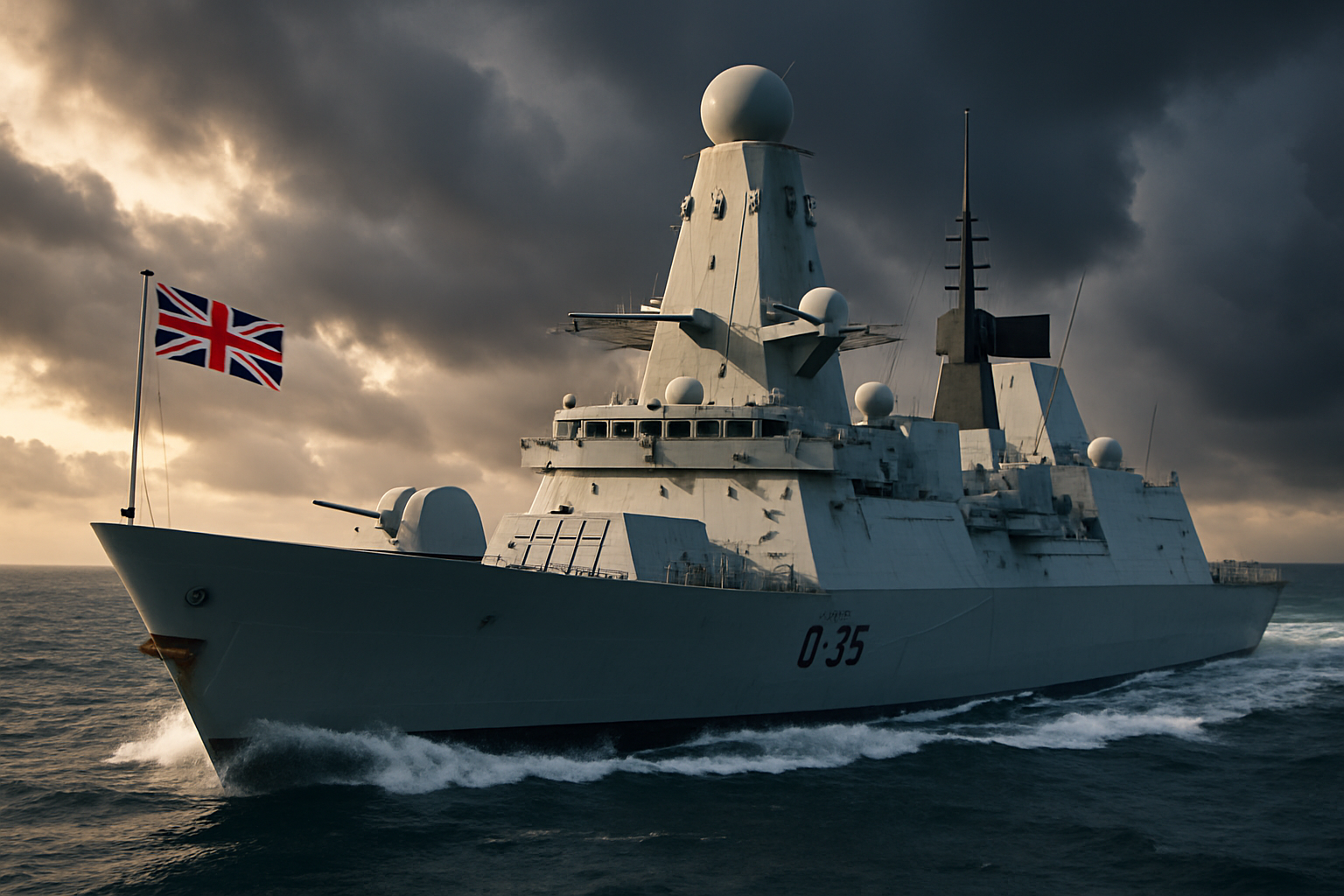
The United Kingdom has authorized its armed forces to board Russian oil tankers operating in British territorial waters, marking a significant escalation in maritime enforcement against Moscow's sanctions-evading shadow fleet operations. Concurrently, the government announced new procurement guidelines prioritizing British suppliers for contracts in sectors deemed vital to national security, including shipbuilding, steel, artificial intelligence, and energy infrastructure.
Prime Minister Keir Starmer approved the tougher action against Russia's shadow fleet of oil vessels attempting to evade international sanctions, according to Downing Street officials. The Royal Navy has previously collaborated with allies in tracking sanctioned Russian vessels, including assisting French naval forces in boarding a sanctioned tanker in the Mediterranean last week.
Naval Operations Against Shadow Fleet
The authorization comes as part of Britain's broader strategy to counter what intelligence sources estimate to be over 600 vessels worldwide operating under false documentation and concealed ownership to circumvent international sanctions. German investigations have revealed that approximately one-third of these vessels operate without correct flag state authorization, creating enforcement opportunities for allied naval forces.
The Royal Navy's Type 45 destroyer HMS Dragon, equipped with Sea Viper missile systems and AW159 Wildcat helicopters with counter-drone capabilities, has been at the forefront of these operations. The vessel has been protecting British personnel and assets, including the 3,000 UK personnel stationed at RAF Akrotiri and Dhekelia bases in Cyprus, following recent Iranian drone attacks on European territory.
"This decisive action demonstrates our commitment to enforcing international law and protecting British interests against those who would circumvent legitimate maritime regulations."
— UK Defence Ministry spokesperson
Procurement Policy Transformation
Parallel to the maritime enforcement measures, the UK government has announced comprehensive changes to public procurement policies. The new guidance specifically marks shipbuilding, steel production, artificial intelligence, and energy infrastructure as sectors vital to national security, requiring departments to prioritize British suppliers or provide detailed justification for sourcing from overseas.
The policy shift has been accelerated by ongoing conflicts in the Middle East that have highlighted the fragility of global supply chains. Government departments will be required to use British steel or justify overseas sourcing under the new rules, representing a significant departure from previous open-market approaches.
Strategic Industrial Priorities
The designation of key sectors reflects Britain's broader strategic autonomy objectives. The emphasis on shipbuilding comes as the Royal Navy has expanded its operational commitments, including the deployment of multiple vessels to protect Cyprus in response to Iranian attacks on European territory. Steel production priorities align with defence manufacturing needs, while AI and energy infrastructure designations recognize these sectors' critical importance to national resilience.
These procurement changes mirror similar initiatives across Europe, where nations are increasingly prioritizing domestic suppliers for security-sensitive contracts. Germany recently surpassed China as the world's fourth-largest arms exporter, marking a shift from historically restrictive export policies, while Nordic countries have tripled their arms imports as part of comprehensive defence transformations.
Regional Security Context
The UK's enhanced security measures occur within a rapidly evolving regional security environment. British forces have been integral to NATO's Arctic Sentry mission, with the UK doubling its troop presence in Norway from 1,000 to 2,000 soldiers over the next three years. This represents the most significant British Arctic deployment since the Cold War, responding to increased Russian military activity in polar regions.
Defence Secretary John Healey has confirmed that Iranian forces have adopted Russian low-altitude flight patterns developed during the Ukraine conflict, making interception more challenging. This intelligence sharing between Moscow and Tehran has prompted enhanced coordination among NATO allies, with Britain playing a leading role in developing countermeasures.
Operational Readiness Enhancement
The UK has also publicly acknowledged the existence of four operational maintenance, repair, and overhaul (MRO) facilities in Ukraine servicing Western-supplied equipment, with a fifth facility planned. This represents the first public confirmation of such operations on Ukrainian soil and demonstrates Britain's long-term commitment to Ukrainian military modernization beyond the current conflict.
These facilities enable rapid repair turnaround for Western weapons systems without the need to transport equipment to neighboring countries, significantly improving operational readiness rates. The MRO infrastructure represents an evolution from traditional arms supply models to comprehensive military support frameworks that maintain distinctions between support roles and direct combat involvement.
Alliance Coordination and Burden-Sharing
Britain's enhanced security posture reflects broader NATO burden-sharing evolution, with European allies assuming greater leadership roles in regional operations. The unprecedented four-nation European coordination (UK, France, Greece, and Spain) in response to Iranian attacks on Cyprus demonstrates the alliance's capacity for rapid collective defense responses outside traditional NATO frameworks.
The UK's naval operations complement French deployment of the aircraft carrier Charles de Gaulle from the Baltic to the Mediterranean, Greek F-16 fighter jets and frigates, and Spanish air defense frigates. This multi-layered defense architecture creates comprehensive protection for European territories while establishing precedents for future alliance coordination.
"These coordinated responses demonstrate that attacks on any European territory will be met with unified alliance action, regardless of geographical boundaries."
— NATO Strategic Communications official
Technology Integration and Innovation
Advanced technology integration has become central to British defence capabilities. Enhanced satellite tracking, AI-powered monitoring, and real-time analytics enable more effective surveillance coordination across jurisdictions. However, coordination challenges remain when operations span multiple national boundaries and legal frameworks.
The UK's emphasis on domestic AI capabilities in defence contracts reflects concerns about technological sovereignty in an era of great power competition. Similar technology integration is occurring across NATO allies, with standardization efforts ensuring interoperability while maintaining competitive advantages in critical areas.
Economic and Industrial Implications
The shift toward prioritizing British suppliers is expected to create substantial employment in defence-related sectors while strengthening domestic industrial capabilities. This approach mirrors Canada's Defence Industrial Strategy, which aims to shift 70% of defence contracts to domestic companies while creating 125,000 jobs over a decade.
However, critics warn that prioritizing domestic suppliers could lead to higher costs and potential delays if British companies lack the capacity or expertise of international competitors. The government maintains that national security considerations justify these trade-offs, particularly given recent disruptions to global supply chains.
Energy Security Priorities
The inclusion of energy infrastructure in priority procurement categories reflects lessons learned from recent global energy crises. Oil prices have surged past $100 per barrel following Iranian closure of the Strait of Hormuz, which handles 40% of global oil transit. The UK's emphasis on domestic energy infrastructure aims to reduce vulnerabilities to geopolitical supply disruptions.
Natural gas prices have increased by 24% in Europe and 78% in the United States due to regional conflicts, highlighting the strategic importance of energy security infrastructure. The UK's procurement priorities aim to ensure greater resilience in critical energy systems while reducing dependence on potentially unreliable foreign suppliers.
International Legal Framework
The authorization to board Russian tankers operates within established international maritime law, specifically targeting vessels engaged in sanctions evasion. Legal experts confirm that such operations against shadow fleet vessels constitute legitimate enforcement of international sanctions when conducted in territorial waters or with proper legal authority.
The comprehensive EU 20th sanctions package has added 43 shadow fleet vessels to blacklists while implementing a complete ban on maritime services for Russian crude oil exports, including insurance, maintenance, port access, and technical support. Britain's naval enforcement operations complement these broader international efforts to close sanctions loopholes.
Precedent-Setting Operations
Belgium's recent seizure of a Russian shadow fleet tanker in the North Sea, conducted with French support and broader G7/Nordic/Baltic coordination, established important precedents for international cooperation in maritime enforcement. The UK's operations build upon this template while extending enforcement capabilities to British territorial waters.
These coordinated enforcement actions demonstrate that sophisticated sanctions violations can be countered through sustained international cooperation, despite the complexity of tracking vessels using false documentation and multiple flag state registrations.
Future Strategic Implications
The UK's enhanced defence and security measures represent a comprehensive response to evolving threats in an increasingly multipolar security environment. The combination of naval enforcement operations and strategic procurement policies demonstrates Britain's commitment to maintaining both immediate operational capabilities and long-term industrial resilience.
Success in these initiatives could influence other NATO allies to adopt similar approaches, potentially reshaping alliance-wide procurement and enforcement strategies. However, effectiveness will ultimately depend on sustained political commitment, adequate resource allocation, and continued international coordination as security challenges continue to evolve.
The integration of economic security considerations with traditional defence priorities reflects recognition that 21st-century conflicts increasingly blur distinctions between military and economic warfare. Britain's response provides a template for democratic nations seeking to maintain strategic autonomy while preserving alliance relationships and international law commitments.