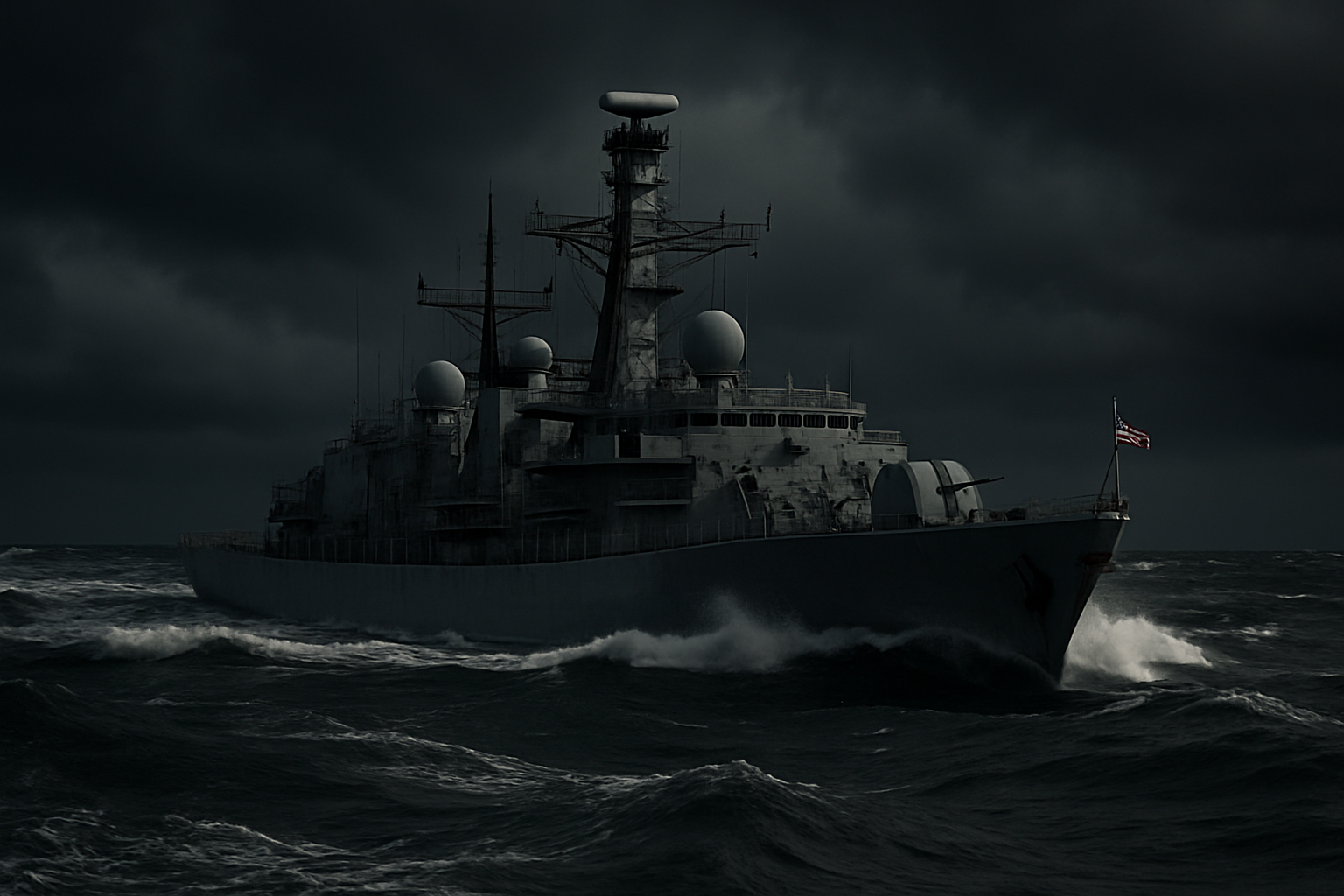
British Defence Secretary John Healey has revealed that UK naval forces successfully foiled a sophisticated Russian submarine operation that spent approximately one month surveying undersea cables and pipelines in British waters, marking a significant escalation in submarine warfare tensions in the North Sea.
In a press conference at Downing Street on Thursday, April 9, 2026, Healey disclosed that British forces, working alongside Norwegian allies, tracked and deterred three Russian submarines engaged in what he described as "malign activity" near critical underwater infrastructure. The operation represents one of the most serious submarine confrontations in British waters since the Cold War.
Direct Warning to Putin
Defence Secretary Healey delivered an unusually direct message to Russian President Vladimir Putin during the announcement: "To President Putin, I say 'We see you. We see your activity over our cables and our pipelines, and you should know that any attempt to damage them will not be tolerated and will have serious consequences.'"
The Defence Secretary emphasized that British armed forces "left them in no doubt that they were being monitored, that their movements were not covert, as President Putin planned, and that their attempt" to conduct surveillance operations had been detected and countered.
Healey confirmed that the Russian submarines have now departed British waters and headed north, with no signs of damage to underwater infrastructure. The public disclosure of the operation was intended to demonstrate to Moscow that their activities had been fully detected and tracked.
Norwegian Cooperation and NATO Response
The operation showcased unprecedented UK-Norwegian naval cooperation in the face of Russian submarine threats. Norwegian Defence Minister Tore O. Sandvik confirmed that Norway participated in the coordinated military operation, deploying P-8 Poseidon maritime patrol aircraft and naval frigates alongside British forces.
"The last few weeks, Norway has participated in a coordinated military operation with our allies. We have used maritime patrol aircraft P-8 and a frigate as participants in this activity"
— Tore O. Sandvik, Norwegian Defence Minister
Sandvik characterized the Norwegian involvement as "both deterrence and defense," emphasizing that "Norway threatens no one" while making clear that such operations represent a "clear marking" toward Russia about the consequences of threatening critical infrastructure.
The coordinated response demonstrates the effectiveness of NATO's Arctic Sentry mission, which has enhanced intelligence sharing, satellite surveillance, and maritime patrols across the North Atlantic region since its launch earlier this year.
Submarine Fleet Composition and Capabilities
According to Norwegian sources, the Russian operation involved one attack submarine and two intelligence-gathering submarines, representing a sophisticated multi-vessel surveillance mission. The submarines were capable of conducting detailed mapping of undersea cable routes and pipeline locations that are vital to European energy security and global communications.
British intelligence sources confirmed that the submarines spent approximately one month in the region, suggesting a comprehensive surveying operation rather than routine transit. The extended presence indicates the strategic importance Russia places on understanding and potentially threatening Western underwater infrastructure.
The presence of both attack and intelligence-gathering submarines suggests Russia was conducting both reconnaissance and preparing potential contingency operations against critical infrastructure that supports NATO communications and European energy supplies.
Critical Infrastructure Vulnerability
The Russian submarine activity focused on areas containing vital undersea cables that carry internet traffic between Europe and North America, as well as energy pipelines crucial to European energy security. These underwater networks represent critical vulnerabilities in Western infrastructure, carrying an estimated 95% of global internet communications.
Recent incidents across the Baltic Sea region have highlighted the vulnerability of such infrastructure. In March 2026, Russian drones struck energy facilities in Estonia and Latvia, while underwater cable sabotage has been reported across the Nordic region, demonstrating a pattern of Russian interest in disrupting critical infrastructure.
The North Sea contains numerous oil and gas pipelines connecting Norwegian energy fields to European markets, making them strategically vital for European energy independence from Russian supplies. Any damage to these systems would have immediate economic and security implications across the continent.
Escalating Regional Tensions
This submarine confrontation occurs amid broader escalation of Russian military activity in the North Atlantic and Arctic regions. Intelligence assessments indicate a 23% increase in Russian military reconnaissance operations since Finland and Sweden joined NATO, fundamentally altering the strategic balance in the region.
The timing of the submarine operation coincides with other provocative Russian activities across Northern Europe. Recent weeks have seen systematic GPS jamming affecting civilian and military navigation, drone incursions near NATO facilities, and increased nuclear rhetoric from Moscow.
Norwegian researcher Magnus Håkenstad has warned that Norway must prepare for the possibility of war within years, while Lithuanian intelligence services predict Russia could be ready for "limited military conflict" within 3-5 years if current tensions continue to escalate.
Enhanced UK-Norwegian Defense Partnership
The successful counter-submarine operation highlights the deepening defense partnership between the UK and Norway. Earlier this year, the UK announced plans to double its troop presence in Norway from 1,000 to 2,000 soldiers over the next three years as part of enhanced Arctic security measures.
This deployment represents a shift from training-focused presence to permanent enhanced deployment, reflecting the changed security environment following Russia's invasion of Ukraine and subsequent military modernization efforts in the Arctic region.
British forces will play a central role in NATO's Arctic Sentry force, which represents the alliance's most comprehensive Arctic security response since the Cold War. The mission encompasses specialized equipment for extreme conditions, enhanced intelligence sharing, and coordinated response capabilities across the vital Arctic waterways.
Technology and Intelligence Warfare
The successful detection and tracking of the Russian submarines demonstrates advanced British and Norwegian surveillance capabilities, including satellite tracking, AI-powered monitoring systems, and real-time analytics that enable effective maritime domain awareness in challenging North Sea conditions.
The operation required sophisticated intelligence coordination across multiple platforms, including P-8 Poseidon maritime patrol aircraft, naval vessels equipped with advanced sonar systems, and shore-based monitoring stations capable of tracking submarine movements across vast ocean areas.
British intelligence capabilities have been enhanced through lessons learned from supporting Ukrainian operations, including the establishment of multiple maintenance, repair, and overhaul facilities that service Western military equipment, demonstrating the evolution of modern defense cooperation.
International Law and Maritime Boundaries
The Russian submarine operation raises complex questions about international maritime law and territorial waters. While submarines have the right of innocent passage through territorial waters, extended loitering near critical infrastructure suggests activities beyond legitimate transit rights.
The British response was carefully calibrated to demonstrate resolve while avoiding escalation. By publicly revealing the operation only after the submarines had departed, the UK signaled both its surveillance capabilities and its restraint in managing the confrontation.
Legal experts note that the monitoring and deterrence activities conducted by British and Norwegian forces represent legitimate defense of territorial sovereignty and critical national infrastructure within established international legal frameworks.
Strategic Implications for European Security
The submarine confrontation represents a watershed moment in European maritime security, demonstrating that regional conflicts and great power competition extend far beyond traditional geographic boundaries. The successful international coordination provides a template for future collective defense responses to hybrid warfare tactics.
European strategic autonomy has gained concrete expression through rapid military coordination independent of broader NATO frameworks, while maintaining alliance unity. The operation shows European nations can coordinate effective defense responses when continental security is directly threatened.
Success in managing this submarine confrontation influences Russian calculations about the costs and risks of future provocations against Western infrastructure. The public revelation serves both deterrent and diplomatic purposes, demonstrating capabilities while leaving channels open for de-escalation.
Future Implications and Deterrence
The successful conclusion of this operation without damage to infrastructure or military confrontation provides a framework for managing future submarine incidents in the region. The coordinated UK-Norwegian response demonstrates alliance capabilities while maintaining proportional responses to provocative activities.
Enhanced surveillance and response capabilities developed during this operation will likely be applied to broader North Atlantic maritime security, particularly as Russia continues to expand its submarine operations and develop new underwater warfare capabilities.
The precedent established by this month-long operation may influence future Russian submarine activities in European waters, potentially deterring similar extended surveillance missions while demonstrating the limits of Western tolerance for threats to critical infrastructure.
As tensions continue to rise across the Arctic and North Atlantic regions, the successful management of this submarine confrontation provides essential lessons for maintaining maritime security while preventing dangerous military escalations that could have global implications for European energy security and international communications networks.