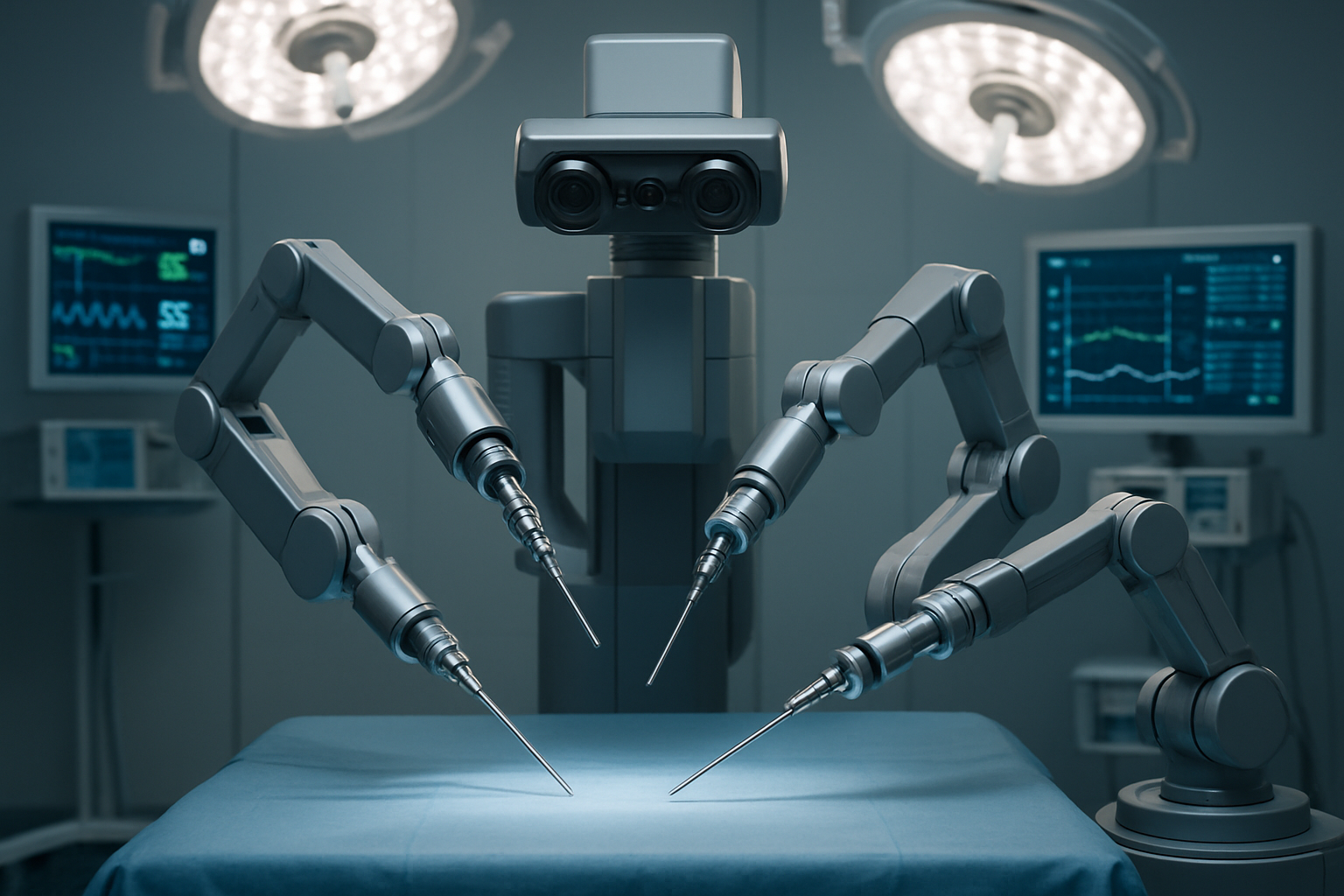
In a groundbreaking achievement for telemedicine, a UK-based surgeon successfully performed a complex prostate removal surgery on a patient in Gibraltar from 1,500 miles away, utilizing an advanced four-armed robotic surgical system with 3D camera technology.
Paul Buxton, a 62-year-old British football fan who relocated to Gibraltar four decades ago, became the patient at the center of this remarkable medical breakthrough when he was diagnosed with prostate cancer. The surgery took place at St Bernard's Hospital, Gibraltar's only medical facility, where a sophisticated robotic system enabled a London-based surgeon to perform the life-saving procedure remotely.
Revolutionary Robotic Technology
The surgical robot employed in this historic operation features four precise mechanical arms equipped with a high-definition 3D camera system, allowing the remote surgeon to visualize and manipulate surgical instruments with extraordinary precision. This technology represents the convergence of telecommunications infrastructure, robotic engineering, and surgical expertise that has been developing throughout what medical professionals are calling the "Therapeutic Revolution of 2026."
The robotic system provided the surgeon with real-time visual feedback and haptic control, enabling the delicate removal of Buxton's prostate with the same precision as if the doctor were physically present in the operating theater. The 3D camera technology offered depth perception and detailed visualization crucial for navigating the complex anatomy surrounding the prostate gland.
Global Context of Remote Surgery Advancement
This successful procedure comes amid a worldwide surge in medical technology innovations documented throughout 2026. From Egypt's implementation of robotic surgery programs in public hospitals to Kuwait's deployment of Hugo robotic surgical systems at military medical facilities, nations across the globe are investing heavily in precision surgical technologies.
The Gibraltar operation builds upon earlier telemedicine developments, including Mauritania's military telemedicine center connecting six medical stations for remote consultations, and Croatia's establishment of 62 tourist medical clinics incorporating digital health monitoring systems. These initiatives collectively demonstrate the growing sophistication of remote medical care capabilities.
"This represents a remarkable triumph for remote robotic surgery that saved the life of a 62-year-old football fan with prostate cancer."
— Medical Source, The Guardian
Technical Challenges and Solutions
Performing surgery at such distances presents unique technical challenges that were successfully overcome in this pioneering procedure. The operation required ultra-reliable telecommunications infrastructure to ensure uninterrupted connectivity between London and Gibraltar. Any delay or disruption in communication could have compromised patient safety, making the technical execution of this surgery particularly remarkable.
The surgical team had to account for potential latency in command transmission, requiring specialized protocols to ensure that the surgeon's movements were translated accurately and instantaneously to the robotic arms. Advanced encryption and security measures were implemented to protect the medical data transmission and maintain patient confidentiality across international boundaries.
Implications for Global Healthcare Access
This breakthrough surgery demonstrates the potential for remote robotic procedures to revolutionize healthcare access, particularly in regions with limited specialist availability. Gibraltar, as a British overseas territory with a single hospital serving its population, exemplifies how remote surgical capabilities can provide access to world-class medical expertise without requiring patient travel.
The success of this procedure could establish a new model for healthcare delivery in remote locations, island nations, and underserved regions worldwide. It aligns with the broader prevention-first healthcare revolution observed globally, where advanced technology enables proactive medical intervention while reducing the need for complex medical referrals to distant facilities.
Patient Outcomes and Recovery
Paul Buxton's successful surgery and recovery represent more than a technological achievement; they demonstrate the human impact of medical innovation. The 62-year-old patient, described as a football enthusiast who made Gibraltar his home four decades ago, received life-saving treatment without the complications and risks associated with traveling to London for the procedure.
The remote surgery eliminated the physical and emotional stress of medical travel while ensuring Buxton could receive treatment close to his support network and familiar environment. This patient-centered approach reflects the broader trend toward human-centered care that balances technological advancement with individual needs and circumstances.
Economic and Strategic Implications
The successful remote surgery has significant economic implications for both Gibraltar and the broader healthcare industry. By enabling complex procedures locally, this technology reduces healthcare costs associated with patient transportation, accommodation, and extended recovery periods away from home.
For Gibraltar specifically, the capability to offer advanced surgical procedures through telemedicine could enhance its position as a regional medical destination while reducing dependency on mainland healthcare systems. This aligns with global trends observed in 2026, where countries are developing healthcare sovereignty and reducing reliance on external medical referrals.
Future of Remote Surgery
This Gibraltar procedure represents a pivotal moment in the evolution of surgical practice. As telecommunications infrastructure continues to improve globally and robotic surgical systems become more sophisticated, remote surgery may transition from experimental procedure to standard medical practice for appropriate cases.
The success builds upon the foundation of the ongoing "Therapeutic Revolution of 2026," characterized by prevention-first approaches, international cooperation in medical innovation, and the integration of advanced technology with human-centered care. Countries worldwide are investing in similar capabilities, suggesting that remote surgery may become increasingly accessible across diverse geographical and economic contexts.
Regulatory and Safety Considerations
The successful completion of this remote surgery will likely prompt regulatory bodies to develop comprehensive frameworks governing international telemedicine procedures. Questions of medical licensing, liability, emergency protocols, and quality standards must be addressed as remote surgery capabilities expand.
Safety protocols developed for this Gibraltar procedure will serve as a template for future remote surgical operations. The success of this case demonstrates that with appropriate technological infrastructure, rigorous planning, and comprehensive safety measures, complex surgical procedures can be performed remotely with outcomes comparable to traditional in-person surgery.
This historic achievement in Gibraltar marks not just a technological milestone but a fundamental shift in how medical expertise can be delivered across geographical boundaries, potentially transforming healthcare access for populations worldwide and establishing new paradigms for international medical cooperation.