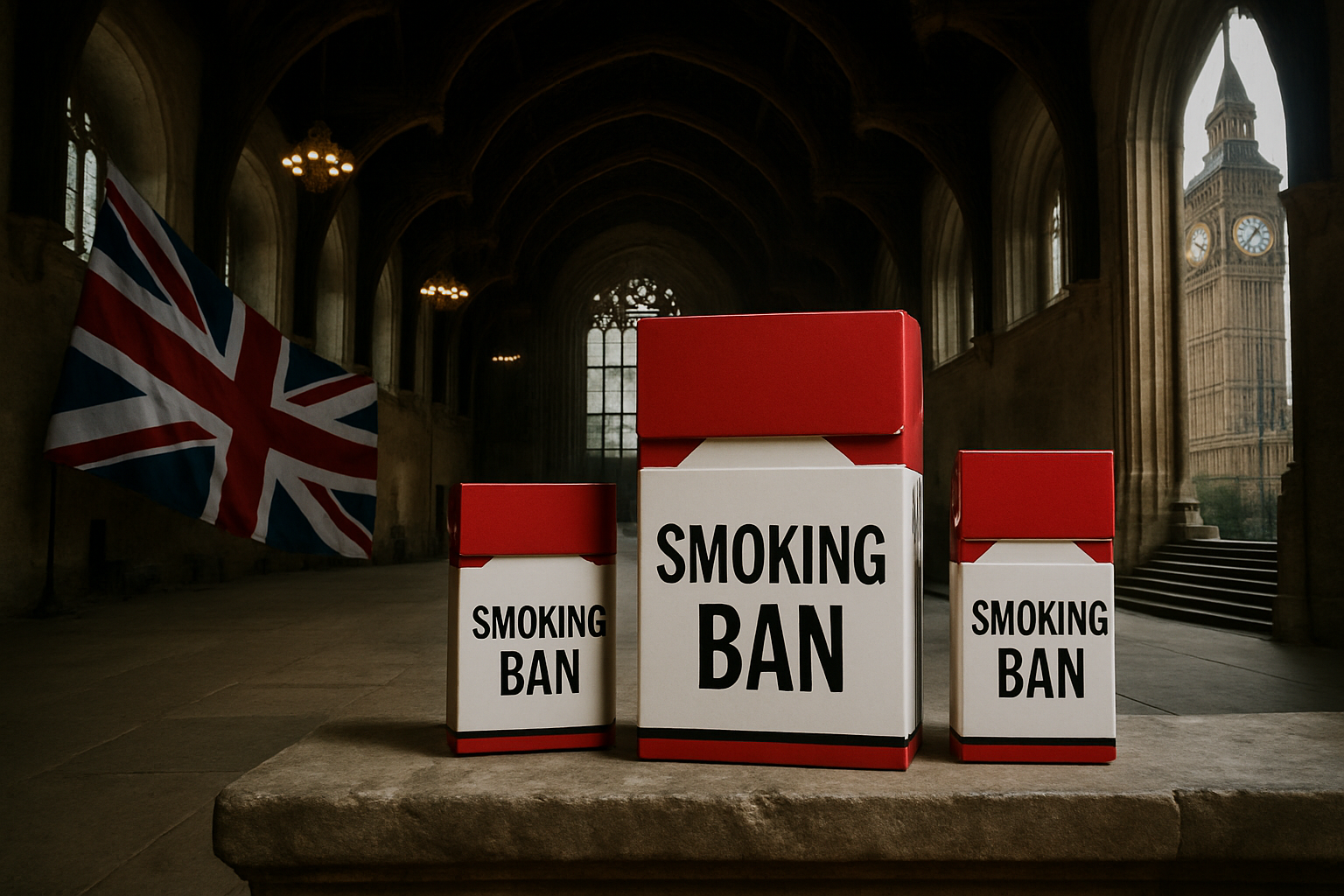
The United Kingdom has enacted groundbreaking anti-smoking legislation that will create the world's first comprehensive generational tobacco ban, prohibiting tobacco sales to anyone born after January 1, 2009, in a historic move to establish what officials call a "smoke-free generation."
The Tobacco and Vapes Bill, passed by British lawmakers on April 22, 2026, represents the most ambitious anti-smoking policy in modern history. Under the new law, the minimum age for purchasing tobacco products will increase by one year annually, meaning individuals born on or after January 1, 2009 will never legally be able to buy cigarettes, regardless of their age.
Revolutionary Approach to Tobacco Control
Health Secretary Wes Streeting described the legislation as "a historic moment for public health," emphasizing the transformative nature of the policy. "Children in Britain will become part of the first smoke-free generation, protected from a life of addiction and harm," Streeting stated following the bill's passage.
The legislation goes beyond traditional tobacco restrictions by implementing a progressive age limit that effectively creates a permanent barrier for younger generations. This approach differs significantly from conventional tobacco control measures, which typically focus on taxation, advertising restrictions, or designated smoking areas.
Comprehensive Vaping Regulations
The new law also introduces stringent controls on electronic cigarettes and vaping products. Key provisions include:
- Enhanced restrictions on advertising and promotional activities
- Stricter controls on product display and retail distribution
- Prohibition of free samples and discount promotions
- Mandatory age verification systems for all retailers
- Illegal sales to anyone under 18 years of age
These measures address growing concerns about vaping's popularity among young people and aim to prevent e-cigarettes from serving as a gateway to traditional tobacco use.
Economic and Health Implications
The legislation addresses significant economic costs associated with smoking-related diseases. The National Health Service currently spends £2.4 billion annually treating smoking-related conditions, while the broader economic impact exceeds £17 billion yearly when including lost productivity and premature deaths.
"This prevention-first approach could eliminate these costs entirely for future generations while generating substantial healthcare savings."
— UK Department of Health Analysis
The policy reflects the UK's broader shift toward prevention-focused healthcare strategies, emphasizing systematic protection over reactive treatment approaches. This aligns with what health experts are calling the "Therapeutic Revolution of 2026," characterized by international coordination on prevention-first healthcare policies.
Global Leadership and International Influence
The UK's legislation positions the nation as a global leader in evidence-based public health policy. The success or failure of this initiative will likely influence international tobacco control efforts for decades to come, as other countries monitor the implementation and effectiveness of the generational ban approach.
The law is part of a broader cultural shift prioritizing long-term community wellbeing over commercial interests. It demonstrates how democratic societies can implement ambitious health policies designed to protect future generations from preventable harm.
Implementation Challenges and Support Systems
The government has allocated substantial resources for enforcement, public education, and retailer transition support. Implementation strategies include:
- Enhanced age verification requirements for all tobacco retailers
- Anti-illicit trade measures to prevent black market development
- Industry diversification programs to help tobacco retailers adapt
- Cross-border coordination to prevent circumvention
- Expanded smoking cessation services for current smokers
Practical challenges include ensuring effective age verification systems and preventing circumvention through online purchases or cross-border shopping. The government is working with retailers to implement robust checking mechanisms and coordinating with international partners to address potential loopholes.
Public Health Revolution
The legislation represents a fundamental transformation from treating smoking-related diseases to preventing them entirely. Ministers describe the initiative as creating a "smoke-free generation" through the most ambitious anti-smoking policy in modern history.
This approach follows successful models in other health areas where systematic prevention has proven more effective and cost-efficient than treatment-focused strategies. The policy acknowledges that protecting future generations from tobacco addiction requires structural changes rather than individual behavior modifications alone.
Looking Forward
The Tobacco and Vapes Bill becomes effective immediately, with the generational purchasing ban taking effect as planned. The legislation creates the possibility of the first truly smoke-free generation in modern history, representing a template for addressing other preventable health threats through systematic protection versus reactive treatment.
As the policy implementation begins, health authorities will monitor its effectiveness in reducing smoking initiation rates among young people while ensuring adequate support for current smokers seeking to quit. The initiative stands as a testament to democratic societies' capacity to prioritize long-term public health over short-term commercial interests.
The success of this groundbreaking legislation will be measured not just in reduced smoking rates, but in its potential to inspire similar preventive health policies worldwide, ultimately contributing to what could become a global movement toward comprehensive public health protection for future generations.