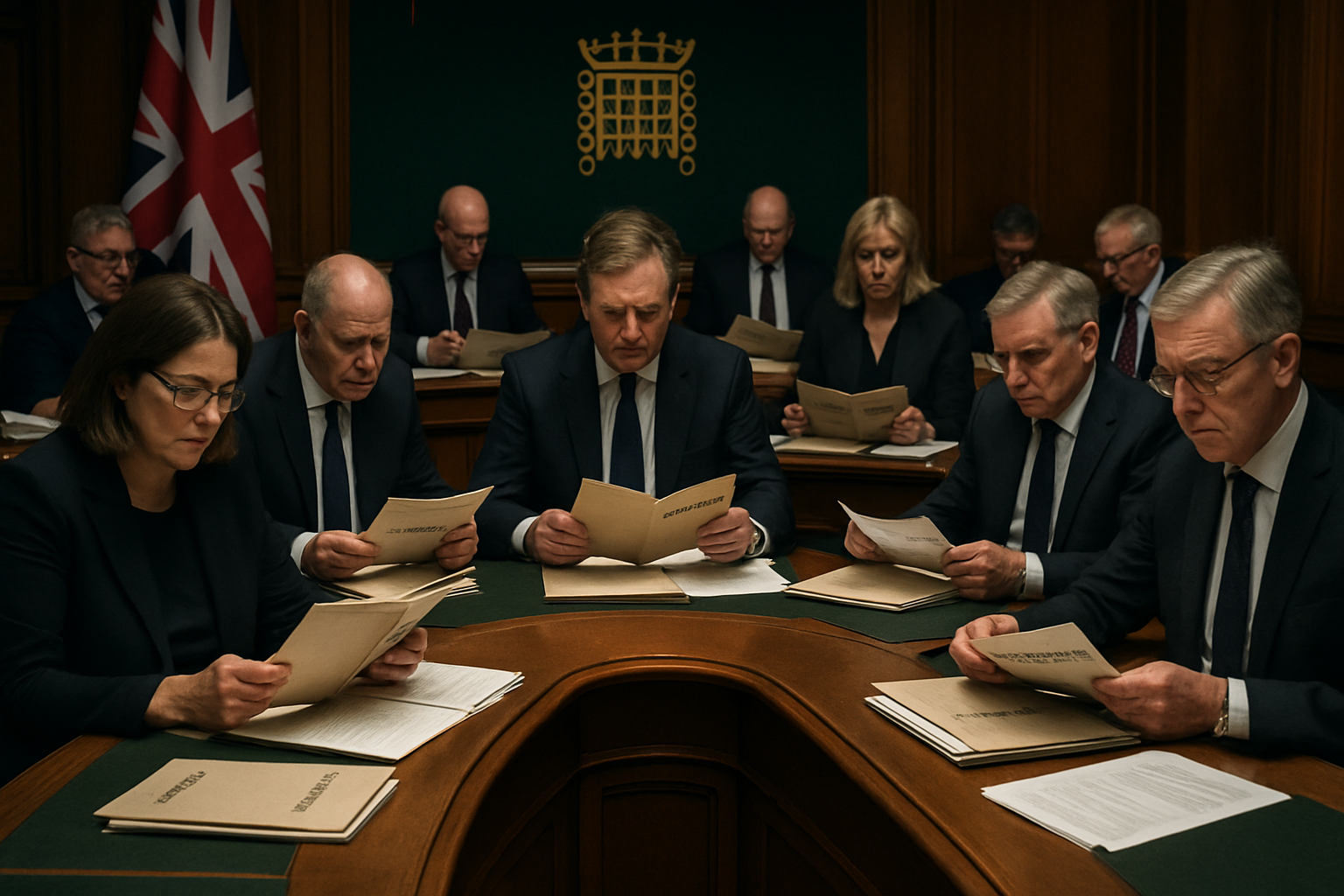
Britain's House of Commons has approved the unprecedented release of confidential government documents related to former Prince Andrew's appointment as trade envoy, marking a critical moment in the ongoing criminal investigation into his alleged connections with convicted sex offender Jeffrey Epstein.
The parliamentary vote comes as Andrew Mountbatten-Windsor remains under investigation by Thames Valley Police following his historic arrest on February 19, 2026 – the first detention of a senior British royal since King Charles I in 1647. The 66-year-old former Duke of York is suspected of misconduct in public office for allegedly sharing classified government information with Epstein during his tenure as UK Special Representative for International Trade and Investment from 2001 to 2011.
Parliamentary Pressure Mounts
The Liberal Democrats tabled the motion in parliament forcing the government to release vetting documents concerning Andrew's original appointment to the trade envoy position. The UK government, led by Labour Prime Minister Keir Starmer, ultimately supported the document release amid mounting pressure from lawmakers and public demands for transparency.
Defence Minister Luke Pollard confirmed the government is actively working with Buckingham Palace on the "right thing to do" to prevent Andrew from being a "heartbeat away from the throne." The government is considering legislation to remove Andrew from the royal line of succession, which would require an Act of Parliament and extensive consultations with the 14 Commonwealth realms where King Charles III serves as head of state.
"The documents will shed light on the vetting process and decision-making that led to Andrew's appointment to such a sensitive position."
— Parliamentary Source
The December 2010 Intelligence Breach
Central to the police investigation are allegations that Andrew transmitted a confidential report about Afghanistan's Helmand province to Epstein on December 24, 2010, during a UAE state visit with Queen Elizabeth II. The leaked intelligence reportedly contained sensitive data about gold, uranium, and oil reserves in the region – information that could have had significant strategic and commercial value.
This alleged breach occurred just two years after Epstein's 2008 conviction for soliciting prostitution from a minor, raising serious questions about Andrew's judgment and the adequacy of royal security protocols. The timing is particularly significant as it coincided with a period when Epstein was actively cultivating relationships with political and business figures worldwide.
King Charles's Unprecedented Response
In a historic break with royal protocol, King Charles III has issued unprecedented statements supporting the investigation into his brother. The monarch declared that "the law must take its course" and pledged "full and wholehearted support and cooperation" with authorities – a seismic shift that prioritizes institutional integrity over family loyalty.
This decision represents one of the most significant constitutional moments in modern British history, demonstrating that the monarchy operates within, rather than above, the law. Royal sources indicate that the King would not oppose parliamentary action to remove Andrew from the succession line, further emphasizing the Crown's commitment to democratic accountability.
International Investigations Intensify
The Prince Andrew case is part of what European law enforcement describes as the "largest international elite criminal network exposure in recent memory," spanning six countries and involving unprecedented coordination between international agencies. The investigation has been triggered by the US Department of Justice's release of over 3 million pages of Epstein-related documents.
Parallel investigations are proceeding across Europe, with Norway's Crown Princess Mette-Marit facing potential criminal proceedings after being mentioned over 1,000 times in the documents. France has established specialized prosecutor units, while Baltic states are coordinating investigations into alleged trafficking networks that recruited women across Lithuania, Latvia, and Estonia.
Metropolitan Police Protection Officer Revelations
New Epstein files have revealed that Metropolitan Police officers assigned to protect Prince Andrew were instructed to provide security for a dinner party at Epstein's New York residence in December 2010. An email with the subject "Security for party" confirmed officers were given "instructions on the door," raising questions about the use of taxpayer-funded royal protection for Epstein's social events.
The Metropolitan Police has stated that no wrongdoing has been identified "at this time," but they are actively contacting former protection officers to seek information about potential allegations. This revelation adds another layer to the investigation, potentially implicating official resources in Epstein's operations.
Public Support for Accountability
Polling indicates that 72% of the British public support the arrest and investigation as proof that no one is above the law. This overwhelming support contrasts sharply with reactions from some international figures – former US President Donald Trump called Andrew's arrest "very, very sad" during an Air Force One briefing.
The victim advocacy community has praised the police action as long overdue. The family of Virginia Giuffre, who died by suicide in 2025 after years of legal battles with Andrew, stated that he "was never a prince" and welcomed the accountability measures.
Constitutional Implications
The case is establishing crucial precedents for constitutional monarchies worldwide in addressing criminal accountability challenges. Unlike some European monarchies where royals enjoy constitutional immunity, British royals can face criminal prosecution, and the Crown Prosecution Service is currently reviewing evidence for potential formal charges.
The misconduct in public office charge carries serious penalties, potentially including imprisonment if convicted. The investigation tests whether democratic institutions can hold powerful figures accountable regardless of their status or international standing.
Ongoing Investigation Timeline
Thames Valley Police continue their investigation with searches completed at Andrew's former Royal Lodge Windsor residence and current Sandringham Estate accommodation. The investigation has expanded to include questioning of former protection officers about their observations during Andrew's working royal period.
The government has not ruled out a judge-led inquiry into the broader implications of the case. Formal succession removal legislation could be introduced within six months, depending on the progression of the criminal case and completion of Commonwealth consultations.
The investigation remains ongoing with no definitive timeline for conclusion. The resolution will establish precedents that will influence how constitutional monarchies globally handle royal family accountability challenges, potentially reshaping the relationship between monarchy and democratic governance in the 21st century.
As former prosecutor Nazir Afzal noted, the case represents a fundamental test of whether British institutions can deliver meaningful accountability for elite criminal networks, regardless of political connections or royal status. The world watches as Britain demonstrates whether democratic principles can prevail over traditional privilege and immunity.