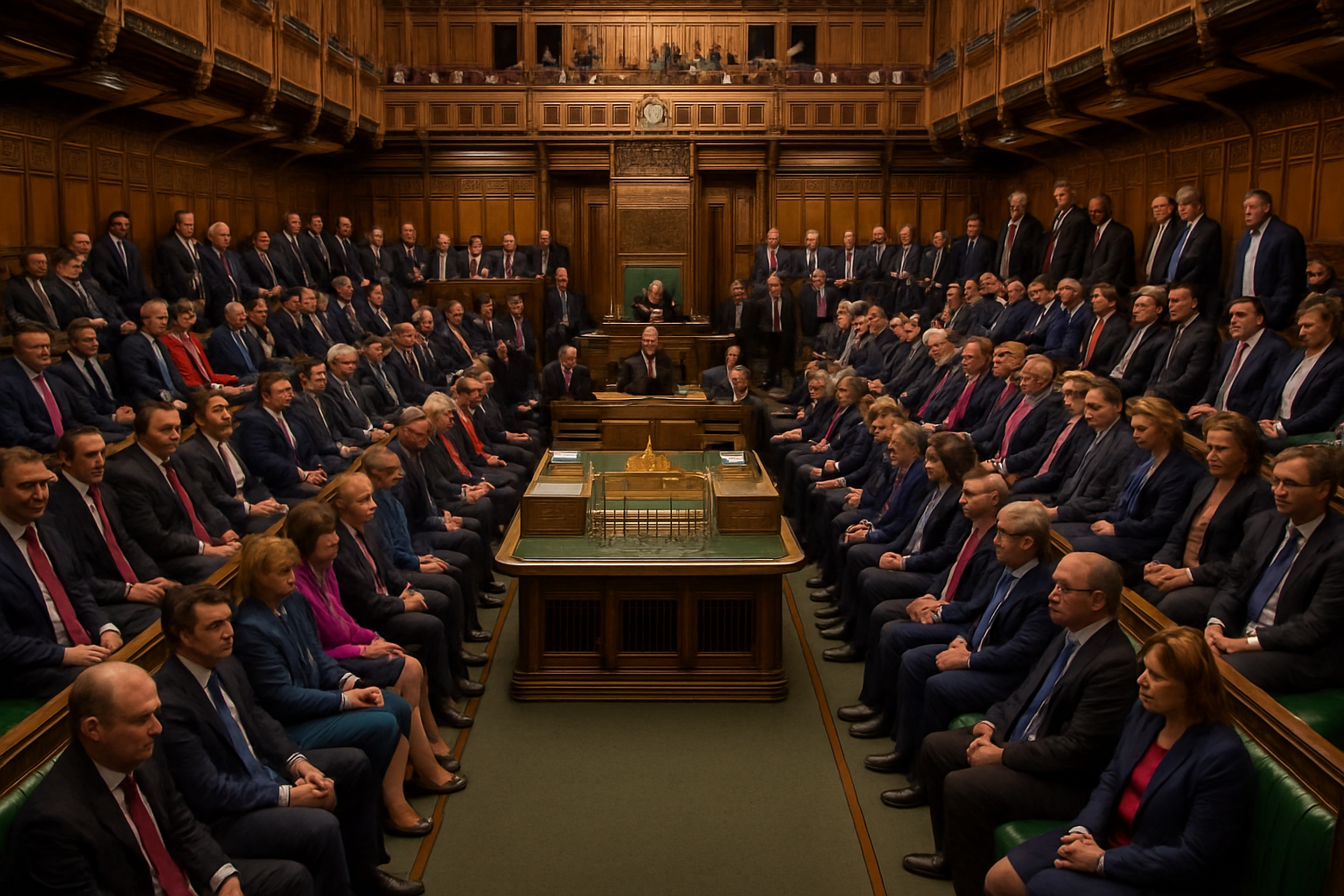
British MPs decisively rejected a proposed ban on social media access for children under 16, voting 307 to 173 against the measure that would have aligned the UK with a growing international movement to restrict youth access to digital platforms.
The proposal, brought forward by Conservative peer and former minister John Nash as an amendment to the children's wellbeing and schools bill, was defeated with a majority of 134 votes on Monday evening. The rejection represents a significant setback for campaigners who have been pushing for stronger digital protections for young people amid mounting concerns about social media's impact on youth mental health.
Global Context of Youth Protection Movement
The UK vote comes at a critical juncture in what experts are calling the most significant social media regulation wave in internet history. According to extensive documentation from Planet News archives, February and March 2026 have witnessed an unprecedented global coordinated effort to implement age restrictions on social media platforms.
Australia leads this movement, having successfully eliminated 4.7 million teen accounts through its under-16 social media ban implemented in December 2025. The Australian model has proven technical feasibility and provided a template that numerous countries have sought to emulate.
Spain has emerged as the most aggressive European regulator, implementing a revolutionary framework that includes not only under-16 bans but also criminal executive liability for tech platform leaders - a world-first that creates personal imprisonment risks for executives whose platforms harm children. Prime Minister Pedro Sánchez has characterized social media platforms as a "digital Wild West" requiring protection from "abuse, addiction, pornography and violence."
European Coordination Efforts
The UK rejection disrupts what had been building momentum across Europe for coordinated implementation designed to prevent "jurisdictional shopping" - where platforms might relocate operations to avoid oversight. Greece has been developing under-15 restrictions through its Kids Wallet enforcement system, while France, Denmark, and Austria have conducted formal consultations on similar measures.
Germany's ruling Christian Democratic Union (CDU) passed motions supporting under-14 social media bans, with Digital Policy Spokesperson Dennis Radtke citing "dynamic developments outstripping media literacy approaches." Poland, Slovakia, Slovenia, and even Indonesia have announced various forms of age restrictions, creating an international regulatory momentum that the UK vote now challenges.
Scientific Evidence Driving Policy
The push for age restrictions has been supported by mounting scientific evidence about social media's impact on developing minds. Dr. Ran Barzilay's research at the University of Pennsylvania demonstrates that early smartphone exposure before age 5 causes persistent sleep disorders, cognitive decline, and weight problems extending into adulthood.
Current global statistics paint a concerning picture: 96% of children aged 10-15 use social media, with 70% experiencing harmful content exposure and 50% encountering cyberbullying. Large-scale US studies reveal that children spending four or more hours daily on screens face a 61% increased depression risk through sleep pattern disruption and decreased physical activity.
University of Macau research has provided definitive evidence that short-form video scrolling negatively impacts cognitive development, causing social anxiety and academic disengagement. The European Commission has found that platforms like TikTok violate Digital Services Act provisions through "addictive design" features including unlimited scrolling, autoplay, and personalized recommendations that maximize user dependency over wellbeing.
Government Powers Expansion
Despite rejecting the outright ban, MPs did back the government's bid to grant additional powers to the secretary of state, suggesting that restrictions could still be introduced in future through executive action rather than legislative mandate. This leaves open the possibility that the UK could still join the international regulatory movement through administrative rather than parliamentary channels.
The vote occurred against the backdrop of Prime Minister Keir Starmer's previous statements supporting youth digital protection. As a father of two teenagers himself, Starmer has acknowledged understanding "the challenges parents face keeping kids safe online," and his government had been conducting a three-month consultation on potential under-16 restrictions following the Australian model.
Industry Response and Resistance
Technology industry resistance to global regulatory efforts has intensified throughout 2026, with executives characterizing measures as authoritarian overreach. Elon Musk has called Spanish measures "fascist totalitarian," while Telegram's Pavel Durov has warned of "surveillance state" implications. Government officials across Europe have used this industry opposition as evidence supporting the necessity of stronger regulatory intervention.
The coordinated resistance has contributed to what analysts term the "SaaSpocalypse" of February 2026, which eliminated hundreds of billions in technology market capitalization amid regulatory uncertainty. Platform companies argue that features like infinite scroll, autoplay, and algorithmic curation represent standard industry practices that enhance user experience rather than creating harmful dependencies.
Implementation Challenges
The UK debate highlighted significant technical and privacy challenges that have complicated international implementation efforts. Real age verification systems require biometric authentication or identity document validation, raising concerns about creating comprehensive government databases that privacy advocates warn could enable broader surveillance beyond child protection purposes.
A global semiconductor crisis has created additional complications, with sixfold memory chip price increases constraining age verification infrastructure development until 2027 when new fabrication facilities come online. The Netherlands' Odido data breach affecting 6.2 million people has also demonstrated the vulnerabilities of centralized personal data repositories that age verification systems would require.
Alternative Approaches
The UK's rejection aligns more closely with alternative approaches being pursued in other regions. Malaysia has emphasized parental responsibility over regulatory bans through digital safety campaigns, with Communications Minister Datuk Fahmi Fadzil stressing that parents must control device access rather than using devices as "digital babysitters."
Oman has implemented "Smart tech, safe choices" educational initiatives focusing on conscious digital awareness and helping young people recognize "digital ambushes" where attackers exploit security curiosity. These approaches represent a philosophical divide between European regulatory enforcement models and Asian education-focused strategies.
Platform Industry Developments
The regulatory pressure has prompted some voluntary industry responses. Instagram announced parental notification systems that alert parents when teens repeatedly search for suicide or self-harm content. X Platform implemented new safety rules barring under-13 accounts and prohibiting advertisers from targeting users under 16, representing a strategic response to mounting legal challenges.
However, these voluntary measures have not satisfied regulators who argue that self-regulation has proven inadequate. Mark Zuckerberg's historic courtroom testimony in Los Angeles revealed internal Meta documents from 2014-2015 showing explicit company goals to increase user engagement time, contradicting public statements about prioritizing user wellbeing.
Global Democratic Governance Test
Policy experts view 2026 as a critical inflection point for democratic technology governance. The question of whether democratic institutions can effectively regulate multinational platforms while preserving digital rights and economic competitiveness has become a defining challenge of the 21st century.
Success in implementing coordinated age restrictions could establish criminal executive liability as a global standard and demonstrate democratic societies' capability to protect children from demonstrable technological harms. Failure might strengthen anti-regulation arguments and leave vulnerable young populations exposed to platforms designed to maximize engagement over wellbeing.
Future Implications
The UK's rejection creates uncertainty about the sustainability of the international coordination effort. While the government retains the option to implement restrictions through executive powers granted by MPs, the parliamentary vote signals significant domestic political resistance to joining the global movement.
Countries implementing restrictions will be closely monitored for their effectiveness in improving youth mental health outcomes while maintaining beneficial aspects of digital connectivity. Australia's systematic measurement of ban effectiveness through medical records, sleep quality data, and educational performance represents the world's first comprehensive assessment of social media restriction impacts.
The stakes extend far beyond regulatory debates, with the fundamental conditions enabling democratic societies to thrive increasingly dependent on how technology platforms shape young minds during crucial developmental years. As governments worldwide grapple with balancing innovation, economic competitiveness, and child protection, the UK's decision may influence whether the 2026 regulatory wave represents a watershed moment in digital governance or a temporary disruption in the technology industry's continued expansion.