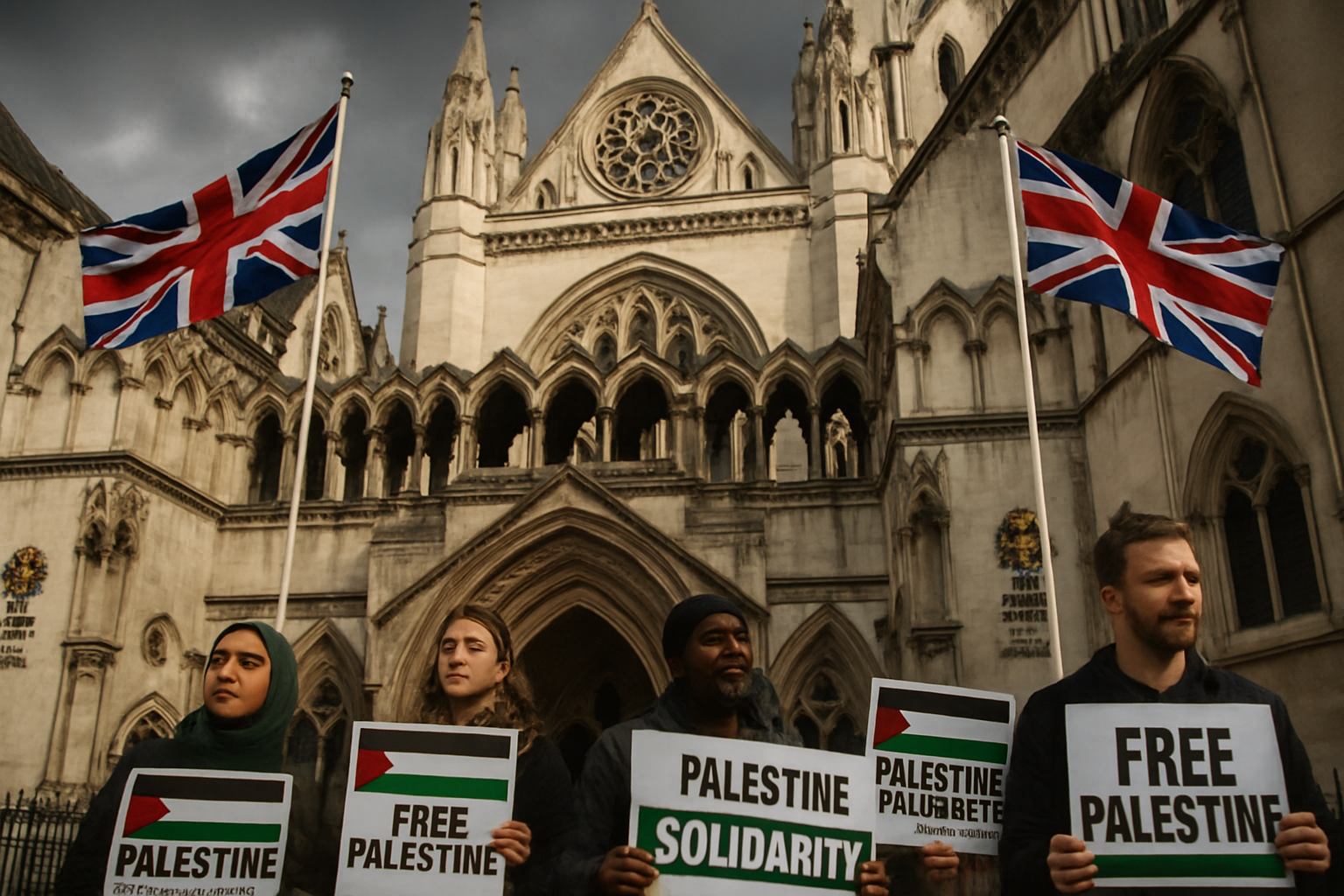
Britain's High Court delivered a landmark ruling on Friday declaring the government's ban on Palestine Action as a terrorist organization unlawful, finding then-Home Secretary Yvette Cooper's decision to proscribe the pro-Palestinian protest group was "disproportionate" and violated fundamental rights to freedom of expression and assembly.
The decision represents a significant victory for civil liberties campaigners and raises serious questions about the arrests of nearly 3,000 people at solidarity protests following the July 2025 ban. Palestine Action co-founder Huda Ammori, who brought the legal challenge, hailed the ruling as "a monumental victory both for our fundamental freedoms here in Britain and in the struggle for freedom for the Palestinian people."
Court Finds Ban Disproportionate
The three-judge panel, led by Dame Victoria Sharp, president of the King's Bench division, sitting with Mr Justice Swift and Mrs Justice Steyn, upheld two key grounds of challenge. While acknowledging that "Palestine Action is an organisation that promotes its political cause through criminality and encouragement of criminality," the court determined that proscription under terrorism laws was still "disproportionate."
The ruling specifically found the ban constituted "a disproportionate interference with the right to freedom of expression and freedom of assembly," establishing important legal precedent for the boundaries of anti-terrorism legislation when applied to domestic protest groups.
This marked the first time the UK government had proscribed a direct action protest group under anti-terrorism laws, categorizing Palestine Action alongside organizations like Islamic State. The unprecedented move attracted widespread condemnation from civil liberties organizations and sparked a defiant civil disobedience campaign that led to over 2,000 arrests since the ban took effect.
Government's Controversial Decision
The proscription followed escalating direct action campaigns by Palestine Action against Israel-linked defense companies operating in Britain. The group had increasingly engaged in what authorities termed disruptive tactics, including blocking factory entrances, spraying red paint on buildings, and conducting raids on defense facilities.
The government's case centered on a 2024 raid on a factory belonging to Elbit Systems, Israel's largest defense firm, where prosecutors alleged activists caused approximately £1 million in damage and a police officer was struck with a sledgehammer. The ban also followed a break-in at RAF Brize Norton air base, where activists allegedly damaged aircraft with spray paint.
Palestine Action had been conducting systematic campaigns against what it termed the UK's complicity in Israeli military operations, targeting facilities of companies manufacturing weapons components and surveillance technology used by Israeli forces.
"This is a monumental victory both for our fundamental freedoms here in Britain and in the struggle for freedom for the Palestinian people, striking down a decision that will forever be remembered as one of the most extreme attacks on free speech in recent British history."
— Huda Ammori, Palestine Action Co-founder
Immediate Government Appeal
Despite the court's ruling, the government immediately announced its intention to appeal, meaning the ban remains temporarily in place. A government spokesperson expressed disappointment with the decision, stating: "I am disappointed by the court's decision and disagree with the notion that banning this terrorist organisation is disproportionate."
The spokesperson emphasized that "the proscription of Palestine Action followed a rigorous and evidence-based decision-making process, endorsed by parliament," while asserting that the ban "does not prevent peaceful protest in support of the Palestinian cause."
However, civil liberties advocates argue the case demonstrates the dangers of expanding terrorism legislation to domestic protest movements, particularly in the context of politically sensitive international issues.
Police Response and Enforcement Changes
The Metropolitan Police acknowledged the "unusual circumstances" created by the ruling and announced they would stop arresting people for supporting Palestine Action while the government pursues its appeal. Police officials stated they would now focus on "gathering evidence" rather than immediate enforcement actions.
This represents a significant operational shift for law enforcement, which had been actively pursuing supporters of the organization under terrorism-related charges. The change in enforcement approach affects not only Palestine Action members but also the thousands of solidarity protesters who had faced potential prosecution for expressing support.
International and Regional Impact
The ruling has attracted significant international attention, with coverage across Middle Eastern media outlets highlighting the decision as a victory for Palestinian solidarity movements worldwide. Al Jazeera, Saudi Gazette, and other regional news sources prominently featured the story, emphasizing the global implications for protest rights and Palestinian advocacy.
The case comes amid heightened international tensions over Israel-Palestine issues, with recent weeks seeing significant developments including Israel's expanded administrative control over the West Bank and ongoing diplomatic efforts to resolve regional conflicts.
Legal experts suggest the ruling could influence how other Western democracies approach the regulation of protest movements related to international conflicts, particularly those involving military actions or arms trade issues.
Civil Disobedience Campaign Vindicated
The court's decision appears to vindicate the civil disobedience campaign that emerged following the original ban. Over 2,000 people were arrested for defying the proscription order, many deliberately courting arrest to challenge what they viewed as an unlawful restriction on political expression.
The scale of the protest response was unprecedented for a terrorism proscription, with supporters arguing that criminalizing solidarity with Palestinian causes represented a fundamental attack on democratic freedoms in Britain.
Many of those arrested now face uncertainty about the status of their cases, with prosecutors likely to review charges in light of the court's finding that the original ban was unlawful.
Legal Precedent and Implications
The High Court's ruling establishes important legal precedent regarding the application of terrorism legislation to domestic protest movements. By finding that proscription was disproportionate despite acknowledging the group's involvement in criminal activities, the court has drawn clearer lines around when anti-terrorism powers can legitimately be used against political activists.
Legal analysts note that the decision strengthens protections for freedom of expression and assembly, even in cases involving controversial political causes or where protest activities may involve property damage or civil disobedience.
The ruling also highlights the courts' role as a check on executive power, particularly in cases where government decisions affect fundamental democratic rights and freedoms.
Looking Forward
As the government prepares its appeal, the case continues to test the boundaries between national security concerns and democratic freedoms in contemporary Britain. The outcome will likely influence how future governments approach the regulation of politically motivated protest movements.
For Palestine Action and its supporters, the ruling represents both vindication and renewed opportunity to pursue their advocacy through legal channels while the appeal process continues. The decision may also encourage other activist groups to challenge government restrictions they view as disproportionate or unlawful.
The case ultimately reflects broader tensions in democratic societies about how to balance security concerns with fundamental rights, particularly when dealing with protest movements that challenge government foreign policy or engage with controversial international issues.