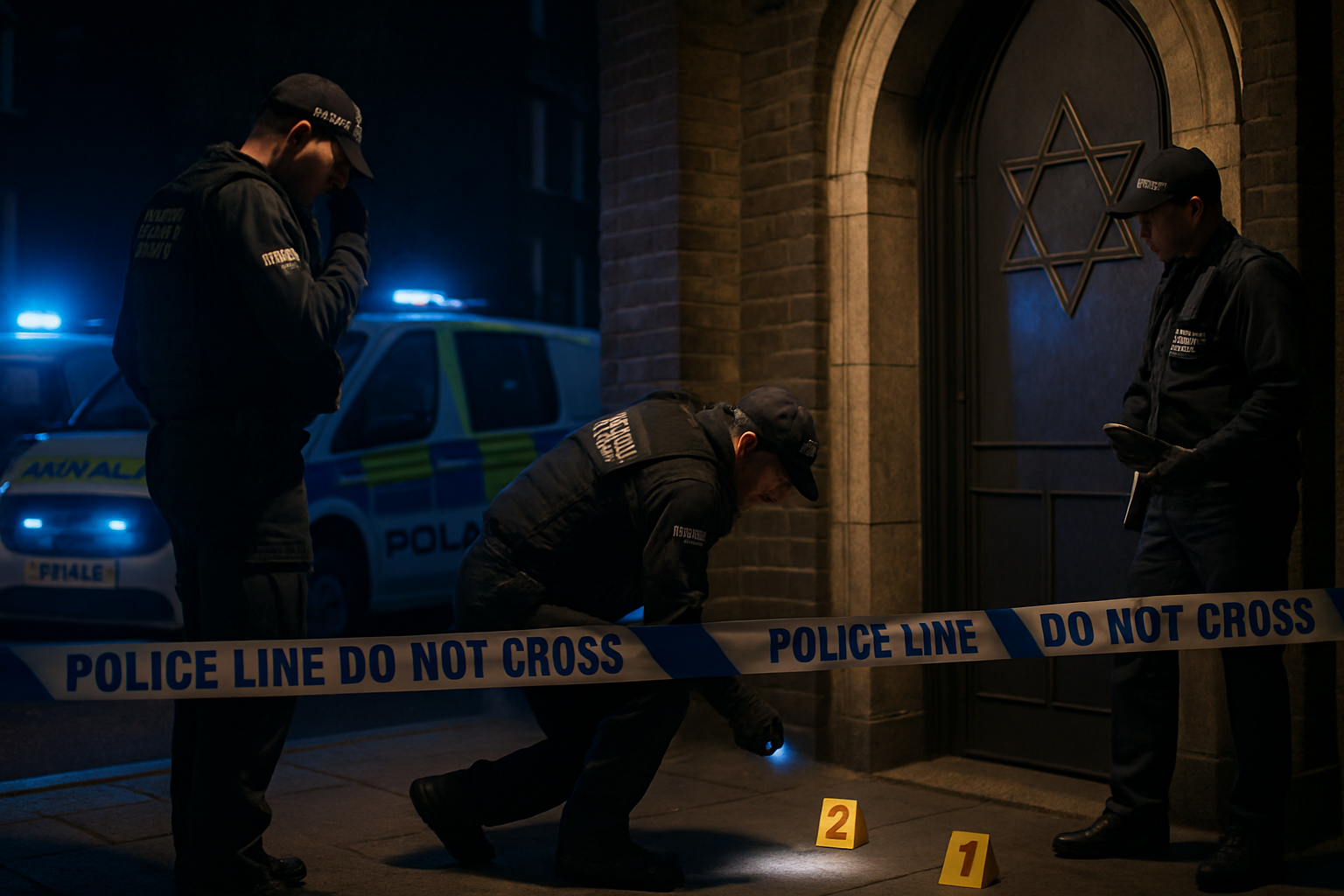
British counter-terrorism police are investigating potential Iranian regime connections to a coordinated series of arson attacks targeting Jewish synagogues and community sites across London, marking a dangerous escalation in what UK Chief Rabbi describes as a sustained campaign of violence and intimidation against the Jewish community.
The Metropolitan Police confirmed on Sunday that specialized counter-terrorism officers are examining a string of fires at synagogues and other Jewish institutions, as well as attacks on a Persian-language media company. While no injuries have been reported in the blazes, the systematic nature of the attacks has raised serious concerns about state-sponsored terrorism on British soil.
Pattern of Coordinated Attacks
The latest incident occurred overnight Saturday into Sunday, targeting the Kenton United Synagogue in northwest London. Despite causing only minor damage, the attack has significantly heightened anxiety within Britain's Jewish community, which has already been grappling with a surge in antisemitic incidents across Europe.
Intelligence sources familiar with the investigation indicate that the attacks demonstrate sophisticated planning and operational security that mirrors tactics documented in Iranian intelligence operations across Europe. The targeting of both religious institutions and Persian-language media suggests a dual-purpose campaign aimed at intimidating both Jewish communities and Iranian dissidents.
"These systematic attacks represent a serious threat to religious freedom and community safety in Britain. We will not allow foreign actors to bring their conflicts to our streets."
— Metropolitan Police spokesperson
Historical Context of Iranian Networks
The investigation comes against a backdrop of escalating concerns about Iranian intelligence operations across Europe. In March 2026, British counter-terrorism police arrested four men, including one Iranian national and three dual British-Iranian nationals, suspected of conducting surveillance operations on Jewish community locations and individuals in the London area.
These arrests were part of what European security services describe as a continent-wide Iranian intelligence campaign targeting Jewish communities and Iranian dissidents. Similar operations have been documented in Denmark, Germany, France, and the Netherlands, utilizing advanced operational security, encrypted communications, and compartmentalized cells.
The sophistication of these networks has intensified significantly following the collapse of nuclear negotiations between Iran and Western powers. Intelligence officials note that Iran's Ministry of Intelligence (MOIS) and the Islamic Revolutionary Guard Corps (IRGC) have expanded their European operations, recruiting individuals with legitimate access to target communities rather than relying solely on traditional diplomatic cover.
Broader European Antisemitic Violence
The London attacks are part of a disturbing pattern of antisemitic violence across Europe that has claimed numerous lives and left communities living in fear. The most devastating incident occurred on December 14, 2025, when attackers killed 15 people at a Hanukkah festival celebration at Bondi Beach. This was followed by a synagogue ramming attack in Brisbane on February 21, 2026.
In March 2026 alone, several European cities experienced coordinated attacks on Jewish institutions. Rotterdam saw an explosive arson attack on a synagogue that resulted in four arrests, while Amsterdam experienced similar incidents targeting Jewish schools and community centers. These attacks demonstrated increasingly sophisticated tactics involving both explosive devices and accelerants.
Ireland has documented 143 antisemitic incidents between September 2025 and February 2026, representing an unprecedented surge in religious targeting. France, meanwhile, thwarted a major terrorist plot in March when authorities arrested two Italian-Moroccan brothers planning a deadly attack with semi-automatic weapons and explosives.
Community Response and Security Measures
UK Chief Rabbi Sir Ephraim Mirvis has described the current situation as a "campaign of violence and intimidation" against British Jews, calling for enhanced security measures and stronger government action. Prime Minister Keir Starmer has expressed being "shocked" by the antisemitic acts and pledged full government support for the affected communities.
Jewish community leaders have emphasized that despite the atmosphere of fear, religious services will continue under enhanced security protocols. Interfaith solidarity has emerged as communities across London's religious spectrum have expressed support for their Jewish neighbors.
"We refuse to be intimidated by these cowardly attacks. Our community has survived far worse, and we will continue our religious and cultural activities with the protection of enhanced security measures."
— Community leader, North London Synagogue
Mental health services have been made available to community members, while security assessments are being conducted at Jewish institutions nationwide. The Metropolitan Police have increased patrols in areas with significant Jewish populations and implemented intelligence-led monitoring protocols.
International Implications
The investigation has significant implications for UK-Iran relations and broader counter-terrorism cooperation with European allies. If Iranian state involvement is confirmed, it would represent a serious breach of diplomatic norms and potentially trigger coordinated international responses.
The attacks occur during a period of heightened tensions between Iran and Western nations, amid broader conflicts in the Middle East. Iranian officials have denied any involvement in European attacks, but intelligence assessments suggest a pattern of state-sponsored operations designed to pressure Iranian diaspora communities and target Jewish populations.
European Union officials are closely monitoring the investigation's findings, as similar attacks have prompted discussions about enhanced sanctions against Iranian intelligence services and improved coordination between member states' security agencies.
Security Response and Investigation
The Metropolitan Police investigation is utilizing terrorism protocols that allow for extended detention periods, comprehensive surveillance of suspect networks, and enhanced international cooperation. Digital forensics teams are examining communications patterns and potential coordination with similar attacks across Europe.
Home Secretary Yvette Cooper has announced a comprehensive review of security protocols at religious institutions, while local authorities are implementing enhanced emergency response procedures. The investigation is expected to involve close cooperation with intelligence services from across Europe and the Middle East.
Security experts note that the professional security training implemented at many Jewish institutions has been crucial in preventing more serious casualties. The community's investment in trained security personnel and coordinated response procedures with law enforcement has proven effective in minimizing the impact of attacks.
Protecting Democratic Values
The attacks represent a critical test for Britain's commitment to religious freedom and community protection. Government officials have emphasized that targeting religious institutions strikes at fundamental democratic principles and will be met with the full force of the law.
The investigation's outcome will likely influence future approaches to protecting minority communities from foreign interference and state-sponsored intimidation. It also raises important questions about the balance between maintaining open societies and protecting vulnerable communities from systematic targeting.
As the investigation continues, the resilience of Britain's Jewish community serves as a testament to the strength of democratic societies in the face of extremist threats. However, the sophisticated nature of the attacks underscores the evolving challenges that security services face in protecting communities from state-sponsored terrorism in an increasingly interconnected world.