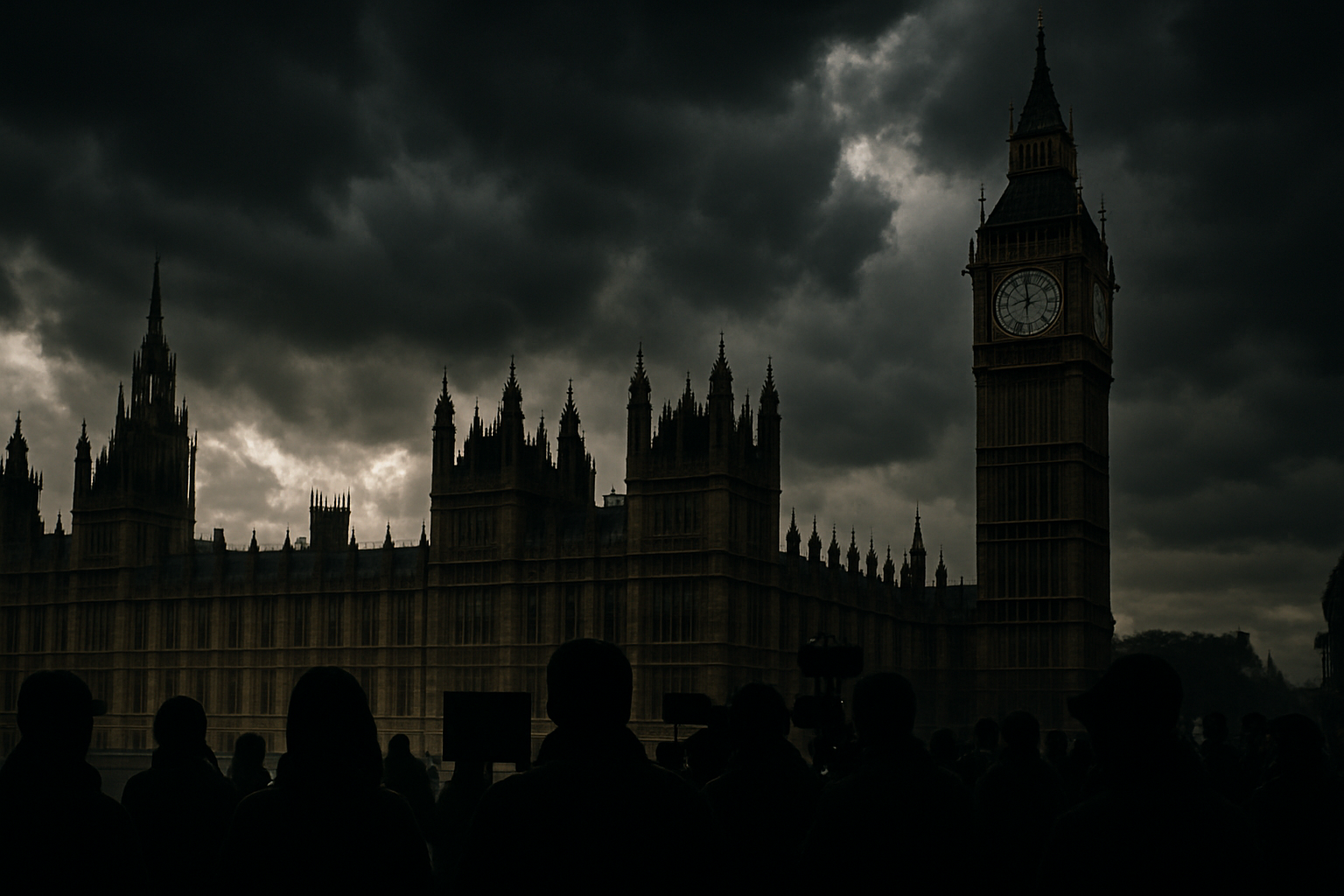
British Prime Minister Keir Starmer faced unprecedented calls for his resignation on Friday as it emerged that Peter Mandelson, his former ambassador to the United States, had failed security vetting but was still granted developed vetting clearance against official recommendations from UK Security Vetting.
The revelation, which has rocked the foundations of the Labour government just 19 months after taking power with a commanding parliamentary majority, represents the gravest political crisis of Starmer's premiership. Opposition figures including Nigel Farage have declared "the time has come for him to go," while critics argue the Prime Minister can no longer escape responsibility despite claiming ignorance of the Foreign Office's decision to override the vetting recommendation.
A Cascade of Government Departures
The Mandelson affair has already claimed multiple high-profile casualties within the government. Sir Olly Robbins, the Foreign Office's most senior civil servant, was forced to leave his position after losing the Prime Minister's confidence for his role in overriding the security vetting decision in January 2025.
This latest departure follows a string of resignations connected to the scandal: Morgan McSweeney resigned as chief of staff taking "full responsibility" for advising the Mandelson appointment, Chris Wormald was forced out as Cabinet Secretary "by mutual consent," and Matthew Doyle was suspended from the Labour whip over separate allegations.
Perhaps most damaging for Starmer has been the unprecedented public call for his resignation from Scottish Labour leader Anas Sarwar, representing an extraordinary breach of party unity that sources describe as creating a "toxic atmosphere" within the parliamentary party.
The Security Vetting Controversy
At the heart of the crisis lies the revelation that Mandelson, a veteran Labour politician with close ties to convicted sex offender Jeffrey Epstein, was granted security clearance despite official warnings about "reputational risk." The 72-year-old was subsequently fired after Starmer said he had lied about the strength of his relationship with Epstein.
"I don't think the prime minister can get out of his responsibility by sacking Olly Robbins. I think the buck has to stop with Mr Starmer."
— Liberal Democrat Leader, on government accountability
Government sources confirmed that Starmer was unaware that Foreign Office officials had overruled the vetting recommendation, but opposition parties argue this represents a fundamental failure of oversight and leadership. The affair has raised serious questions about the adequacy of diplomatic appointment procedures and ministerial accountability.
International Embarrassment and Diplomatic Fallout
The Mandelson appointment was originally intended to strengthen US-UK relations during a critical period in transatlantic diplomacy. Instead, it has become a source of international embarrassment, with German media reporting that Starmer has "no credit left" with the British public.
The Metropolitan Police continue their investigation into allegations that Mandelson leaked confidential government information to Epstein during the 2008 financial crisis while serving as Business Secretary. Former Prime Minister Gordon Brown has characterized these alleged actions as "economic crime" and "betrayal," demanding that Mandelson return his £75,000 severance payment and testify before the US Congress.
Parliamentary Response and Reform Demands
The Intelligence and Security Committee has demanded "maximum transparency" in the affair, threatening to publish documents "even if embarrassing to No 10." Parliamentary committees are reviewing diplomatic appointment vetting procedures, with calls for fundamental reforms including mandatory parliamentary approval for ambassadorial appointments and independent oversight of security decisions.
Constitutional experts suggest that the override of security vetting without ministerial knowledge may breach established conventions governing the relationship between civil servants and elected officials. The affair has prompted broader questions about the balance between administrative independence and political accountability in matters of national security.
Electoral Consequences and Political Survival
The crisis has already contributed to Labour's catastrophic defeat in the Gorton and Denton by-election in February, where the party finished third behind the Green Party and Reform UK in a constituency held since 1935. The defeat, coming amid the ongoing Mandelson scandal, demonstrated the electoral impact of the government's credibility problems.
With crucial local elections approaching in May, party sources suggest that further electoral defeats could trigger a formal leadership challenge. Potential successors mentioned include Health Secretary Wes Streeting and Deputy Prime Minister Angela Rayner, though both have publicly backed Starmer despite the crisis.
International Context and Broader Implications
The UK crisis is part of what European law enforcement officials describe as the "largest international elite criminal network exposure in recent memory," stemming from the release of Jeffrey Epstein documents. The scandal has affected multiple countries, with investigations ongoing in six nations and unprecedented international cooperation in addressing transnational elite criminal networks.
Norway's Crown Princess Mette-Marit faces potential criminal proceedings, while corporate resignations have included Goldman Sachs executives and DP World's CEO. The UK government's handling of the Mandelson affair will establish important precedents for how democratic institutions respond to elite accountability challenges in the 21st century.
The Path Forward
As Starmer fights for his political survival, he faces the challenge of restoring public trust while ongoing investigations continue. The Prime Minister has expressed being "absolutely furious" over the handling of the Mandelson vetting, but critics argue that anger is insufficient given the scale of the oversight failure.
The resolution of this crisis will have lasting implications for British politics, diplomatic procedures, and the principles of ministerial responsibility that underpin democratic governance. Whether Starmer can weather this unprecedented storm or becomes another casualty of the scandals engulfing his administration remains to be seen.
The coming weeks will prove decisive in determining not only Starmer's political future but also the broader questions of accountability and reform that this crisis has raised about the machinery of modern democratic government.