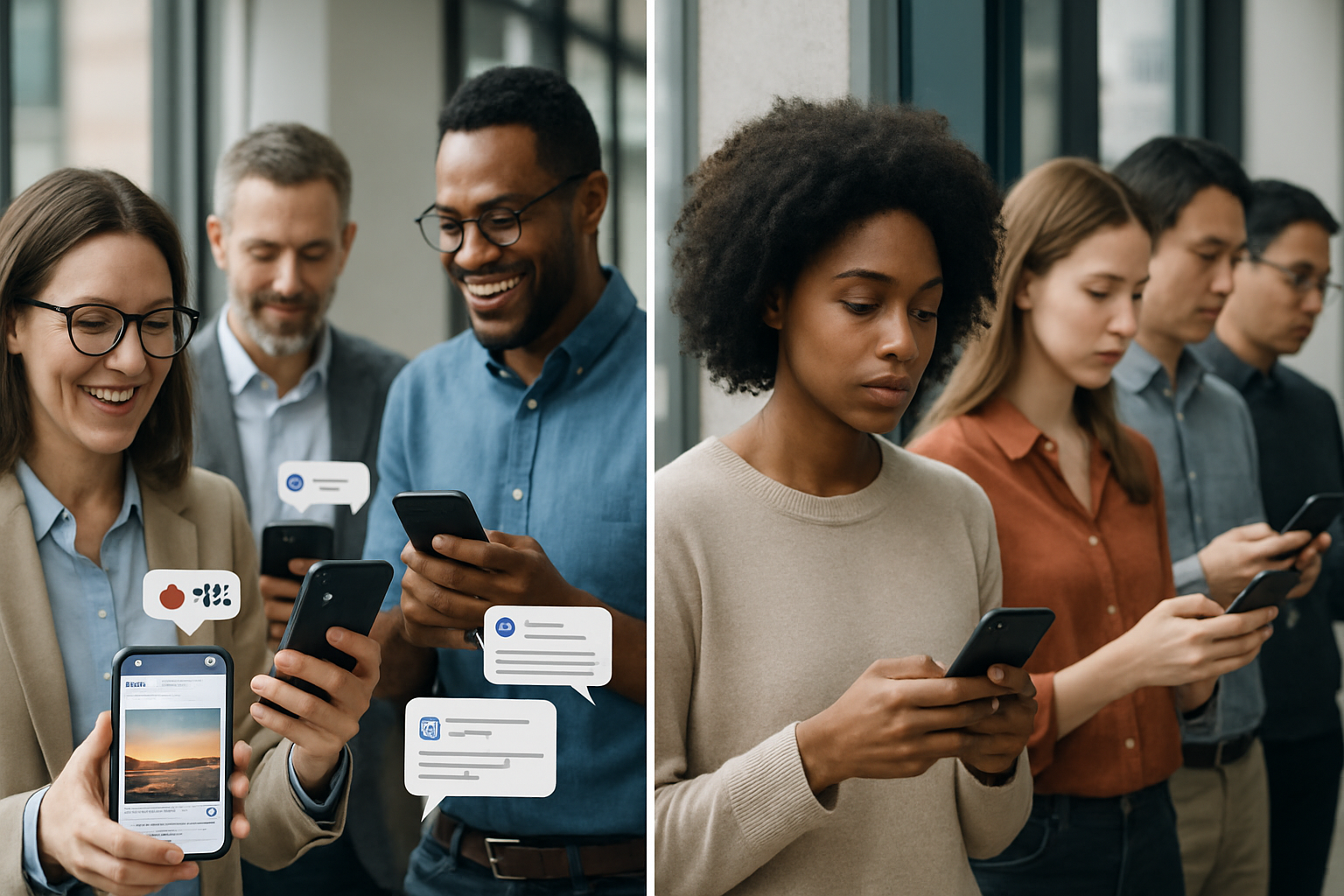
A significant transformation is underway in how UK adults engage with social media platforms, with new research from Ofcom revealing a notable decline in active posting behavior as users shift toward what experts are calling "digital ghost" patterns - consuming content without contributing their own.
The UK communications regulator's latest findings indicate that fewer adults are actively posting content on social media platforms, coinciding with what industry observers describe as a fundamental shift in digital behavior patterns. This change reflects a broader global phenomenon where users are increasingly prioritizing digital wellness over traditional engagement metrics.
The Digital Ghost Movement
The concept of "digital ghosts" or "zero posting" first documented in Venezuela as "Silencio visible: el 'zero posting' como forma de autocuidado digital" (Visible silence: zero posting as digital self-care), represents a conscious departure from the engagement-driven social media model that has dominated the past decade.
According to mental health professionals studying this trend, digital ghosts maintain technological connectivity while protecting psychological wellbeing by avoiding the performance pressure and social comparison that comes with active content creation. This approach allows users to stay informed and connected without the psychological burden of curating an online presence.
"We're seeing a sophisticated form of digital wisdom emerging, where people are learning to navigate technology in ways that preserve rather than diminish their humanity."
— Digital Wellness Researcher
The Science Behind the Shift
The movement toward passive consumption aligns with emerging research on social media's impact on mental health. Studies indicate that 96% of children aged 10-15 use social media, with 70% experiencing harmful content exposure and over 50% encountering cyberbullying. For adults, the constant pressure to maintain an engaging online persona has created what researchers term a "wellness paradox" - where the pursuit of digital social connection can lead to psychological exhaustion.
Dr. Ran Barzilay's research at the University of Pennsylvania demonstrates that early smartphone exposure before age 5 causes persistent sleep disorders, cognitive decline, and weight problems that extend into adulthood. University of Macau studies further prove that short-form video consumption damages cognitive development, causing social anxiety and academic disengagement in younger users.
For adults who grew up during the early social media era, the shift toward digital ghost behavior represents a mature response to understanding these psychological mechanisms. By consuming content without creating it, users avoid the dopamine-driven reward cycles that can interfere with the brain's natural motivation systems.
Global Regulatory Context
This behavioral shift is occurring alongside the most significant social media regulation wave in internet history. Countries worldwide are implementing unprecedented platform restrictions, with Australia eliminating 4.7 million teen accounts under its under-16 social media ban, while Spain has introduced criminal executive liability frameworks creating imprisonment risks for tech executives who fail to protect users.
The European Commission has found TikTok in violation of Digital Services Act provisions for "addictive design" features including unlimited scrolling, autoplay, and personalized recommendations that prioritize engagement over user wellbeing. These platforms face potential penalties of up to 6% of global revenue - billions of euros in TikTok's case.
The UK government has launched comprehensive consultations examining potential under-16 social media restrictions, with Prime Minister Keir Starmer stating, "As dad of two teenagers, I know challenges parents face keeping kids safe online." Technology Minister Liz Kendall has confirmed that legislative changes are prepared for rapid deployment following consultation completion.
Alternative Approaches to Digital Wellness
While European nations pursue regulatory enforcement strategies, other countries are adopting educational approaches. Malaysia emphasizes parental responsibility through digital safety campaigns, with Communications Minister Datuk Fahmi Fadzil stressing that parents must control device access rather than using devices as "babysitters." Oman has launched "Smart tech, safe choices" initiatives focusing on conscious digital awareness rather than restriction.
This philosophical divide between regulatory enforcement and educational empowerment reflects broader questions about individual agency versus collective protection in digital governance. The digital ghost movement represents an organic, community-developed response that sidesteps this debate entirely by allowing users to maintain connectivity while exercising personal control over their level of engagement.
The Therapeutic Revolution of 2026
The rise of digital ghost behavior coincides with what mental health professionals are calling the "Therapeutic Revolution of 2026" - a global shift from crisis-response to prevention-first mental healthcare. Countries implementing prevention-focused strategies report superior cost-effectiveness compared to traditional treatment-focused approaches.
Montana achieved an 80% reduction in police mental health calls through mobile crisis teams providing proactive community intervention. Finland has maintained its position as the world's happiest country for nine consecutive years by organizing society around human flourishing rather than merely treating illness.
The digital ghost movement exemplifies this prevention-first approach by addressing the root causes of social media-related psychological distress rather than merely treating its symptoms. By reducing performance pressure and social comparison, users can maintain the beneficial aspects of digital connectivity while avoiding the psychological burdens.
Economic and Cultural Implications
The shift toward passive consumption has significant implications for the creator economy and platform business models. High-profile content creators are reporting lower earnings than expected, as engagement-based monetization faces challenges from users who prefer consuming without interacting.
The "SaaSpocalypse" of February 2026 eliminated hundreds of billions in technology market capitalization amid regulatory uncertainty and changing user behaviors. Platforms are being forced to reconsider business models that have traditionally prioritized engagement metrics over user welfare.
Culturally, the digital ghost movement represents what researchers call "digital wisdom" - the development of sophisticated strategies for navigating technology while preserving authentic human connections. This trend is particularly prominent among Generation Z, who are prioritizing sleep, personal development, and authentic relationships over traditional social media performance metrics.
Implementation Challenges and Opportunities
While the digital ghost movement offers a promising path toward healthier digital relationships, it also presents challenges for democratic discourse and social connection. Reduced active participation in online conversations could potentially limit civic engagement and community building that has historically occurred through social media platforms.
However, research suggests that digital ghosts often engage more meaningfully in offline community activities and face-to-face relationships. The reduced psychological burden from social media performance allows for more authentic connections in physical spaces.
The global semiconductor crisis, with memory chip prices increasing sixfold until 2027, has ironically supported this trend by encouraging more efficient, less resource-intensive forms of digital engagement. Users are finding that consuming rather than creating content requires less technical infrastructure while providing similar informational benefits.
Future Implications and Global Impact
The digital ghost movement signals a fundamental evolution in human-technology relationships that extends far beyond the UK. As awareness of social media's psychological impacts increases, more adults are choosing conscious consumption strategies that prioritize long-term wellbeing over short-term engagement.
This trend could reshape the technology industry's approach to platform design, potentially moving away from engagement-maximizing algorithms toward wellness-supporting features. Companies may need to develop new metrics that measure user wellbeing rather than simply time spent on platforms.
The success of the digital ghost movement will likely influence international policy discussions about platform regulation and digital rights. Rather than relying solely on governmental restrictions or industry self-regulation, this organic user response demonstrates that communities can develop their own solutions to digital wellness challenges.
As the UK continues to lead global conversations about online safety and digital governance, the rise of digital ghost behavior represents a mature, thoughtful response to the challenges of life in the digital age. By choosing when and how to engage with social media platforms, adults are demonstrating that it's possible to maintain the benefits of digital connectivity while protecting psychological wellbeing.
The long-term implications of this behavioral shift will likely influence how future generations approach technology, potentially creating a new social contract that prioritizes sustainable digital wellness over endless engagement. As the movement continues to grow, it may well represent the beginning of a more balanced and healthy relationship between humans and technology in the 21st century.