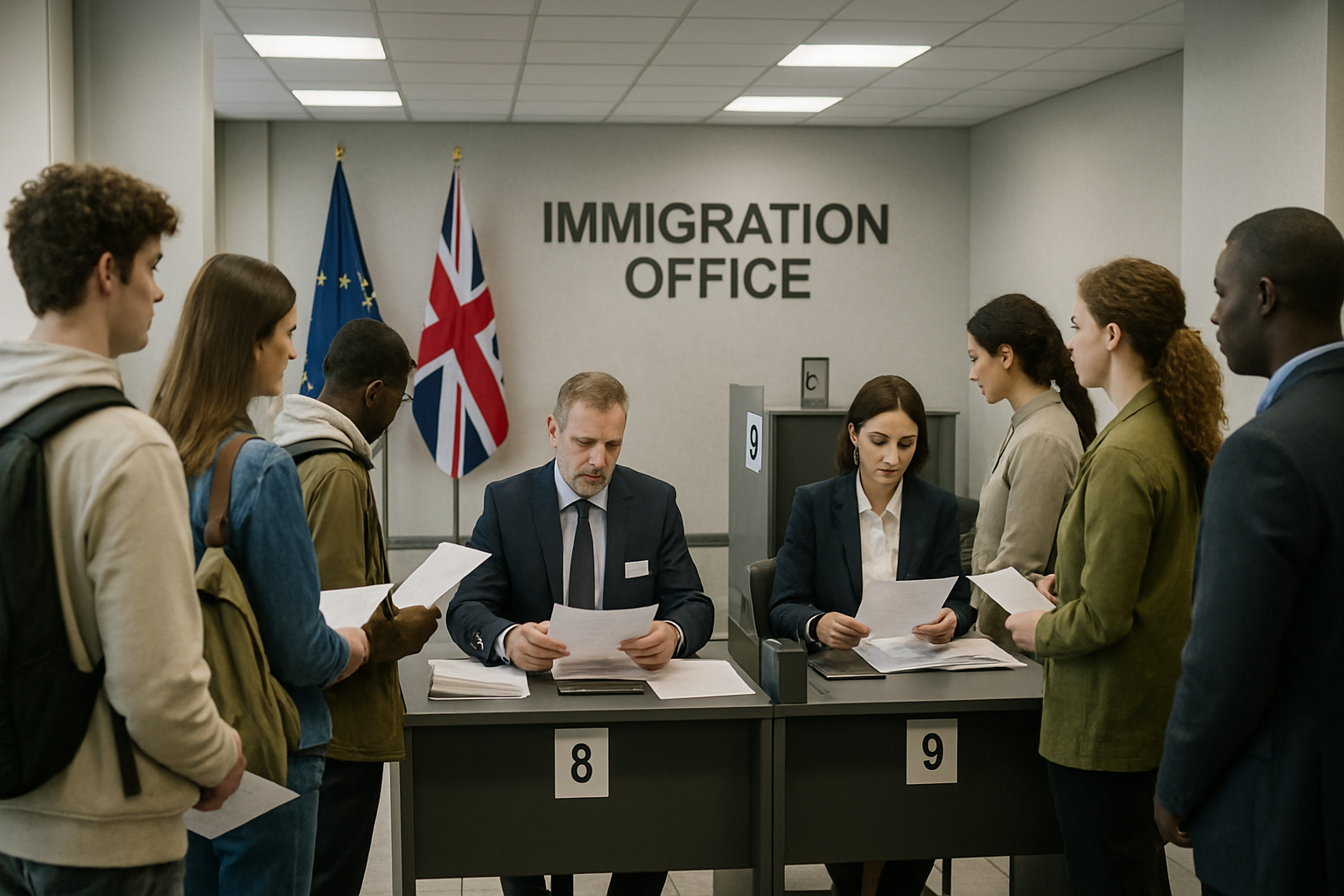
The United Kingdom has implemented what officials describe as an "emergency brake" on student visas from four conflict-affected countries, marking the first country-specific visa suspension in British immigration history as European nations confront an evolving asylum and migration crisis that challenges traditional humanitarian frameworks.
Home Secretary Shabana Mahmood announced the immediate suspension of study visas for nationals from Afghanistan, Cameroon, Myanmar, and Sudan on Tuesday evening, with the policy taking effect on March 26. The decision follows what government officials describe as systematic abuse of legal migration channels, with 39% of the UK's 100,000 asylum claimants in 2025 initially arriving through legitimate routes including study visas.
Unprecedented Policy Escalation
The visa suspension represents a dramatic escalation in the UK's post-Brexit immigration strategy, targeting countries experiencing severe humanitarian crises. All four affected nations face complex challenges: Afghanistan remains under Taliban control with 88% of female households unable to meet minimum living standards, Myanmar continues grappling with military coup aftermath since 2021, Sudan faces ongoing civil conflict, and Cameroon deals with separatist movements.
"The British government has imposed an 'emergency brake' on visas for students from Afghanistan, Cameroon, Myanmar and Sudan, in response to what it said was a surge of requests for asylum from people arriving in the United Kingdom to study," according to official government statements.
The policy extends beyond education, with work visas for Afghan nationals also suspended. This represents the first time the UK has implemented country-specific restrictions based on asylum claim patterns rather than security assessments alone.
European Context and Broader Implications
The UK's action occurs within a broader European shift toward restrictive immigration policies. The European Parliament approved historic asylum procedure changes in February 2026, allowing member states to deport asylum seekers to "safe" third countries through a center-right and far-right alliance. This represents a fundamental shift from protection to deterrence principles that have guided European asylum policy since the 1950s.
"Ban affecting Sudan, Afghanistan, Myanmar and Cameroon will mean more people make Channel crossings, charity says"
— UK Immigration Charity Warning
Immigration advocacy groups have warned that the visa restrictions will likely drive more people to use dangerous Channel crossing routes via small boats. The concern reflects the interconnected nature of migration routes, where legal pathway restrictions often increase reliance on irregular migration methods.
The policy follows extensive research conducted by Mahmood, including visits to Denmark's Sjælsmark deportation facility, as the UK studies European approaches to migration management. This represents part of a comprehensive post-Brexit immigration overhaul that includes Electronic Travel Authorization for 85 countries, 30-month limits on refugee protection status, and enhanced family visa restrictions.
Statistical Evidence and Government Rationale
Government data reveals a 470% surge in asylum applications from students of the four affected countries between 2021-2025, creating what officials characterize as evidence of systematic exploitation of the UK's legal immigration system. This pattern emergence prompted the emergency brake mechanism activation for the first time in UK immigration history.
The statistical justification reflects broader European concerns about legal migration channel abuse. Cyprus, holding the EU Council Presidency since January 2026, ranks second in the EU for immigration inflows with 42 migrants per 1,000 residents—over four times the EU average. Meanwhile, EU asylum applications dropped 19% overall in 2025, with Germany experiencing a 31% reduction, suggesting complex regional migration pattern shifts.
Educational Sector Disruption
The visa suspension disrupts the UK's position as a global education hub, affecting thousands of prospective students and potentially billions in international student revenue. Universities face immediate challenges with existing partnerships and accelerated satellite campus strategies to maintain international engagement despite domestic restrictions.
The educational impact extends beyond individual institutions to represent a fundamental questioning of the UK's historical role as a destination for international students. The policy creates unprecedented barriers for legitimate students from regions experiencing political instability while attempting to address asylum system abuse.
Legal and Constitutional Challenges
Civil rights organizations are expected to challenge the blanket restrictions on non-discrimination grounds, raising questions about the UK's international law obligations toward people fleeing persecution from humanitarian crisis regions. Legal experts anticipate constitutional challenges regarding the proportionality of country-specific bans affecting entire populations rather than individual assessments.
The implementation significance extends beyond domestic policy, potentially setting international precedents for similar approaches globally. Other nations monitoring the UK experience may adopt comparable measures if deemed effective, fundamentally altering international approaches to legal migration management.
Continental Policy Alignment
The UK policy aligns with broader European restrictive trends. France experienced doubled citizenship applications in December 2025 as foreigners rushed to meet new B2 French language requirements. Germany has begun deportations to Afghanistan through Taliban agreements, while the EU's Entry/Exit System detected over 4,000 overstayers in its first four months of operation.
Greece leads a coalition with Germany, Netherlands, Austria, and Denmark to establish migrant deportation centers in third countries, likely in Africa, utilizing enhanced cooperation mechanisms that enable smaller member state groups to advance policies without unanimous EU consent. This represents the most significant European migration policy transformation since the Dublin system establishment.
Humanitarian Concerns and Alternative Approaches
Critics argue the policy penalizes individuals fleeing genuine persecution while failing to address root causes of forced migration. The affected countries represent some of the world's most severe humanitarian crises, raising ethical questions about obligations under international law to provide protection channels for those facing persecution.
Alternative successful approaches exist: Guyana's diaspora reintegration program has facilitated over 2,000 returns in five years through opportunity-based policies, while Albania has welcomed 27,000 foreign nationals to fill labor shortages, demonstrating positive migration management approaches.
International Implications and Precedent Setting
The visa suspension occurs during heightened international scrutiny of democratic nations' approaches to balancing border security with humanitarian obligations. European officials emphasize the importance of managing migration through legal and democratic channels rather than purely enforcement-based approaches.
Global observers are monitoring the UK experience as a potential template for future country-specific restrictions if similar "abuse" patterns are identified elsewhere. The policy represents a critical test of 21st-century democratic border management that attempts to maintain humanitarian commitments while achieving security objectives.
Success or failure of the UK approach will influence international migration policy development for decades, particularly as climate change, conflict, and economic instability create increased displacement pressures requiring sophisticated policy responses that balance multiple competing interests.
Looking Forward: Policy Effectiveness and Adaptation
The UK government maintains no stated review timeline for the emergency restrictions, creating uncertainty for affected communities and educational institutions. Implementation will require continuous country monitoring for conditions that might warrant policy reversal, adding administrative complexity to an already strained immigration system.
As European nations navigate increasing migration pressures amid demographic aging, labor shortages, and climate-induced displacement, the UK's country-specific visa approach represents one response among many being tested across the continent. The effectiveness of restrictive versus opportunity-based policies will likely determine future international approaches to managing complex 21st-century migration challenges.
The ultimate measure of success will be whether such policies achieve their stated objectives of preventing system abuse while maintaining the UK's humanitarian commitments and international reputation as a destination for legitimate students and workers seeking opportunity and education.