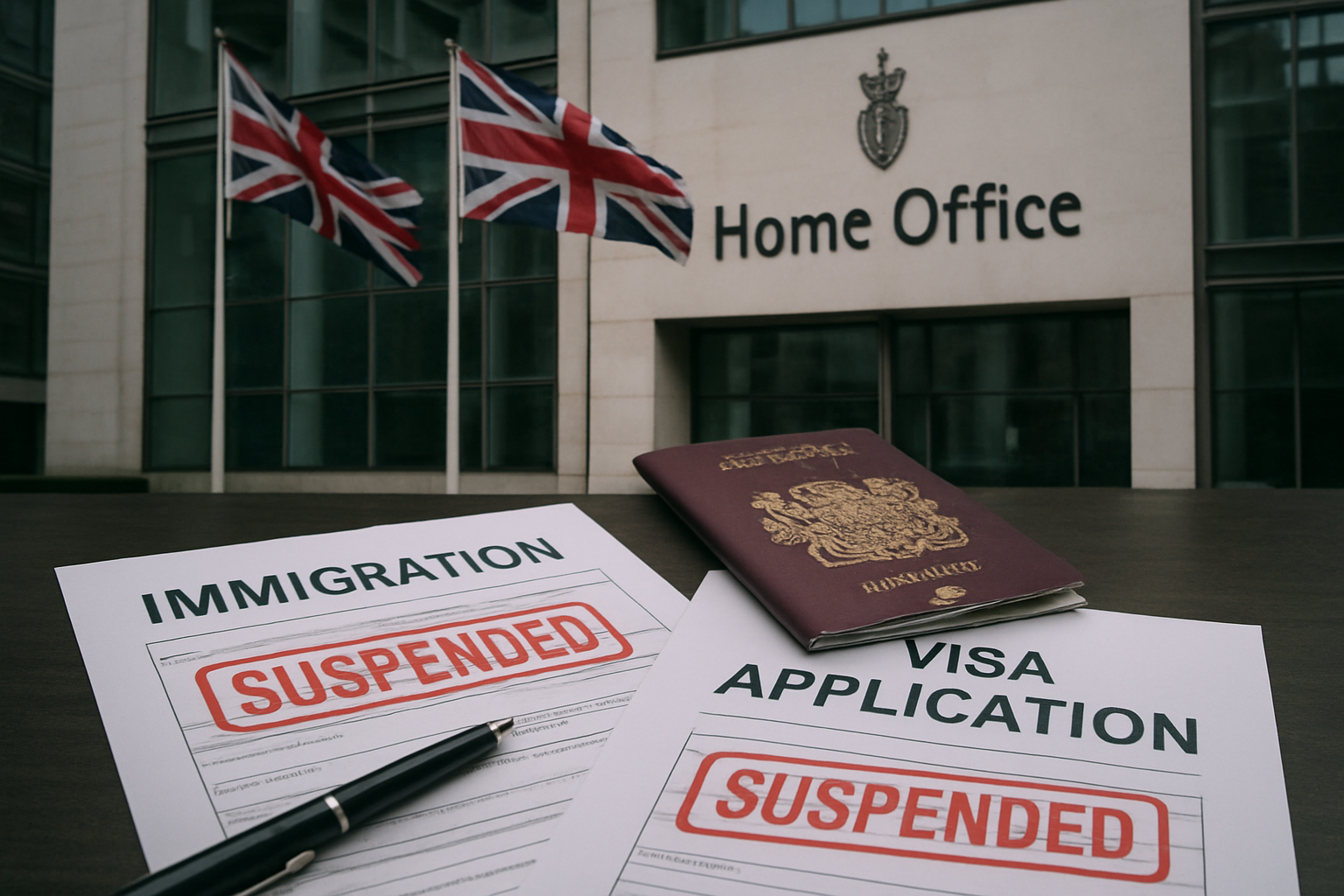
Britain has suspended student visas for nationals from Afghanistan, Cameroon, Myanmar and Sudan, marking the first time the government has imposed an emergency brake on immigration from specific countries as Home Secretary Shabana Mahmood accused these nations of exploiting Britain's generosity to claim asylum.
The suspension, announced on March 3, 2026, also extends to work visas for Afghan nationals, representing a significant escalation in the UK's increasingly restrictive immigration policies. The Home Office said asylum applications from students of these four countries rose more than 470% between 2021 and 2025.
System Abuse Allegations Drive Policy Change
Home Secretary Shabana Mahmood justified the unprecedented move by claiming that nationals from these countries have systematically abused the UK's visa system to gain entry and subsequently claim asylum. The government characterized this as exploitation of Britain's traditional openness to international students.
"The government has imposed an emergency brake on visas for the first time on nationals from four countries, as Shabana Mahmood accused them of exploiting Britain's generosity to claim asylum," according to official government statements.
The decision affects thousands of prospective students who were planning to study in the UK, potentially disrupting academic partnerships and enrollment plans already in motion for the 2026-2027 academic year.
Rising Anti-Immigration Sentiment Context
The visa ban comes amid a documented rise in anti-immigration sentiment across the UK, reflecting broader European trends toward more restrictive migration policies. The move is part of the government's stated goal to "curb asylum claims via legal routes" by targeting what officials describe as systematic abuse of the student visa pathway.
This policy shift represents a continuation of the UK's hardening stance on immigration that has accelerated since Brexit, with recent measures including the implementation of Electronic Travel Authorization requirements for visitors from 85 countries and significant restrictions on dual nationals.
Impact on Affected Countries
The four targeted countries - Afghanistan, Cameroon, Myanmar and Sudan - share common characteristics of political instability, conflict, and deteriorating human rights situations that have driven increased displacement and asylum seeking globally.
Afghanistan, in particular, has seen mass displacement since the Taliban's return to power in August 2021, with the Georgetown Institute for Women, Peace and Security recently ranking the country 181st out of 181 countries in their Women, Peace and Security Index. The ongoing humanitarian crisis has left 88% of female-headed households unable to meet minimum living requirements.
Myanmar continues to experience political upheaval and violence following the 2021 military coup, while Sudan faces ongoing civil conflict. Cameroon has seen increased instability due to separatist movements and broader regional security challenges.
Historical Context of UK Immigration Policy
The suspension builds on a series of increasingly restrictive UK immigration measures implemented over recent years. In February 2026, the government introduced comprehensive asylum system changes, including temporary refugee protection limited to 30 months, replacing traditional indefinite protection.
These measures follow Home Secretary Mahmood's visit to Denmark's Sjælsmark returns centre, where she observed strict deportation facility conditions as part of studying European approaches to migration control. The UK has increasingly aligned with European partners in adopting more restrictive asylum and immigration policies.
"Britain will stop issuing education visas to nationals from Afghanistan, Cameroon, Myanmar and Sudan, and work visas for Afghans, the government said on Tuesday, as it moves to curb asylum claims via legal routes."
— France 24 International Breaking News
International Reaction and Diplomatic Implications
The policy has drawn international attention, with coverage across European and international media highlighting the UK's departure from its historically welcoming approach to international education. The move affects the UK's reputation as a global education destination and may influence international students' choices more broadly.
The suspension occurs as other European nations are also reassessing their migration policies, with the European Parliament having approved historic asylum procedure changes allowing deportation to 'safe' third countries. This reflects a broader continental shift toward enforcement-focused approaches over humanitarian protections.
Educational Sector Concerns
The sudden nature of the visa suspension has raised concerns within the UK's higher education sector, which has become increasingly dependent on international student fees as a revenue source. Universities may face immediate enrollment impacts and longer-term reputational challenges in affected regions.
The policy could also disrupt existing academic partnerships and research collaborations, particularly with institutions in the affected countries that have established exchange programs or joint research initiatives with UK universities.
Legal and Humanitarian Questions
Legal experts and human rights organizations are likely to challenge the blanket nature of the restrictions, arguing that they may violate principles of non-discrimination and the right to education. The policy's broad application regardless of individual circumstances or academic merit raises questions about proportionality and due process.
The targeting of nationals from countries experiencing severe humanitarian crises also raises ethical questions about the UK's obligations under international law to provide protection for those fleeing persecution and conflict.
Implementation Timeline and Future Implications
The immediate implementation of the suspension leaves many prospective students in limbo, with applications already in process now subject to the ban. The government has not indicated when or under what conditions the restrictions might be reviewed or lifted.
This unprecedented use of country-specific visa restrictions could set a precedent for future immigration policy, potentially expanding to other nations if the government deems similar patterns of "system abuse" to exist elsewhere.
Broader Immigration Strategy
The student visa suspension forms part of a comprehensive approach to reducing overall immigration numbers, which has included restrictions on family reunion visas, increased salary thresholds for work visas, and enhanced requirements for various visa categories.
These measures reflect the current government's commitment to delivering on electoral promises to reduce immigration, even as employers across sectors report significant labor shortages and universities warn of the economic impact of reduced international student numbers.
The policy represents a significant shift in the UK's approach to international education, moving from a primarily welcoming stance to one focused on preventing potential abuse of the system, regardless of the broader implications for the country's educational and cultural relationships globally.