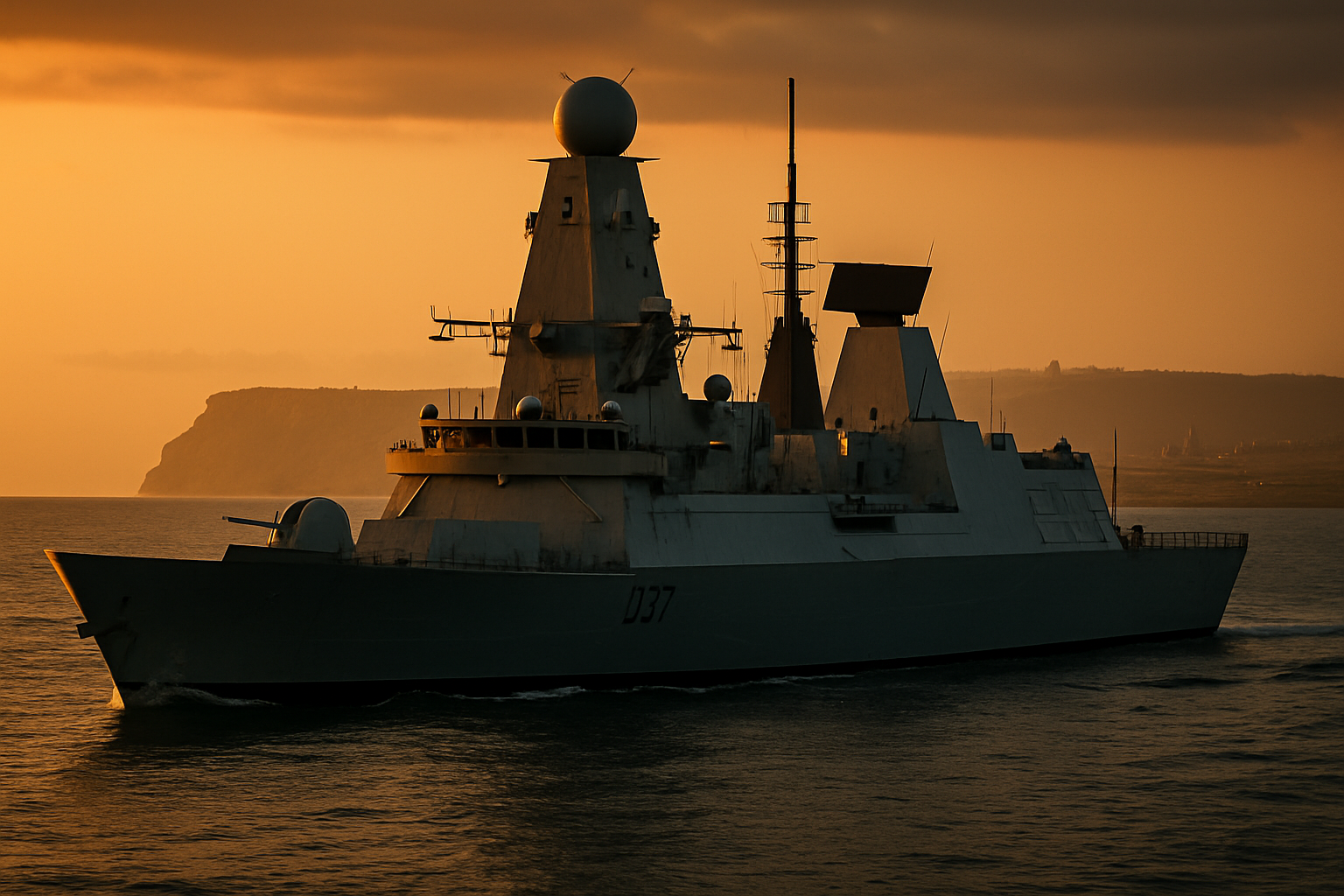
Britain is planning to deploy a Royal Navy warship to defend its sovereign military bases in Cyprus following Iranian drone attacks that marked the first time a Middle Eastern conflict has directly reached European territory since World War II.
Defense Secretary John Healey met with senior military officials on Tuesday to assess the evolving threat environment after Iranian drones successfully struck RAF Akrotiri in the early hours of Monday morning. According to three sources familiar with the discussions, HMS Duncan, a Type 45 destroyer equipped with advanced air defense systems, is being considered for deployment to the Eastern Mediterranean within the week.
Unprecedented European Escalation
The attacks on British sovereign territory represent a watershed moment in the expanding Middle East crisis. For the first time since 1945, European soil has been directly targeted as part of a regional Middle Eastern conflict, challenging fundamental assumptions about continental security.
"This changes everything," said Magnus Ranstorp, a Swedish security researcher. "We're seeing the geographic boundaries that traditionally contained Middle Eastern conflicts completely break down. Europe is no longer immune."
The Iranian drones, launched from Lebanon as part of "Operation True Promise 4," struck RAF Akrotiri's runway causing minor material damage but no casualties. A second wave of two additional Iranian drones heading toward the base was intercepted by Cypriot forces later Monday.
Historic First Strike on European Territory
Cyprus activated its national ESTIA evacuation plan for the first time in the island's history, evacuating Akrotiri village and closing all schools in the affected areas including Asomatos, Episcopi, and Trachoni. The unprecedented response highlighted the gravity of the situation facing European authorities.
"Cyprus was not the target - the target was British Bases," emphasized government spokesman Konstantinos Letymbiotis, drawing a careful distinction between the island nation and the UK sovereign installations.
— Konstantinos Letymbiotis, Cyprus Government Spokesman
RAF Akrotiri houses approximately 3,000 UK personnel and serves as a critical hub for British operations in the Eastern Mediterranean, positioned just 100 miles from Lebanon and 200 miles from Syria. The base has been a cornerstone of British military presence in the region for over six decades.
HMS Duncan: Britain's Shield
HMS Duncan, the Royal Navy destroyer under consideration for deployment, represents one of Britain's most advanced air defense platforms. The Type 45 destroyer is specifically designed to counter the type of drone and missile threats emanating from Iran and its proxies.
The ship's Sea Viper missile system can track and engage multiple aerial targets simultaneously, making it ideal for defending against the coordinated drone swarms that have become Iran's signature tactic. Military sources indicate the vessel could be positioned to provide protective coverage over both RAF Akrotiri and the nearby Dhekelia base.
"The technical capability exists to intercept these drone attacks," confirmed a senior defense official speaking on condition of anonymity. "HMS Duncan has precisely the systems needed to counter Iranian unmanned aerial threats."
Part of Broader Regional Crisis
The attacks on Cyprus occurred amid the most dangerous Middle East escalation since the Cold War's end. Iran's "Operation True Promise 4" retaliation campaign followed the US-Israeli "Operation Epic Fury" strikes, which reportedly resulted in significant Iranian leadership casualties.
The Iranian Revolutionary Guard Corps declared that "no red lines remain," expanding their target list to include British assets after years of focusing primarily on US and Israeli facilities. This escalation has forced European nations to reassess their vulnerability to Middle Eastern conflicts.
International Response Mobilizes
Britain's warship deployment plans are part of a broader European response to the crisis. Greece has already deployed two navy frigates, "Kimon" and "Psara," along with four F-16 fighter jets to Cyprus - the most significant Eastern Mediterranean military mobilization since Turkey's 1974 invasion.
France has committed to deploying missile defense systems and anti-drone technology following emergency consultations between President Emmanuel Macron and Cyprus President Nikos Christodoulides. Germany's new Chancellor Friedrich Merz has also promised frigate support, demonstrating unprecedented European unity in responding to the crisis.
"This represents the most serious threat to European security architecture since the Cold War," warned European Commission President Ursula von der Leyen in emergency statements with European Council President António Costa.
— Ursula von der Leyen, European Commission President
Cyprus Caught Between Powers
Cyprus finds itself in an increasingly precarious position as host to British sovereign bases while maintaining its own diplomatic independence and EU membership. The island's government has been careful to distinguish between attacks on British territory and threats to Cyprus itself.
The Cyprus Peace Council organized an anti-war demonstration, condemning the British bases as "anachronistic remnants of colonialism." However, the government has fully cooperated with British authorities and activated unprecedented emergency protocols to protect both military personnel and local civilians.
The evacuation of Akrotiri village marked the first implementation of Cyprus's national ESTIA plan, exposing significant gaps in the island's civil defense capabilities. Current shelter capacity can protect only about 30% of the population, with only 2,200 registered shelters serving a population of over 800,000.
Global Aviation and Economic Impact
The Cyprus attacks are part of a broader regional crisis that has created the most extensive aviation disruption since the COVID-19 pandemic. Over 18,000 flights have been cancelled worldwide as Iran, Iraq, Israel, UAE, Qatar, Syria, Kuwait, and Bahrain simultaneously closed their airspace.
Oil prices have surged 10% to over $80 per barrel amid concerns about the Strait of Hormuz, through which 40% of global oil transit passes. Natural gas prices have increased 24% in Europe and 78% in the United States, highlighting the global economic stakes of the regional conflict.
Historical Significance and Precedent
The attacks on British sovereign bases represent more than a tactical escalation - they mark a fundamental breach of the geographic boundaries that have traditionally contained Middle Eastern conflicts since World War II. European security experts are describing March 2, 2026, as a potential turning point in post-war international relations.
"We're witnessing the template-setting moment for 21st-century conflict management," observed Dr. Sarah Mitchell, a European security analyst. "The rapid spillover from regional disputes to European territory demonstrates how traditional crisis containment mechanisms are failing in our multipolar era."
The success or failure of the international response to contain this crisis could provide a framework for future diplomatic interventions or, conversely, accelerate the trend toward military solutions for international disputes.
Nuclear Diplomacy's Complete Collapse
The current escalation occurred despite what had been described as the most promising US-Iran diplomatic engagement in years. Geneva talks had achieved "broad agreement on guiding principles" - the most significant progress since the 2018 collapse of the Joint Comprehensive Plan of Action (JCPOA).
However, fundamental disagreements proved insurmountable. Iran insisted on excluding ballistic missiles and regional proxy activities as "red lines" from nuclear-only talks, while the US demanded a comprehensive agreement including missiles, armed groups, and human rights concerns.
Iran continues enriching uranium to 60% purity - dangerously close to the 90% threshold required for weapons-grade material. Intelligence estimates suggest Iran possesses over 400 kilograms of enriched uranium, sufficient for multiple nuclear weapons if weaponized.
Britain's Strategic Calculation
Prime Minister Keir Starmer confirmed to the House of Commons that RAF bases in Cyprus had not been used by US forces for offensive strikes, emphasizing that the UK's role remains defensive. However, the Iranian drone strike occurred before Britain made any public announcement about its position, suggesting Iran viewed British facilities as legitimate targets regardless of their actual use.
Defense Secretary Healey has been careful not to explicitly endorse US-Israeli strikes, instead calling on the United States to clarify the legal basis for its operations against Iran. This measured response reflects broader European concerns about the precedent of unilateral military action against a sovereign state.
The decision to potentially deploy HMS Duncan represents a significant escalation in British military commitment to the region while attempting to maintain a defensive posture that avoids further provoking Iranian retaliation.
Regional Implications and Alliance Strain
The unprecedented targeting of European territory has severely strained the regional coalition that had been supporting diplomatic solutions. Saudi Arabia, UAE, Qatar, and Egypt had formed an extraordinary consensus backing the nuclear negotiations, but Iranian attacks on member territories have tested this unity.
Egyptian President Abdel Fattah al-Sisi condemned the attacks on "sisterly Arab countries," warning of "comprehensive chaos" if the violence continues to spread. The coalition's survival will be crucial for any future diplomatic initiatives in the region.
Looking Forward: A Dangerous Precedent
The deployment of HMS Duncan, if approved, would mark Britain's most significant military response to Middle Eastern aggression since the Falklands conflict. More broadly, it represents Europe's recognition that the traditional geographic barriers protecting the continent from regional conflicts have been permanently breached.
The coming days will be crucial in determining whether this crisis can be contained through defensive measures and diplomatic intervention, or whether it marks the beginning of a broader Middle Eastern conflict with global implications for energy security, nuclear governance, and international law enforcement.
As European leaders grapple with this new reality, the attacks on British sovereign bases in Cyprus may be remembered as the moment when Middle Eastern conflicts definitively transcended their traditional boundaries, forcing a fundamental reassessment of continental security in the 21st century.