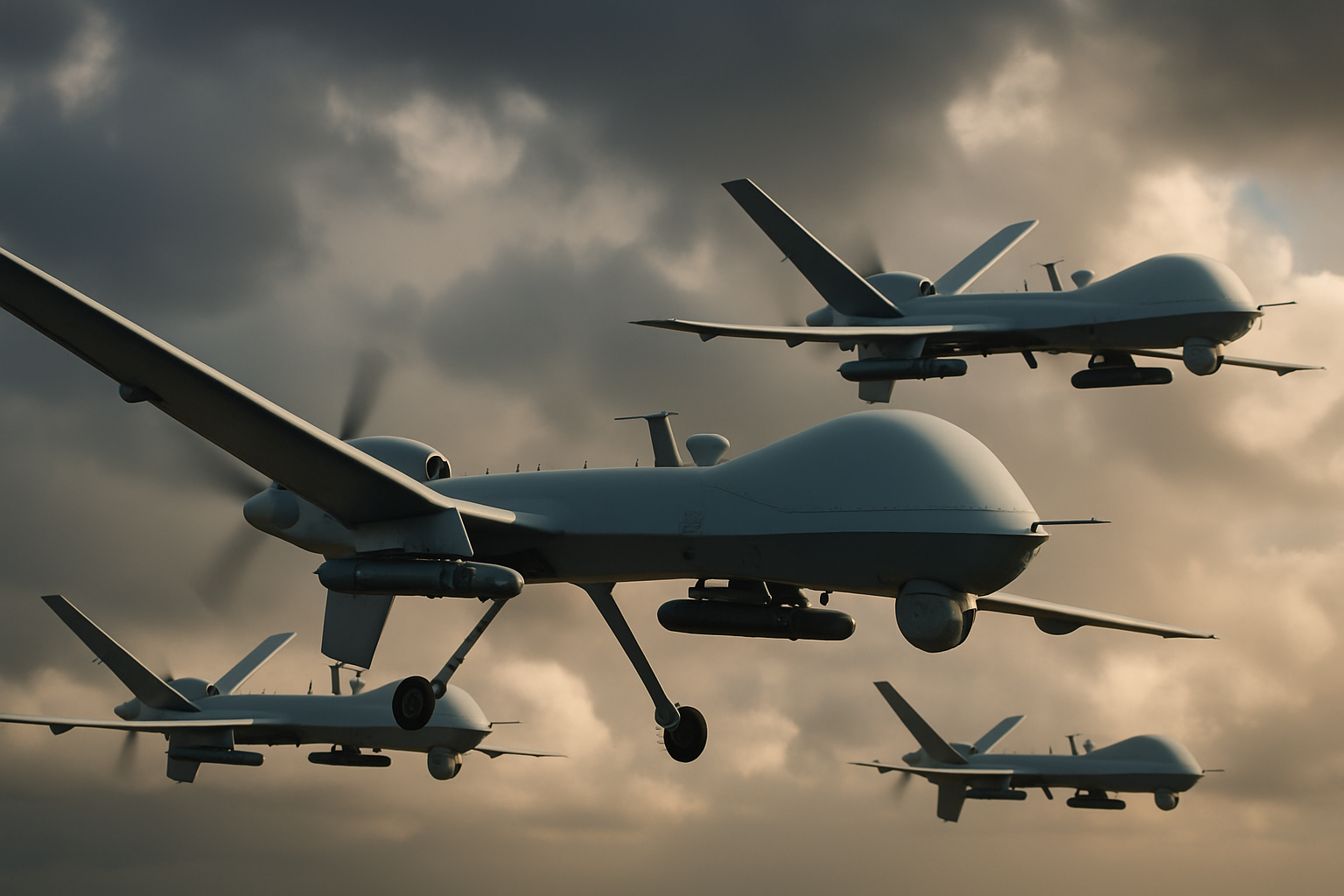
Ukraine launched a massive coordinated drone assault against Russian territory using 283 unmanned aircraft, marking one of the largest such operations since the conflict began in February 2022. The attack targeted Russian military facilities, oil refineries, and critical infrastructure across multiple regions.
According to the Russian Defense Ministry, the unprecedented nighttime operation represented a significant escalation in Ukraine's deep-strike capabilities, with Ukrainian forces successfully penetrating Russian air defenses to strike facilities as far as 1,400 kilometers from the border.
Scale and Scope of the Attack
Russian officials reported intercepting the majority of the 283 drones, but confirmed multiple successful strikes. In the Rostov region alone, approximately 90 drones targeted military and energy facilities, according to regional governor Yuri Sliusar. The Bashkortostan region, including the city of Ufa, also came under attack, with debris from intercepted drones injuring two construction workers near oil refinery facilities.
The operation demonstrates Ukraine's evolving technological capabilities and strategic shift toward targeting the sources of Russian military power rather than purely defensive operations. French intelligence sources confirmed that several targeted facilities produce critical electronic components, semiconductors, and microchips essential to Russian weapons systems.
Strategic Targeting and Military Objectives
The drone strikes specifically targeted oil refineries, chemical plants, and military production facilities across multiple Russian regions. According to Ukrainian sources, the operation aimed to degrade Russia's military-industrial capacity and energy infrastructure supporting the war effort.
This represents the latest in a series of Ukrainian long-range strikes that have reached deep into Russian territory, including previous attacks on ballistic missile facilities in the Udmurt Republic and oil depots in the Pskov region. The strikes demonstrate Ukraine's ability to project power far beyond the immediate conflict zone.
Diplomatic Context and Implications
The massive drone operation comes as peace talks between Ukraine, Russia, and the United States remain indefinitely suspended due to the ongoing Iran crisis. The trilateral negotiations, which had achieved significant progress including a historic 314-prisoner exchange and the restoration of US-Russia military communications after a four-year suspension, have been derailed by Middle East priorities.
Ukrainian President Volodymyr Zelensky has stated there are "no necessary signals for trilateral meeting until security situation allows," referring to the broader regional instability affecting international diplomatic efforts.
Military and Technical Evolution
The scale of the 283-drone attack represents a dramatic evolution in Ukraine's military capabilities. Intelligence sources indicate that Ukraine's defense industry has expanded to include 450 companies, making it the largest sector in the Ukrainian economy. The country has established 10 European export centers and is transitioning from an aid recipient to a security provider.
Ukrainian military experts are now deploying to Middle Eastern countries including the UAE, Qatar, Jordan, Bahrain, and Kuwait to share expertise in combating Iranian Shahed drones—the same weapons that have devastated Ukrainian infrastructure.
Russian Response and Defense
Russian authorities reported implementing emergency containment measures and deploying additional air defense systems in response to the attacks. The scale of the operation has prompted Moscow to reassess its defensive capabilities and consider enhanced protection for critical infrastructure facilities.
The attacks highlight vulnerabilities in Russia's defense of its military-industrial base, particularly facilities producing advanced electronics and components crucial to modern weapons systems. International law experts note that such military production facilities constitute legitimate targets under the laws of armed conflict.
Broader Conflict Dynamics
The drone offensive occurs amid continued Russian territorial gains, with Moscow's forces advancing 481 square kilometers in January 2026 compared to 260 square kilometers in December 2025—an 85% acceleration. Russian forces have also intensified their "energy terrorism" strategy, leaving over 1,170 buildings in Kyiv without adequate heating during extreme winter conditions.
The conflict has entered its fifth year with Ukraine disclosing that 55,000 soldiers have been officially confirmed killed, though international estimates suggest actual casualties may be 2-3 times higher. Over 17.8 million Ukrainians continue to access winter support programs.
International Support and Nuclear Context
Despite the suspension of peace talks, international support for Ukraine remains unprecedented. The European Union has approved a historic €90 billion loan package—the largest single-nation assistance effort in EU history—while Sweden and Denmark have committed €246 million in air defense systems.
The conflict continues against the backdrop of an unprecedented nuclear governance crisis. The New START treaty between the United States and Russia expired in February 2026, marking the first time in over 50 years without bilateral nuclear constraints between the superpowers, who together control 80% of the world's nuclear weapons.
Looking Ahead
The massive drone attack represents Ukraine's determination to maintain pressure on Russian military capabilities despite the suspension of diplomatic efforts. With the framework for peace negotiations preserved but timeline uncertain due to regional conflicts, both sides appear committed to military solutions for their territorial and strategic objectives.
The success of such large-scale drone operations could significantly impact Russia's long-term military sustainability, while Ukrainian retaliation continues to exact a devastating toll on civilian populations. The stakes extend far beyond Ukraine and Russia, affecting European security architecture, international law enforcement, and territorial sovereignty principles that will shape power competition for decades to come.