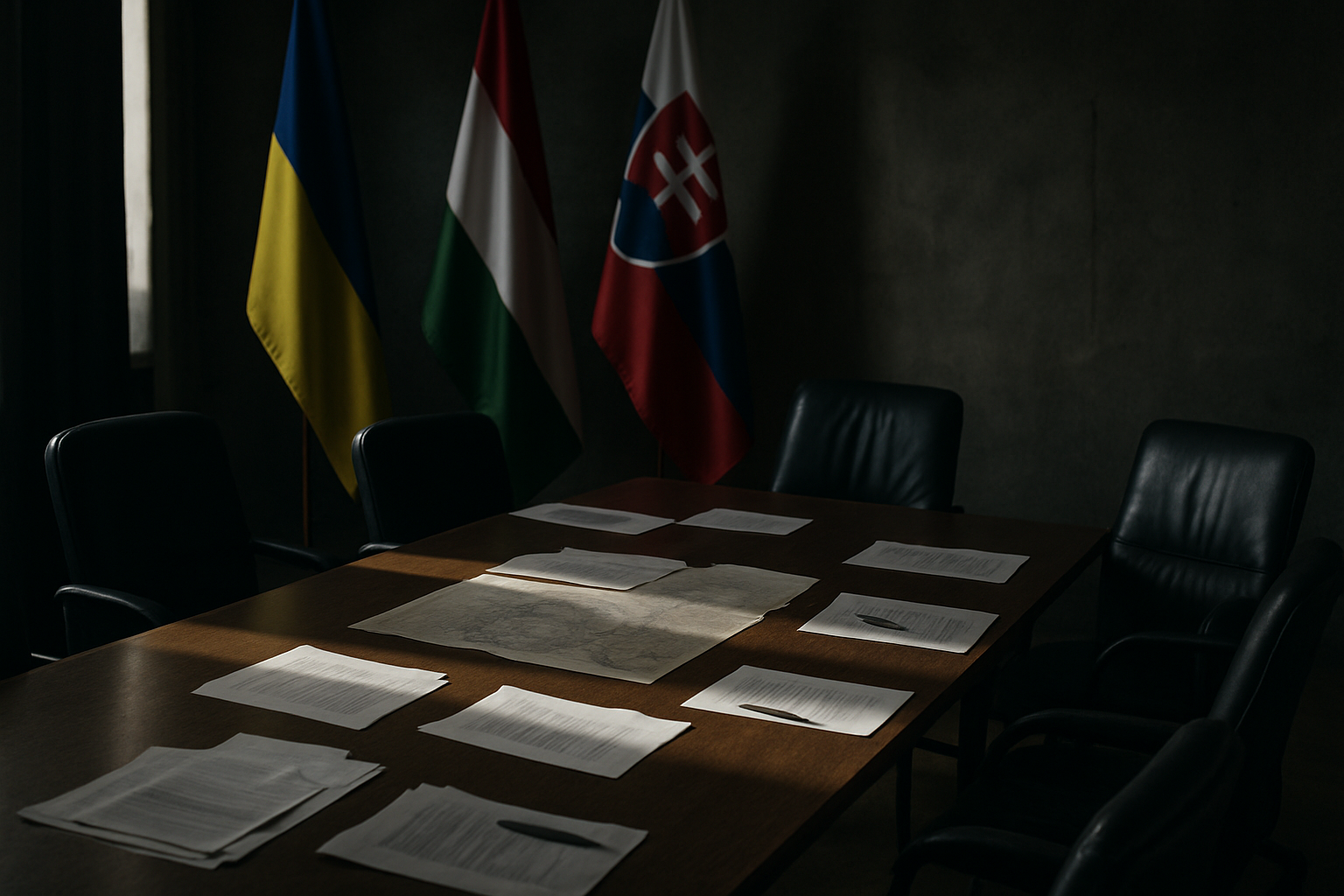
Ukraine's Foreign Ministry rejected what it calls "ultimatums and blackmail" from Hungary and Slovakia, as both Central European nations threaten to cut emergency electricity supplies unless Russian oil transit through the Druzhba pipeline resumes by February 23.
The escalating dispute involves the critical Druzhba pipeline, which has been offline since January 27, creating a complex energy crisis that tests European Union solidarity during one of the continent's most challenging periods since World War II.
The Ultimatum: Slovakia's 48-Hour Deadline
Slovak Prime Minister Robert Fico issued the starkest warning on Saturday, giving Ukraine a 48-hour deadline to restore Russian oil flows or face the suspension of emergency electricity supplies starting Monday, February 23. This represents a dramatic escalation in tensions between EU allies during Ukraine's critical winter energy crisis.
"Slovakia will halt electricity supplies to Ukraine from February 23 if Ukraine doesn't resume oil supplies via the Druzhba pipeline," Fico declared, according to TASS reports. The ultimatum comes as Slovakia has released 250,000 tons from its strategic oil reserves to maintain operations at the Slovnaft refinery—enough for only one month of capacity.
Hungary quickly followed suit, with Prime Minister Viktor Orbán announcing that his government is "weighing the possibility of suspending emergency electricity aid to Ukraine if oil supplies to Hungary are not restored." This coordinated pressure from two of the EU's most Moscow-friendly governments represents a significant challenge to European unity.
Ukraine's Defiant Response
Ukraine's Ministry of Foreign Affairs issued a forceful statement Saturday evening, declaring that it "rejects and condemns ultimatums and blackmail by the governments of Hungary and the Slovak Republic regarding energy supplies between our countries."
"Ukraine rejects and condemns ultimatums and blackmail by the governments of Hungary and Slovakia regarding energy supplies. Ultimatums should be sent to Kremlin, not to Kyiv."
— Ukrainian Ministry of Foreign Affairs
The Ukrainian position maintains that the pipeline shutdown resulted from Russian drone attacks on western Ukrainian infrastructure on January 27, requiring extensive repairs. Slovak and Hungarian officials, however, echo Moscow's narrative that Ukraine is deliberately manipulating oil supplies as a political weapon.
Energy Weapon in Winter Warfare
The crisis unfolds against the backdrop of Russia's systematic "winter weapon" strategy targeting Ukrainian civilian infrastructure. According to Ukrainian officials, more than 1,170 buildings in Kyiv remain without heating during sub-zero temperatures, while Ukrainian nuclear plants have been forced to halt electricity production for the first time since the conflict began.
Over 17.8 million Ukrainians are currently accessing winter support programs, highlighting the massive humanitarian impact of Russia's energy infrastructure attacks. Emergency warming centers have been activated nationwide as the country struggles to maintain basic services during extreme weather conditions.
Slovakia and Hungary are the only two EU countries still dependent on Russian oil via Ukrainian territory, operating under special exemptions from EU sanctions. Both nations have maintained notably pro-Moscow positions throughout the conflict, complicating European unity on Ukraine support.
EU Solidarity Under Stress
The energy ultimatums come at a particularly sensitive time, as the EU has just approved a historic €90 billion loan package for Ukraine—the largest assistance package ever provided to a single nation. However, Slovakia, Czech Republic, and Hungary all refused to participate in financing the loan, demonstrating persistent divisions within the bloc.
Hungary has gone further, actively blocking the loan package over the same pipeline dispute. Foreign Minister Péter Szijjártó accused Ukraine of "blackmailing" Hungary, adding another layer to the diplomatic crisis.
Croatia has offered alternative Mediterranean routes for oil supplies, but these would only accommodate non-Russian crude and would require months or years to fully implement. The immediate crisis remains unresolved, with Ukraine calling for dialogue while its European partners issue ultimatums.
Broader Strategic Context
The energy dispute occurs during a critical phase of the Ukraine-Russia conflict. President Volodymyr Zelensky recently disclosed that 55,000 Ukrainian soldiers have been officially confirmed killed, with a "large number" still missing in action. International estimates suggest actual casualties could be 2-3 times higher.
Meanwhile, diplomatic efforts continue through the Geneva peace talks framework, which has achieved some humanitarian breakthroughs including a historic 314-prisoner exchange and the restoration of US-Russia military communications after a four-year suspension. However, the fundamental sticking point remains eastern Ukrainian territories under Russian control.
The Trump administration has established a June 2026 deadline for a comprehensive peace agreement, with talks potentially escalating to Washington and presidential-level involvement. This timeline adds urgency to resolving both military and energy-related disputes.
International Law and Precedent
The Ukrainian Foreign Ministry's response specifically directs criticism toward Moscow, arguing that "ultimatums should be sent to Kremlin, not to Kyiv." This reflects Ukraine's position that Russia, as the aggressor nation conducting systematic attacks on civilian infrastructure, bears responsibility for the energy crisis.
The dispute raises significant questions about energy weaponization within the European Union and sets precedents for how member states balance national energy interests against collective security commitments during international conflicts.
Legal experts note that systematic targeting of civilian energy infrastructure during extreme winter conditions constitutes violations of the Geneva Conventions, adding complexity to the diplomatic and humanitarian dimensions of the crisis.
Humanitarian Stakes
Beyond the diplomatic tensions, the dispute carries immediate life-threatening implications for Ukrainian civilians. With nuclear plants offline and heating systems failing across major cities, emergency electricity supplies from Slovakia represent a critical lifeline during one of the harshest winters in recent memory.
The coordinated pressure from Hungary and Slovakia effectively uses Ukrainian civilian suffering as leverage in energy negotiations—a tactic that Ukrainian officials characterize as "blackmail" and international observers view as potentially violating humanitarian principles during wartime.
Looking Ahead
The February 23 deadline creates an immediate crisis requiring urgent diplomatic intervention. The dispute tests the fundamental principles of EU solidarity, energy security cooperation, and support for member states under attack.
Success in resolving the crisis could strengthen European unity and demonstrate effective crisis management mechanisms. Failure could deepen divisions within the EU, weaken support for Ukraine, and create dangerous precedents for energy weaponization during international conflicts.
As Europe faces what many consider its greatest security challenge since World War II, the outcome of this energy dispute will significantly influence the trajectory of both the Ukraine-Russia conflict and the future of European integration under pressure.