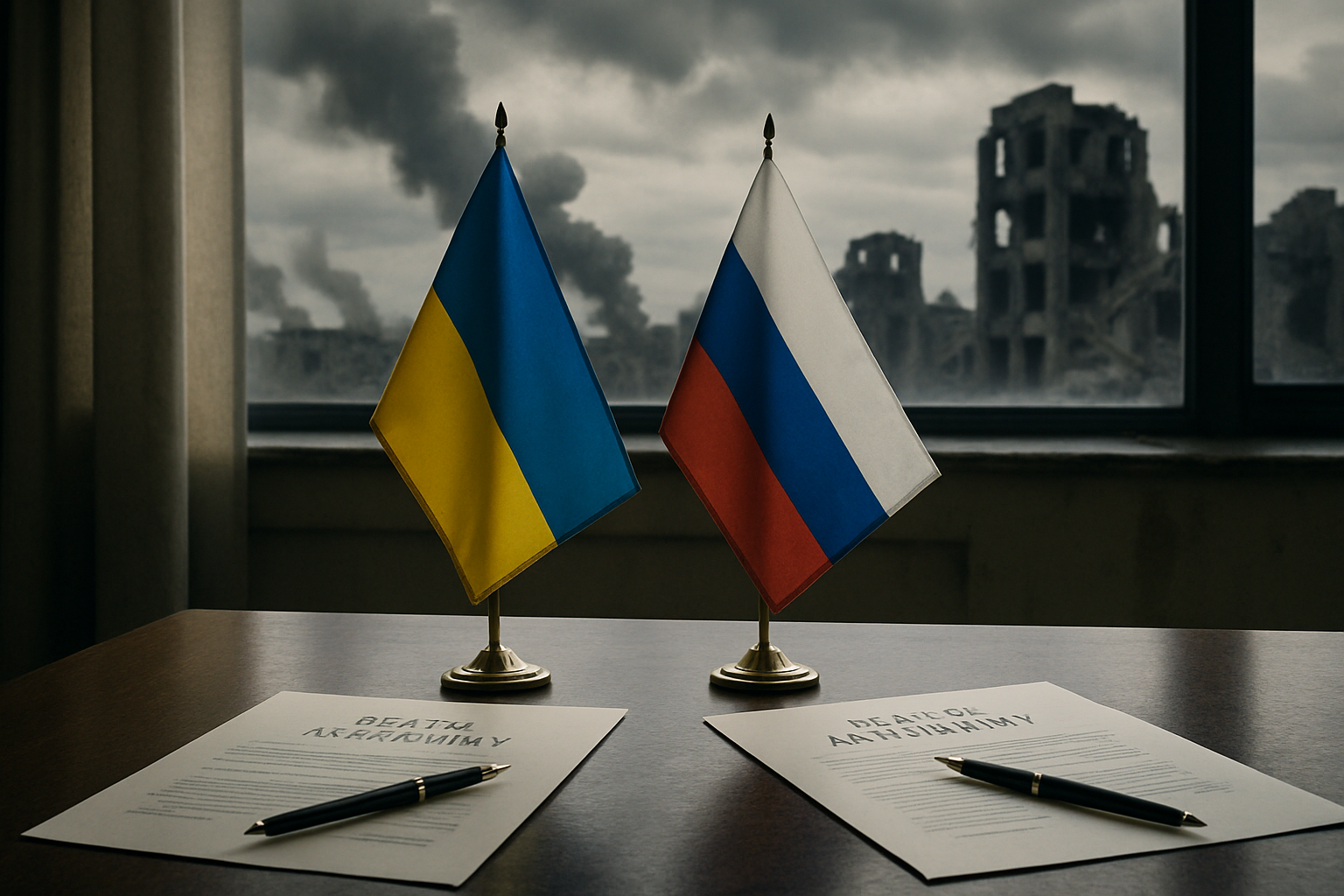
Ukrainian and Russian representatives concluded mixed-result peace talks in Geneva as the conflict approaches its fourth anniversary, with diplomatic breakthroughs on ceasefire monitoring mechanisms overshadowed by accelerating Russian territorial gains and systematic attacks on civilian infrastructure.
The trilateral negotiations between Ukraine, Russia, and the United States in Geneva on February 17-18 achieved what US Special Envoy Steve Witkoff described as "significant progress" on technical military issues, particularly ceasefire verification procedures. However, fundamental territorial disputes over eastern Ukrainian regions under Russian control remain unresolved, highlighting the complex challenges facing peace efforts.
Geneva Talks: Progress Amid Persistent Deadlock
The Geneva negotiations represented an evolution from the successful Abu Dhabi framework, which achieved a historic 314-prisoner exchange in early February—the first such swap in five months. Ukrainian Defense Minister Rustem Umerov led the Ukrainian delegation, while Russian advisor Vladimir Medinsky headed Moscow's team, with US Special Envoy Steve Witkoff providing mediation.
For the first time in the trilateral format, European "Big 5" observers from Germany, France, Italy, the UK, and Poland participated, adding institutional weight to the proceedings. However, President Volodymyr Zelensky described the talks as "difficult," accusing Russia of "deliberately stalling progress" in negotiations that "could already have reached the final stage."
"Russia is trying to drag out negotiations that could already have reached the final stage. We see progress on ceasefire monitoring, but differences remain on territorial issues and the Zaporizhzhia Nuclear Power Plant."
— Volodymyr Zelensky, President of Ukraine
Military Escalation Contradicts Diplomatic Momentum
The talks proceeded against a backdrop of intensifying military operations. Russian forces have accelerated territorial gains, capturing 481 square kilometers in January 2026 compared to 260 square kilometers in December 2025, according to the Institute for the Study of War. Over 10,000 Russian drones and bombs were launched in January alone.
Hours before the Geneva talks commenced, Russia launched one of its largest attacks of 2026—29 ballistic missiles and 396 drones targeting Ukrainian cities and energy infrastructure. Ukrainian air defense systems intercepted 25 missiles and 367 drones, but significant damage occurred in Odesa and central Ukraine, with civilian casualties reported.
This pattern of major attacks immediately preceding diplomatic meetings has become a consistent Russian tactic, designed to strengthen Moscow's bargaining position through humanitarian pressure.
Systematic Civilian Targeting Raises War Crimes Concerns
The conflict has witnessed increasingly systematic targeting of civilian infrastructure, particularly energy systems during Ukraine's harsh winter. Russian attacks have left over 1,170 buildings in Kyiv without heating during temperatures reaching minus-30°C, in what Ukrainian officials term "energy terrorism."
Particularly devastating was a February 11 drone strike on Bohodukhiv in Kharkiv region, which killed four civilians including three young children—two one-year-old boys and one two-year-old girl—along with their father. This marked the second deadly attack on the same town within three days, demonstrating what appears to be systematic family targeting.
These attacks violate Geneva Conventions provisions protecting civilians and constitute what international legal experts describe as war crimes under international humanitarian law.
Historic International Support Despite European Divisions
Despite ongoing military escalation, international support for Ukraine has reached unprecedented levels. The European Union approved a historic €90 billion loan package—the largest EU assistance package ever provided to a single nation—though Slovakia, Czech Republic, and Hungary refused participation, revealing persistent divisions within the bloc.
Additional military support includes Sweden and Denmark's €246 million air defense package featuring Tridon Mk2 systems, and Germany's provision of 35 Patriot missiles. The World Bank has allocated $40 million for energy restoration efforts, while over 17.8 million Ukrainians are accessing winter support programs.
Nuclear Crisis Adds Unprecedented Urgency
The diplomatic efforts unfold against the most dangerous nuclear backdrop in decades. The New START treaty between the US and Russia expired on February 5, 2026—marking the first time in over 50 years without bilateral nuclear constraints between the superpowers. Both nations control approximately 80% of global nuclear weapons, with Russia possessing 4,380 warheads and the US maintaining 3,708.
UN Secretary-General António Guterres has described this as a "grave turning point," warning that nuclear risks are at their "highest in decades." The restoration of US-Russia military communications through the Geneva process now represents the only remaining major diplomatic channel between the nuclear superpowers.
June 2026 Deadline Creates Pressure for Innovation
The Trump administration has established a June 2026 deadline for a comprehensive peace agreement, with talks potentially moving to Washington for presidential-level engagement. This timeline represents a deliberate escalation in diplomatic pressure, evolving from the Abu Dhabi framework through Geneva to potential high-level US involvement.
However, the core territorial challenge remains unchanged: eastern Ukrainian territories currently under Russian control. Russia demands territorial recognition and insists any Putin-Zelensky summit must occur in Moscow. Ukraine maintains its position on territorial integrity while seeking comprehensive security guarantees.
Human Cost Reaches Staggering Proportions
President Zelensky revealed in February that 55,000 Ukrainian soldiers have been officially confirmed killed since the February 2022 invasion, with a "large number" still classified as missing in action. International research estimates suggest actual military casualties could be 2-3 times higher when including undocumented deaths and missing personnel.
The civilian toll continues mounting through systematic targeting of non-military infrastructure. Ukrainian nuclear plants were forced to halt electricity production for the first time in the conflict following Russian attacks on electrical distribution networks, with the International Atomic Energy Agency confirming this unprecedented shutdown.
Ukrainian Resistance and Strategic Operations
Despite defensive pressures, Ukrainian forces have maintained offensive capabilities through strategic long-range operations. Recent strikes have targeted Russian industrial facilities deep within Russia's territory, including a successful drone attack on a ballistic missile factory in the Udmurt Republic, injuring 11 people according to Russian sources.
Ukrainian forces have also continued operations in occupied territories, demonstrating resilience against accelerating Russian advances. The conflict has seen innovations in drone warfare, with Ukraine becoming a major developer and exporter of unmanned systems to European allies.
Technology and Communications Warfare
The conflict has highlighted the critical role of communications technology in modern warfare. Ukrainian hackers successfully disrupted Russian military communications by exploiting Starlink satellite networks, leading to significant Russian territorial losses before Moscow adapted its systems.
The technological dimension extends to cyber operations, with both sides engaging in sophisticated information warfare campaigns targeting military communications and civilian infrastructure. These developments have implications far beyond the current conflict, potentially reshaping future military doctrine.
Regional and Global Responses
Poland's decision to formally withdraw from the Ottawa Convention on anti-personnel landmines, citing Russian threats, demonstrates how the Ukraine conflict is reshaping regional security calculations. The Czech Republic's "Gift for Putin" initiative has raised over $72 million for Ukrainian military equipment, showing sustained grassroots European support.
International involvement extends beyond European actors, with reports of American pilots operating F-16 aircraft in Ukrainian service and Nigerian citizens discovered fighting for Russian forces, highlighting the conflict's global recruitment networks.
Diplomatic Innovation Faces Ultimate Test
The current situation presents what experts describe as a humanitarian-military paradox: concrete diplomatic results—prisoner exchanges and restored military communications—achieved amid continued civilian targeting. This raises questions about genuine peace commitment versus calculated pressure tactics.
The proven framework from the UAE—working groups by topic followed by joint position synchronization—has demonstrated that sustained diplomatic engagement can produce humanitarian results even during active military operations. However, translating this momentum to territorial compromise solutions represents the ultimate test of 21st-century conflict resolution.
Global Implications Beyond Europe
Success in resolving the Ukraine conflict could provide a template for international dispute resolution, potentially ending Europe's deadliest war since World War II. Failure, however, may intensify military operations globally and undermine the credibility of diplomatic solutions to territorial disputes worldwide.
The stakes extend beyond Ukraine and Russia, affecting European security architecture, international law enforcement, and territorial sovereignty principles that will shape power competition for decades to come. The international community is watching closely as diplomatic innovation confronts the limitations of traditional conflict resolution approaches.
Looking Ahead: Washington Talks as Decisive Phase
As the conflict approaches its fourth anniversary on February 24, the potential evolution to Washington venue talks represents the most significant diplomatic opportunity since the invasion began. The June 2026 deadline creates unprecedented pressure for innovative territorial compromise solutions while fundamental positions remain far apart.
The restoration of US-Russia military communications and successful prisoner exchanges prove that adversaries can find common ground on humanitarian issues. Whether this foundation can extend to comprehensive territorial and security arrangements will determine not only the trajectory of the Ukraine conflict but also the broader framework for international conflict resolution in the 21st century.
The coming months will test whether sustained diplomatic innovation can overcome military escalation in what has become a defining challenge for European security, international law, and the principles of territorial sovereignty that underpin the modern international order.