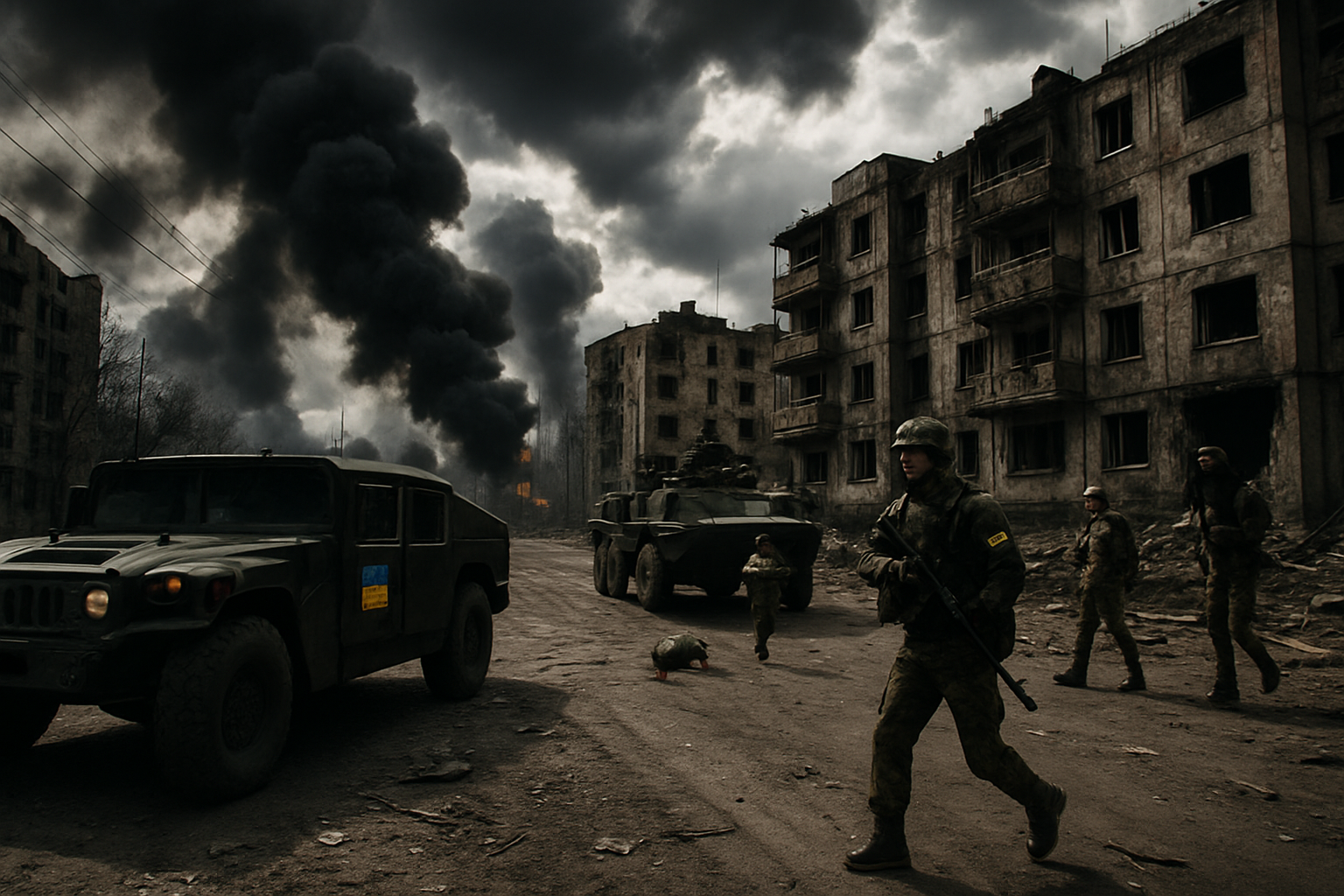
Russia launched its most intensive coordinated assault of 2026, deploying over 200 attack drones across multiple Ukrainian regions while targeting critical infrastructure and civilian areas. Ukrainian air defenses intercepted 190 of the attacking drones, but significant damage was reported in key strategic locations including Crimea, where Ukrainian Security Service operations struck three Russian naval vessels.
The latest escalation comes as trilateral peace negotiations between Ukraine, Russia, and the United States remain indefinitely suspended due to the Iran crisis consuming American foreign policy attention. What was once the most promising diplomatic opportunity since the invasion began now hangs in uncertainty, with framework achievements from February 2026 preserved but timeline unknown.
Massive Strike Campaign and Defensive Success
According to Ukrainian Defense Ministry reports, Russian forces launched over 200 attack drones in coordinated nighttime operations targeting Ukrainian cities and infrastructure facilities. The assault pattern demonstrated sophisticated planning, with strikes reported from the annexed Crimean peninsula to northwestern Russian territory, suggesting an expanded geographic scope of operations.
Ukrainian air defense systems, bolstered by recently delivered Western equipment including German Patriot missiles and Swedish air defense systems, successfully neutralized 190 of the incoming threats. However, several strikes penetrated defensive lines, causing fires and explosions in strategic locations.
Particularly significant were Ukrainian Security Service (SBU) Alpha operations that successfully struck three Russian military vessels in occupied Crimea, demonstrating sustained Ukrainian operational capabilities despite defensive pressures. The SBU operations underscore Ukraine's continued ability to project power into Russian-controlled territories.
Innovative Defense Technologies Transform Battlefield
The conflict has witnessed unprecedented innovation in air defense systems, with Slovakia reporting that Ukraine has revolutionized Patriot missile deployment. Ukrainian forces now require only single interceptor missiles to neutralize incoming ballistic threats, dramatically improving ammunition conservation and extending defensive system endurance.
"Ukraine has optimized Patriot usage completely differently from the rest of the world. Russian missiles are being eliminated with single shots."
— Slovak Defense Analysis Report
This tactical evolution represents a significant advancement in defensive warfare, with Ukrainian operators developing battlefield techniques that maximize the effectiveness of Western-supplied systems. The innovation demonstrates how sustained conflict pressure drives rapid technological adaptation and operational improvements.
Humanitarian Crisis Deepens Amid Systematic Targeting
Russian forces continued systematic targeting of civilian infrastructure, with attacks reported on meat processing facilities in Kharkiv region that left three employees with acute stress reactions. Fire stations in Sumy region came under repeated drone strikes, part of a documented pattern of targeting emergency services that violates international humanitarian law.
The attacks represent continuation of what Ukrainian authorities describe as "energy terrorism," with over 1,170 Kyiv buildings still lacking adequate heating from previous infrastructure strikes. Ukrainian nuclear facilities have been forced to halt electricity production for the first time since the conflict began, creating unprecedented energy security challenges.
According to disclosed figures, 55,000 Ukrainian soldiers have been officially confirmed killed, with authorities acknowledging "large numbers" remain missing. International estimates suggest actual casualties may be two to three times higher, highlighting the conflict's devastating human toll.
Diplomatic Framework Suspended But Preserved
The suspension of trilateral Ukraine-Russia-US negotiations represents a critical setback to diplomatic momentum that had achieved historic breakthroughs in February 2026. The framework included a 314-prisoner exchange—the largest in five months—and restoration of US-Russia military communications after a four-year suspension.
President Zelensky confirmed that negotiations remain postponed indefinitely due to the Iran crisis consuming American attention, stating there are "no necessary signals for trilateral meetings until the security situation allows." The June 2026 deadline for Washington venue talks, potentially involving presidential-level engagement, now faces uncertainty due to competing Middle East priorities.
Despite the suspension, diplomatic achievements remain intact and can be reactivated when conditions permit. Pentagon-Moscow deconfliction protocols continue operating globally, representing the most substantial US-Russia agreement since the conflict began. The prisoner exchange mechanisms and structured negotiation format pioneered through UAE methodology have proven effective for humanitarian results.
Ukraine's Strategic Transformation to Security Provider
In a remarkable strategic evolution, Ukraine has transformed from aid recipient to global security provider. Over 200 Ukrainian military specialists have deployed to UAE, Qatar, Jordan, Bahrain, and Kuwait to share expertise in combating Iranian Shahed drones—the same weapons systems that have devastated Ukrainian infrastructure.
This Middle East cooperation represents Ukraine's leveraging of battlefield experience into strategic partnerships, potentially creating new diplomatic leverage for future negotiations. The partnerships also provide Ukraine with expanded international relationships beyond traditional European allies.
Additionally, the UK has revealed four operational maintenance, repair, and overhaul (MRO) facilities within Ukraine servicing Western-supplied equipment, with a fifth facility planned. This unprecedented military infrastructure represents long-term international commitment to Ukrainian defense capabilities beyond current conflict requirements.
Nuclear Governance Crisis Creates Urgent Backdrop
Operations continue under the unprecedented nuclear governance vacuum created by New START treaty expiration on February 5, 2026—the first time in over 50 years without US-Russia nuclear constraints. Both nations control 80% of global nuclear weapons, with Russia possessing 4,380 warheads and the US 3,708.
UN Secretary-General António Guterres has described this as a "grave turning point" with nuclear risks at their "highest levels in decades." The restored military communications represent the only remaining formal diplomatic channel between the nuclear superpowers, making their preservation critical for preventing miscalculation.
International Support Reaches Historic Levels Despite Divisions
International assistance has reached unprecedented levels, with the European Union approving a historic €90 billion loan package—the largest single-nation assistance ever provided. However, significant divisions remain, with Slovakia, Czech Republic, and Hungary refusing participation, exposing internal EU disagreements over engagement approaches.
Germany has delivered 35 Patriot missiles, while Sweden and Denmark committed €246 million for air defense systems. Over 17.8 million Ukrainians are accessing winter support programs as the humanitarian crisis deepens amid systematic infrastructure targeting.
Despite the substantial support, concerns have emerged about weapon supply sustainability due to competing demands from the Iran crisis, where Gulf states have reportedly used more PAC-3 missiles in recent days than Ukraine received from the US in four years.
Territorial Disputes Remain Fundamental Obstacle
The core territorial disagreement remains unchanged, representing the fundamental obstacle to conflict resolution. Eastern Ukrainian territories under Russian control continue as the primary sticking point, with Russia demanding recognition of occupied territories and insisting on Moscow as the venue for any Putin-Zelensky talks.
Ukraine maintains its territorial integrity position, categorically rejecting territorial concessions. President Zelensky has previously stated that the Ukrainian people would reject "handing over territories" as a "failure story," emphasizing the political impossibility of territorial compromise without security guarantees.
Russian territorial gains accelerated to 481 square kilometers in January versus 260 square kilometers in December 2025, representing an 85% increase in the fastest monthly expansion. This acceleration potentially strengthens Moscow's bargaining position while creating additional pressure for diplomatic resolution.
Strategic Implications for Global Security Architecture
The conflict's trajectory carries profound implications for 21st-century security architecture and territorial sovereignty principles. Success in eventual resumed negotiations could end Europe's deadliest war since World War II and provide a conflict resolution template for future territorial disputes.
Failure, however, could intensify global military operations and undermine diplomatic credibility for territorial dispute resolution worldwide. The stakes encompass European security architecture redefinition, international law enforcement credibility, and territorial sovereignty principles that will influence decades of international relations.
The suspension of the most significant diplomatic opportunity since the invasion began demonstrates the challenges of managing multiple simultaneous international crises in an interconnected multipolar security environment.
Coming Phase Uncertain as Multiple Crises Compete
The timeline for resumed negotiations depends entirely on resolution of the Iran situation and broader Middle East stability. Military escalation continues with systematic civilian targeting while Ukraine maintains operational capabilities and expands international partnerships.
Framework preservation allows for reactivation of diplomatic processes when favorable conditions return. The UAE methodology has proven effective for humanitarian results, and the Pentagon-Moscow deconfliction protocols provide a foundation for broader engagement.
As the conflict approaches its fourth anniversary, the international community faces the critical test of whether diplomatic innovation can ultimately overcome military escalation in determining European security trajectory for decades to come. The template established will affect global conflict prevention mechanisms and the credibility of diplomatic solutions to territorial disputes worldwide.