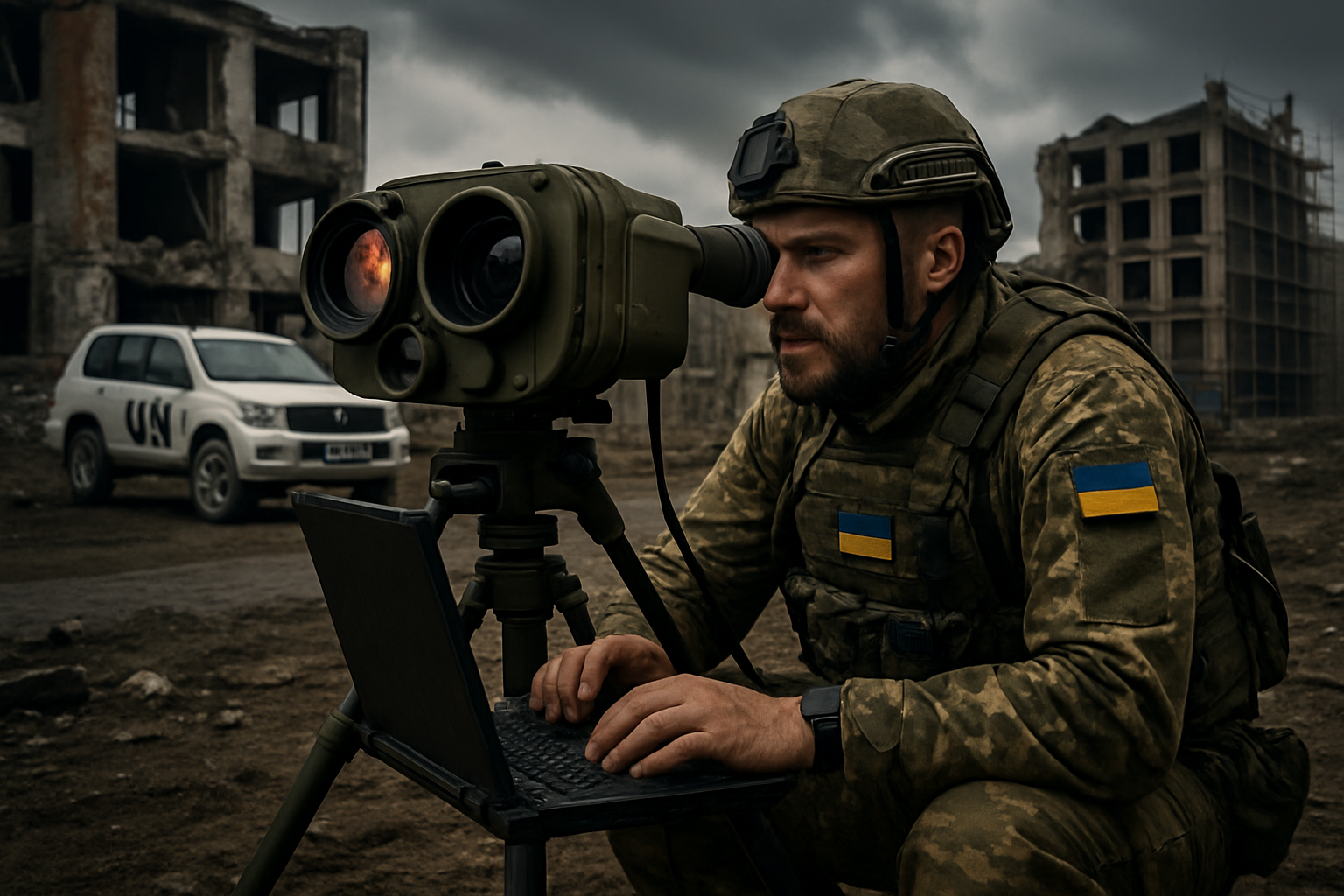
Ukraine has deployed more than 200 military specialists to five Middle Eastern countries to help defend against Iranian Shahed drone attacks, marking a strategic evolution from aid recipient to security provider, even as peace negotiations with Russia remain indefinitely suspended due to the Iran crisis.
Ukrainian President Volodymyr Zelensky confirmed that Kyiv has sent military experts to the United Arab Emirates, Qatar, Jordan, Bahrain, and Kuwait to assist with intercepting the same type of Iranian-manufactured drones that have devastated Ukrainian infrastructure for over two years. This unprecedented deployment represents Ukraine's transformation into a global security partner, leveraging battlefield experience gained during the ongoing conflict.
Peace Talks Indefinitely Postponed
The deployment comes as high-level diplomatic efforts have stalled. Zelensky announced that trilateral negotiations between Ukraine, Russia, and the United States have been postponed indefinitely due to the escalating Iran crisis. "Due to the situation around Iran, there are still no necessary signals for a trilateral meeting," Zelensky stated, though he indicated talks would resume "as soon as the security situation allows."
This represents a significant setback to diplomatic momentum that had achieved substantial breakthroughs in February, including a historic 314-prisoner exchange and the restoration of US-Russia military communications after a four-year suspension. The Geneva talks in February had shown "significant progress" on ceasefire monitoring mechanisms, according to US Special Envoy Steve Witkoff.
Military Situation Intensifies
The suspension of peace talks occurs against the backdrop of accelerating military operations. Russian forces have continued systematic attacks on civilian infrastructure, with recent strikes on oil and gas facilities of the Naftogaz Group in the Poltava and Sumy regions. Military analysts report that Russian territorial gains reached 481 square kilometers in January 2026, compared to 260 square kilometers in December 2025 - an 85% increase representing the fastest territorial expansion in recent months.
"There were 146 combat engagements along the frontline as of 22:00 on Friday, with the heaviest fighting recorded on the Pokrovsk axis, where Russian forces launched 28 assaults on Ukrainian positions."
— Ukrainian General Staff
The conflict has taken an unprecedented toll, with Zelensky previously disclosing that 55,000 Ukrainian soldiers have been officially killed, with a "large number" missing. International estimates suggest actual casualties may be two to three times higher.
International Support and Challenges
Despite the diplomatic setbacks, international support for Ukraine remains robust. The European Union has approved a historic €90 billion loan package - the largest single-nation assistance program in EU history - though Slovakia, the Czech Republic, and Hungary refused to participate, exposing significant divisions within the bloc.
Hungary has emerged as a particular challenge, with Prime Minister Viktor Orbán threatening further measures against Ukraine to force the resumption of Russian oil deliveries through the Druzhba pipeline. This dispute has created what Lithuanian Foreign Minister calls a situation where "the EU cannot become Budapest's hostage."
Nuclear Governance Crisis
The suspension of peace talks occurs within the context of an unprecedented nuclear governance crisis. The New START treaty between the US and Russia expired on February 5, 2026, marking the first time in over 50 years that the two nuclear superpowers operate without bilateral nuclear constraints. Both nations control approximately 80% of the world's nuclear weapons, with UN Secretary-General António Guterres calling the situation a "grave turning point" with nuclear risks at their "highest in decades."
Strategic Implications of Middle East Deployment
Ukraine's deployment of military specialists to the Middle East represents more than tactical cooperation - it signals a fundamental shift in Ukraine's international role. By offering expertise gained from defending against Iranian drones for over two years, Ukraine is positioning itself as a valuable security partner rather than solely a recipient of aid.
A fire at a Czech arms company that produces drones for Ukraine has raised concerns about supply chain resilience, though initiative leaders confirm that drone deliveries to Kyiv, including batches funded through international campaigns, will not be disrupted.
Regional Diplomatic Efforts
While direct trilateral talks remain suspended, diplomatic channels continue through various formats. Turkey has emerged as a potential mediator, with Ukrainian Ambassador to Turkey Vasyl Bodnar suggesting that President Recep Tayyip Erdogan "could persuade Putin to enter peace talks with Ukraine," noting that Turkey is "one of the few countries capable of conveying to Russian leader Vladimir Putin the need to enter negotiations."
The framework for future negotiations remains intact despite the suspension. The prisoner exchange mechanisms, structured negotiation formats, and Pentagon-Moscow deconfliction protocols established during the February breakthroughs can be reactivated when conditions permit.
Looking Forward
The coming phase remains highly uncertain, with the timeline for renewed negotiations dependent on the resolution of the Iran situation. Military escalation continues with systematic civilian targeting, while Ukraine maintains operational capabilities and expands international partnerships.
The success or failure of eventual resumed talks carries global implications for 21st-century territorial dispute resolution templates. Stakes include European security architecture redefinition, international law enforcement credibility, and territorial sovereignty principles that could shape international relations for decades to come.
As Ukraine continues its strategic evolution from conflict victim to regional security provider, the international community watches whether diplomatic innovation or continued military escalation will ultimately determine the resolution of Europe's most significant security challenge since the Cold War.