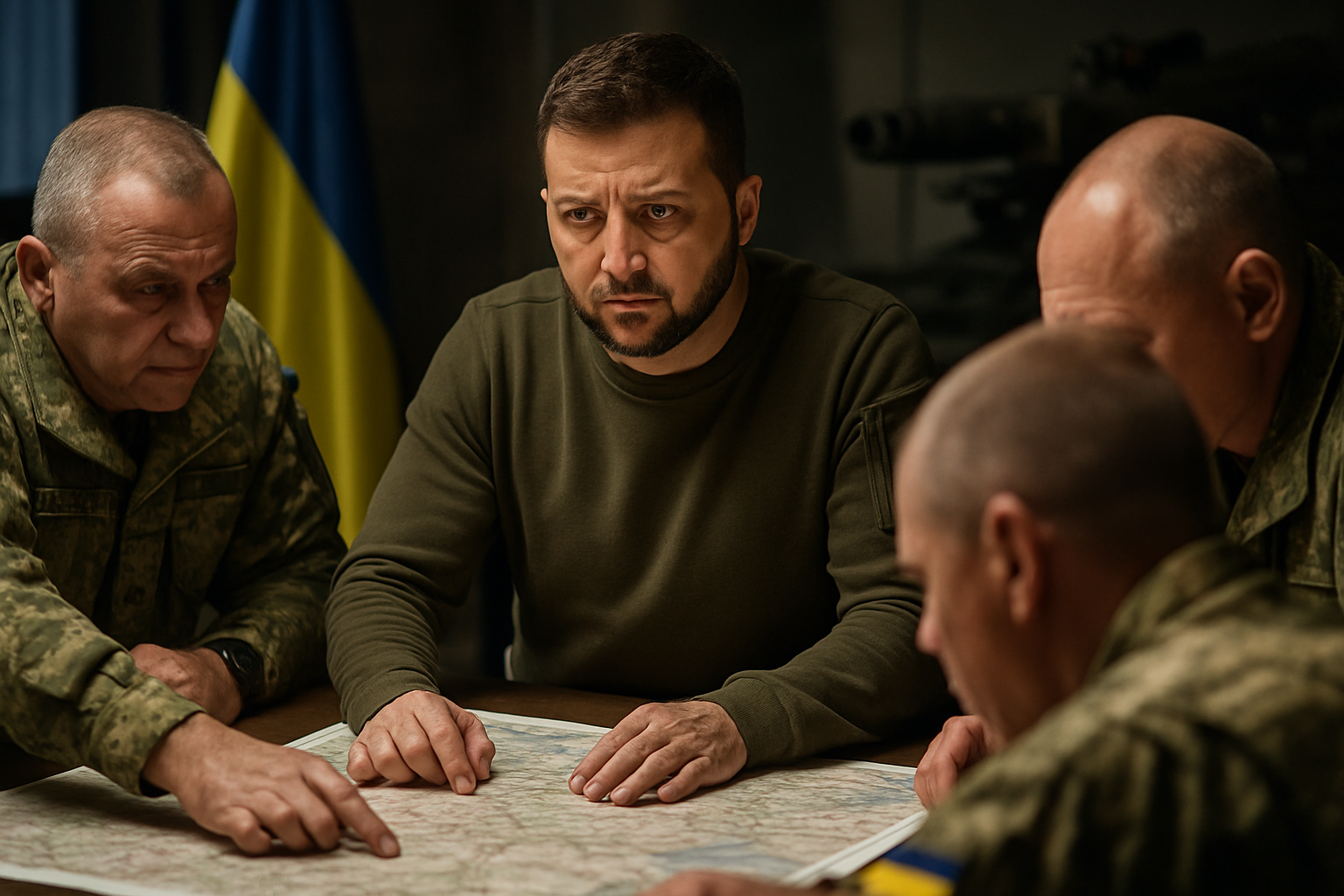
The Ukrainian conflict has entered a critical phase in March 2026, marked by intensified Russian attacks on civilian targets, postponed peace negotiations, and unprecedented international military cooperation as the war approaches its third year with no clear resolution in sight.
The past week has witnessed some of the most devastating attacks on Ukrainian civilian infrastructure since the conflict began, with Russian forces launching coordinated strikes that have killed dozens of civilians and wounded hundreds more across multiple regions. Simultaneously, what appeared to be promising diplomatic momentum has stalled due to escalating tensions in the Middle East.
Devastating Civilian Casualties Mount
Russian forces have unleashed a series of coordinated attacks targeting civilian areas across Ukraine, demonstrating a systematic pattern of strikes that violate international humanitarian law. In Zaporizhzhia, guided aerial bombs killed at least nine civilians and wounded dozens more, with the casualty toll continuing to rise as rescue operations progress through damaged residential areas.
The attacks have been particularly devastating in eastern Ukraine, where Russian drone strikes in Chuhuiv, Kharkiv region, killed at least one civilian and injured two others in residential areas. In a separate incident in Shostka, a Russian drone strike completely destroyed the building housing the district police department, marking a clear escalation in targeting civilian administrative infrastructure.
"These systematic attacks on civilian targets represent a clear violation of the Geneva Conventions and demonstrate Russia's continued strategy of terrorizing the Ukrainian population."
— International humanitarian law expert
The scale of violence has reached alarming proportions, with reports indicating that Russian forces have launched over 1,750 strike drones, 1,530 guided aerial bombs, and 39 missiles in the past seven days alone, according to Ukrainian President Volodymyr Zelensky's latest briefing.
Diplomatic Setback as Peace Talks Postponed
In a significant diplomatic setback, trilateral peace negotiations between Ukraine, Russia, and the United States have been postponed indefinitely due to the escalating crisis in the Middle East involving Iran. President Zelensky confirmed that the talks, which had shown promising signs of progress in previous rounds, were delayed at the request of the American side.
"Due to the situation around Iran, there are still no necessary signals for trilateral meeting," Zelensky stated, while expressing hope that negotiations will resume "as soon as the security situation and general political context allow."
The postponement represents a major blow to international diplomatic efforts, which had achieved significant breakthroughs in recent months including a historic prisoner exchange of 314 individuals and the restoration of US-Russia military communications after a four-year suspension.
Ukraine's Strategic Pivot to Middle East Cooperation
In a remarkable shift that underscores Ukraine's evolution from aid recipient to security provider, President Zelensky announced that Ukrainian military experts will be deployed to Middle Eastern nations including the UAE, Qatar, Jordan, Bahrain, and Kuwait. The mission focuses on sharing Ukraine's battlefield-tested expertise in combating Iranian "Shahed" drone attacks – the same weapons systems that have devastated Ukrainian infrastructure.
This strategic pivot demonstrates Ukraine's growing role as a regional security partner, leveraging its hard-won experience against Iranian-supplied weapons to build new international partnerships while the core territorial dispute with Russia awaits resolution.
International Military Support Continues
Despite the diplomatic delays, international military support for Ukraine has reached unprecedented levels. Germany has delivered crucial PAC-3 Patriot missiles agreed upon during the latest Ramstein format meeting, significantly bolstering Ukraine's air defense capabilities against the continuing barrage of Russian attacks.
The European Union's historic €90 billion loan package remains the largest single-nation assistance effort in European history, though it continues to face resistance from Hungary, Slovakia, and the Czech Republic, highlighting persistent divisions within the European Union over Ukraine policy.
Escalating Tensions Over Energy Infrastructure
The conflict has intensified around energy infrastructure, with both sides targeting critical installations. Gazprom reported that Ukrainian drones have attacked TurkStream and Blue Stream pipeline facilities in southern Russia twelve times over the past two weeks, while Russian forces continue their systematic targeting of Ukrainian energy infrastructure.
The attacks on energy facilities have created a humanitarian crisis, with over 1.7 million Ukrainians still accessing winter support programs as the country's power grid struggles to maintain stability under constant assault.
Diplomatic Complications with Hungary
Ukraine's relationship with Hungary has reached a new low point over the Druzhba pipeline dispute. Ukraine's Foreign Ministry clarified that Hungarian citizens who arrived in Kyiv claiming to represent an official delegation for pipeline talks were actually private visitors without official status, despite Hungarian government claims to the contrary.
The dispute has broader implications for European unity, with Ukraine's central bank chair accusing Hungary of using seized Ukrainian bank assets as leverage for international blackmail, further complicating EU cohesion on Ukraine policy.
Unprecedented Military Training Exchange
In a historic role reversal that highlights the conflict's global implications, Ukrainian military instructors will begin training German soldiers using battlefield experience gained from the war with Russia. This development comes as Berlin prepares for potential Russian threats to NATO by 2029, marking a significant shift in European security thinking.

Nuclear Governance Crisis Deepens
The security situation is further complicated by the continued absence of nuclear arms control agreements between the United States and Russia. The New START treaty expired in February 2026, marking the first time in over 50 years that the two nuclear superpowers operate without bilateral constraints on their arsenals.
With both nations controlling approximately 80% of the world's nuclear weapons, UN Secretary-General António Guterres has described the current situation as a "grave turning point" with nuclear risks at their "highest in decades."
Looking Ahead: Uncertain Timeline
The postponement of peace talks has cast uncertainty over the Trump administration's previously announced June 2026 deadline for a comprehensive peace agreement. What had appeared to be a promising diplomatic track – evolving from Abu Dhabi to Geneva to potentially Washington with presidential-level involvement – now faces an indefinite delay due to Middle Eastern priorities.
The fundamental territorial dispute remains unchanged, with Russia demanding recognition of its control over eastern Ukrainian territories and Ukraine maintaining its position on territorial integrity while seeking long-term security guarantees from Western partners.
"We maintain our commitment to diplomatic solutions, but we will not compromise on our territorial integrity or the safety of our people."
— Ukrainian Presidential Office statement
As the conflict enters what many analysts consider a critical phase, the international community faces the challenge of maintaining momentum on multiple diplomatic tracks while managing escalating tensions in different regions. The success or failure of eventual resumed negotiations will have profound implications not only for European security but for the global framework of international law and conflict resolution in the 21st century.
The coming weeks will be crucial in determining whether the diplomatic breakthrough achieved in early 2026 can be preserved and translated into meaningful progress toward ending Europe's deadliest conflict since World War II, or whether the focus will shift increasingly toward military solutions as political attention remains divided across multiple global crises.