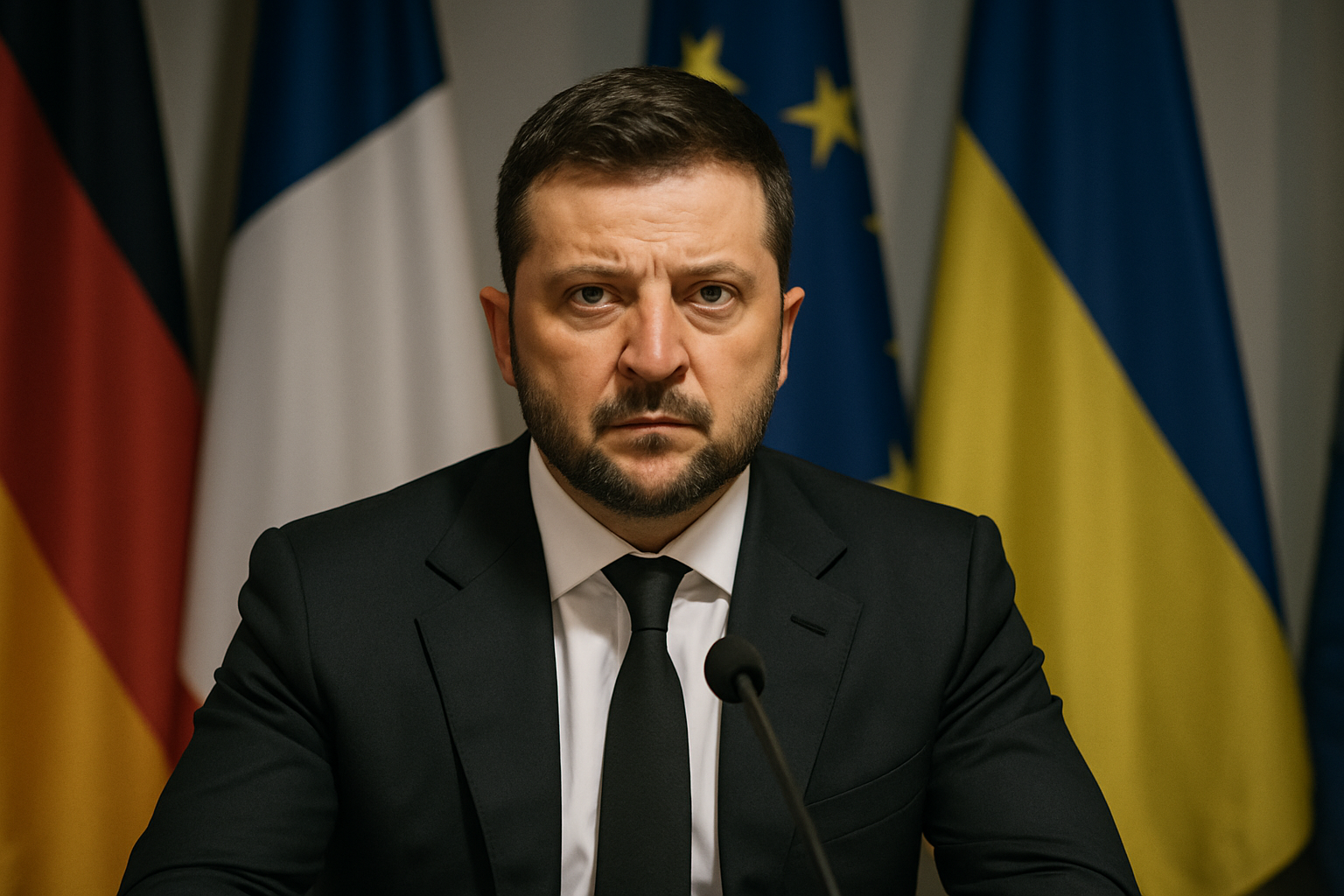
Ukraine continues to receive unprecedented international support while navigating complex diplomatic challenges, as European foreign ministers visited Kyiv to commemorate the fourth anniversary of the Bucha massacre and reaffirm their commitment to Ukrainian sovereignty despite ongoing setbacks in peace negotiations.
European Union High Representative for Foreign Affairs Kaja Kallas led a delegation of over a dozen EU foreign ministers to Bucha on Tuesday, marking four years since Russian forces killed more than 400 civilians in the town during their retreat from the Kyiv region. The symbolic visit demonstrated continued European solidarity as Ukraine enters its fifth year of conflict with Russia.
Diplomatic Momentum Stalled by Regional Crises
The high-level European visit occurred against the backdrop of indefinitely suspended trilateral peace negotiations between Ukraine, Russia, and the United States. President Volodymyr Zelensky announced that talks have been postponed due to the Iran crisis, stating there are "no necessary signals for trilateral meeting" until the Middle East security situation allows.
This represents a significant setback to diplomatic momentum that had achieved historic breakthroughs in February 2026, including a 314-prisoner exchange—the first in five months—and the restoration of US-Russia military communications after a four-year suspension. Geneva talks in February had shown "significant progress" on ceasefire monitoring mechanisms, with European "Big Five" observers participating for the first time.
"We discuterons de notre situation actuelle et de la distance qui nous sépare d'accords trilatéraux, ou au moins de réunions trilatérales"
— President Volodymyr Zelensky
European Unity Under Pressure
The visit to Bucha highlighted both European solidarity and internal divisions. While EU leaders confirmed delivery of the historic €90 billion loan package—the largest single-nation assistance in European history—Hungary continues to threaten vetoes over the Druzhba oil pipeline dispute. Foreign Minister Péter Szijjártó maintains his country's veto of both EU aid packages and sanctions, creating what Lithuanian officials have called an attempt to make "the EU hostage to Budapest."
German reports revealed concerning intelligence about close contacts between Hungarian Foreign Minister Szijjártó and Russian Foreign Minister Sergey Lavrov, prompting Ukrainian Foreign Minister Andriy Sybiha to call for EU assessment of these relationships, stating they "undermine trust and the security of internal discussions within the EU."
Military Situation and International Response
Russian territorial gains have accelerated significantly, with forces capturing 481 square kilometers in January 2026 compared to 260 square kilometers in December 2025—an 85% increase representing the fastest monthly expansion of the conflict. Energy infrastructure attacks continue systematically, leaving over 1,170 Kyiv buildings with inadequate heating as part of what officials term "energy terrorism."
International support remains robust despite political divisions. Sweden and Denmark have committed €246 million for air defense systems, while Germany has delivered 35 Patriot missiles. The United Kingdom has revealed the existence of four operational maintenance, repair, and overhaul (MRO) facilities in Ukraine servicing Western-supplied equipment, with a fifth facility planned—the first public acknowledgment of such extensive military infrastructure.
Ukraine's Strategic Evolution
Ukraine has evolved from aid recipient to security provider, deploying military experts to five Middle Eastern countries—UAE, Qatar, Jordan, Bahrain, and Kuwait—to combat Iranian Shahed drones, the same weapons being used against Ukrainian infrastructure. This strategic pivot demonstrates how battlefield experience is being leveraged into new international partnerships.
President Zelensky met with Italian Deputy Prime Minister Antonio Tajani to discuss the consequences of a potential blockade of the Strait of Hormuz and efforts to counter Russian propaganda, highlighting the interconnected nature of regional security challenges affecting Ukraine's diplomatic position.
Bucha: Symbol of Justice Delayed
The visit to Bucha served as a powerful reminder of the war's human cost and the need for accountability. EU foreign policy chief Kallas declared that Bucha "symbolizes the cruelty of Russia's war" and emphasized that "the EU is committed to ensuring these crimes do not go unpunished." Ukrainian Foreign Minister Sybiha noted that the international presence demonstrates that "justice for Russian atrocities is inevitable."
The massacre site has become emblematic of documented war crimes, with systematic civilian targeting patterns continuing across Ukrainian territory. Recent attacks on a gas pipeline in Sumy region and ongoing strikes on civilian infrastructure underscore the persistent threat to non-combatants.
Nuclear Governance Crisis Adds Urgency
The diplomatic challenges occur within an unprecedented nuclear governance crisis following the February 5, 2026 expiration of the New START treaty—the first time in over 50 years without US-Russia nuclear constraints. Both superpowers control approximately 80% of global nuclear weapons, with UN Secretary-General António Guterres describing this as a "grave turning point" with nuclear risks at their "highest in decades."
The restored US-Russia military communications represent the only remaining formal diplomatic channel between the nuclear superpowers, making the preservation of dialogue frameworks critical for global security.
Path Forward Uncertain
The timeline for resuming peace negotiations depends on resolving the Iran crisis that has diverted American foreign policy attention. Despite the suspension, diplomatic achievements remain intact—prisoner exchange mechanisms, structured negotiation formats, and Pentagon-Moscow deconfliction protocols covering global operations can be reactivated when favorable conditions return.
Eastern Ukrainian territories under Russian control remain the fundamental sticking point, with Russia demanding recognition and Moscow venues for potential Putin-Zelensky talks, while Ukraine maintains its territorial integrity position. Zelensky has categorically rejected territorial concessions, stating that Ukrainian people would reject "handing over territories" as a "failure story."
Global Implications
The suspension of what many considered the most significant diplomatic opportunity since the invasion began carries implications far beyond Europe. Success in eventual resumed talks could provide a template for 21st-century territorial dispute resolution, while failure may intensify military operations globally and undermine diplomatic credibility for conflict resolution mechanisms.
The stakes include European security architecture redefinition, international law enforcement credibility, and territorial sovereignty principles that will influence power competition dynamics for decades to come. As Ukraine continues to receive unprecedented international support—over €100 billion committed—the coming phase remains uncertain, dependent on broader Middle East stability and the international community's ability to manage multiple simultaneous crises while preserving momentum for Europe's most significant security challenge since the Cold War.
The preservation of the diplomatic framework achieved through UAE methodology, with working groups by topic and joint position synchronization, demonstrates that sustained engagement can produce concrete humanitarian results even amid military operations. Whether this foundation can be rebuilt into comprehensive territorial compromise solutions will determine not only Ukraine's future but also the trajectory of international relations in an increasingly multipolar world.