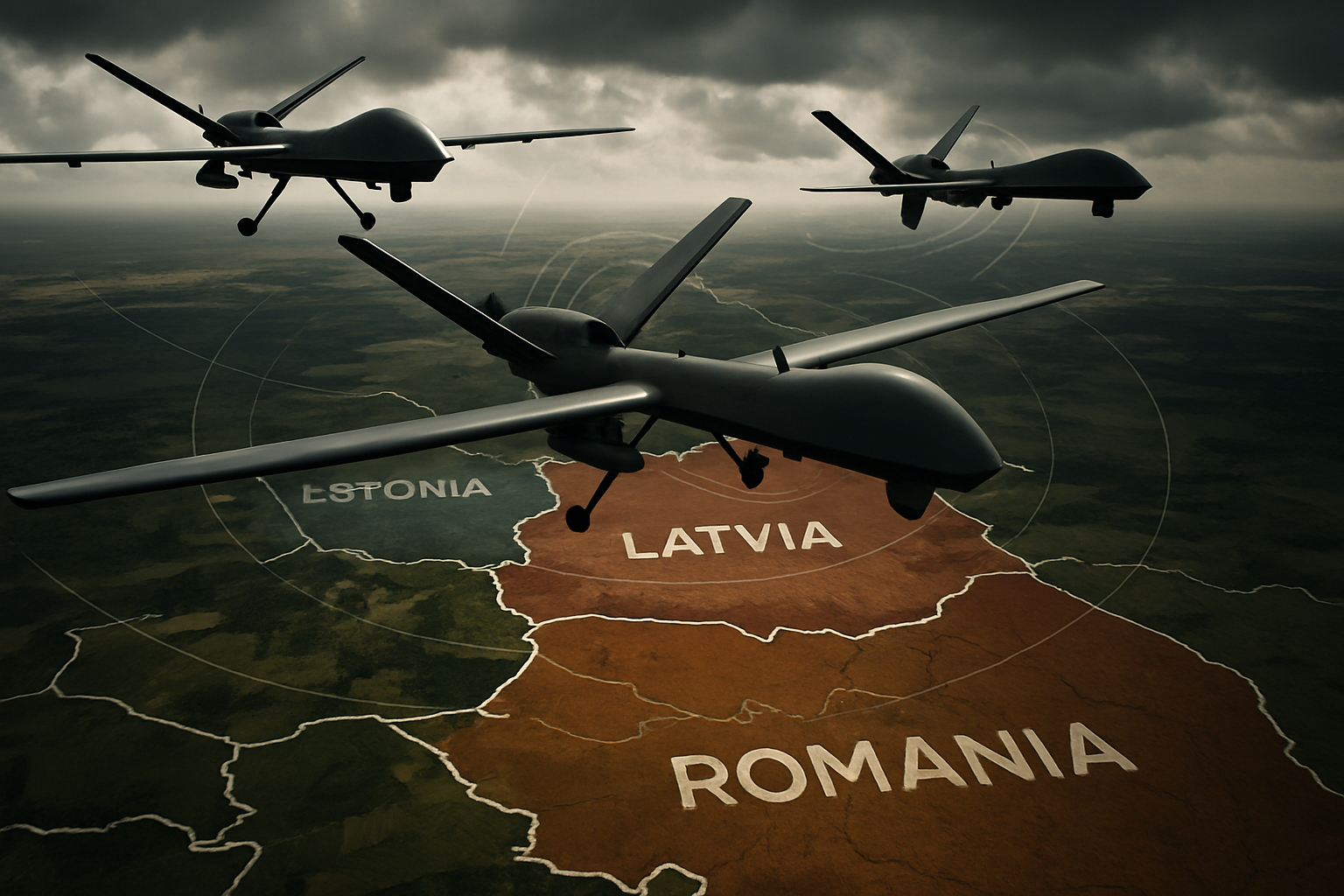
Ukrainian military drones conducting strikes against Russian energy infrastructure strayed into the airspace of multiple European Union nations over March 30-31, 2026, with confirmed incidents in Estonia, Latvia, and at least one drone crash in Romania, according to defense officials across the Baltic region.
The incidents mark a significant escalation in spillover effects from Ukraine's intensified deep-strike campaign against Russian oil export facilities along the Baltic Sea coast, creating new diplomatic and security challenges for NATO's eastern flank as Ukrainian forces expand their operational reach beyond traditional combat zones.
Estonia Reports Multiple Drone Crashes
Estonian Defense Forces confirmed that fewer than 10 foreign drones entered Estonian airspace during the overnight period of March 30-31, with at least one drone crashing in Tartu County. The Police and Border Guard Board (PPA) is investigating three potential crash sites across southern Estonia.
"The immediate danger had passed by 6am on Tuesday," Estonian defense officials reported, noting this marked the second such spillover incident in less than a week. On March 25, a drone entering from Russian airspace struck the chimney of the Auvere power plant in northeastern Estonia.
"Several Ukrainian drones apparently went off course during continued attacks on Russia's Baltic coastal areas."
— Colonel Uku Arold, Estonian Defense Forces Strategic Communications
Debris recovery operations in the Kastre municipality of Tartu County revealed fragments consistent with Ukrainian drone technology, according to Estonian World reporting. The drones entered Estonian territory from both southern and eastern directions during what Ukrainian officials described as a major offensive against Russian energy infrastructure.
Regional Pattern of Cross-Border Incidents
Latvia's defense ministry confirmed that drone debris was discovered within its territory following the same overnight operations, though specific details about crash locations and damage assessment remain under investigation. This represents the latest in a series of airspace violations affecting Baltic states since Ukraine began escalating long-range strikes against Russian energy targets.
Moldovan military sources reported that a Shahed drone illegally entered Republic of Moldova airspace at 09:05 local time on March 31, with Ukrainian anti-aircraft structures notifying Moldovan authorities that the aircraft had crossed into their territory. The incident demonstrates the far-reaching geographic impact of Ukraine's expanded operational capabilities.
Romanian border security detected drone activity along its northern frontier, with preliminary investigations suggesting Ukrainian military assets may have briefly violated Romanian airspace during the intensive strike operations against Russian facilities near the Black Sea coast.
Ukraine's Strategic Energy Campaign
The drone incidents occurred during Ukraine's most ambitious coordinated strike campaign against Russian energy infrastructure to date, successfully disrupting approximately 40% of Russian oil export capacity according to Reuters analysis. Ukrainian forces targeted the Novatek-Ust-Luga plant in the Leningrad region and conducted strikes on combat icebreakers at Vyborg Shipyard, demonstrating enhanced deep-strike capabilities over distances exceeding 2,000 kilometers.
The energy warfare strategy has proven highly effective, with dozens of shadow fleet tankers stranded in the Gulf of Finland after Ukrainian strikes forced both Ust-Luga and Primorsk terminals to halt petroleum loading operations. Russian firefighters continue battling blazes at Baltic ports handling 700,000 barrels daily capacity.
This represents Ukraine's third major attack on the Ust-Luga port within one week, part of a systematic campaign to disrupt Russian war financing through energy export revenues. The strategic success comes at the cost of increased operational complexity as longer-range missions carry higher risks of navigation errors and cross-border incidents.
NATO Response and Regional Security
The incidents occur against the backdrop of enhanced Baltic cooperation through NATO's Arctic Sentry mission, which has intensified intelligence sharing, satellite surveillance, and maritime patrols following a 23% increase in Russian military activity since Sweden and Finland joined the alliance.
Lithuanian intelligence assessments warn that Russia could be ready for "limited military conflict" within 3-5 years if a Ukraine ceasefire allows force reconstitution. This timeline has added urgency to regional defense preparations, with Estonia establishing a €10 million HIMARS maintenance center in partnership with Lockheed Martin - the first such facility for advanced rocket systems in the region.
Estonia's energy independence model, with 88% renewable electricity and continental Europe's largest battery storage facility serving 90,000 households, provides a template for reducing vulnerabilities to energy warfare tactics. However, the recent airspace incidents highlight that even energy-independent nations face security challenges from expanded conflict operations.
Diplomatic Complexity and Measured Responses
The Estonian response demonstrates the delicate diplomatic balance required as NATO allies navigate supporting Ukraine's legitimate defense while ensuring their own airspace security. Defense Minister Antti Häkkänen of Finland, which experienced similar incidents on March 29, stated authorities were treating such matters "very seriously" while acknowledging the operational challenges Ukraine faces in conducting precision strikes over vast distances.
Unlike the systematic Russian provocations of March 25, which involved deliberate strikes on Estonian and Latvian infrastructure, the current incidents appear to result from Ukrainian aircraft going off course during defensive operations targeting legitimate military and energy infrastructure supporting Russia's war effort.
"These incidents highlight the complex operational environment as Ukraine exercises its right to defend against Russian aggression, while Baltic states must balance support with territorial sovereignty."
— Senior Estonian Defense Official
Regional coordination has proven effective in managing these challenges without escalation. NATO protocols are being developed to distinguish between hostile Russian provocations and friendly Ukrainian aircraft experiencing navigation difficulties during defensive operations.
Broader Security Architecture Implications
The frequency of such incidents may increase as Ukrainian long-range capabilities continue expanding, requiring enhanced coordination mechanisms between Ukraine and neighboring NATO allies. The Baltic states' experience managing complex spillover effects provides a valuable template for other regions that may face similar challenges as the conflict evolves.
Finland's lifting of its comprehensive nuclear weapons ban and Sweden's willingness to host nuclear weapons during wartime represent the broader security transformation occurring across the Nordic-Baltic region. These policy shifts reflect the changing security calculus as nations adapt to the reality of expanded conflict operations near their borders.
The successful Estonian response - maintaining strong support for Ukraine while protecting territorial integrity - demonstrates that enhanced cooperation, early warning systems, and diplomatic coordination can prevent such incidents from causing casualties or significant disruption.
Looking Forward
As Ukraine's deep-strike campaign against Russian energy infrastructure continues showing strategic success, the international community faces the challenge of supporting legitimate defensive operations while managing the inevitable spillover effects. The March 30-31 incidents provide important lessons for developing protocols that maintain both Ukrainian operational effectiveness and European security.
The 30 ships anchored in Estonia's economic zone near Juminda and Loksa, unable to reach Russian ports following Ukrainian strikes on Ust-Luga and Primorsk terminals, illustrate the broader effectiveness of Ukraine's energy warfare strategy. However, the airspace incidents underscore the need for continued refinement of coordination mechanisms as operational ranges extend.
Baltic states continue demonstrating that small nations can effectively manage complex security challenges through enhanced cooperation, technological innovation, and sophisticated diplomatic coordination. Their success in preventing escalation while maintaining support for Ukraine's defensive efforts offers a model for managing 21st-century hybrid security challenges where conflicts routinely transcend traditional geographic boundaries.