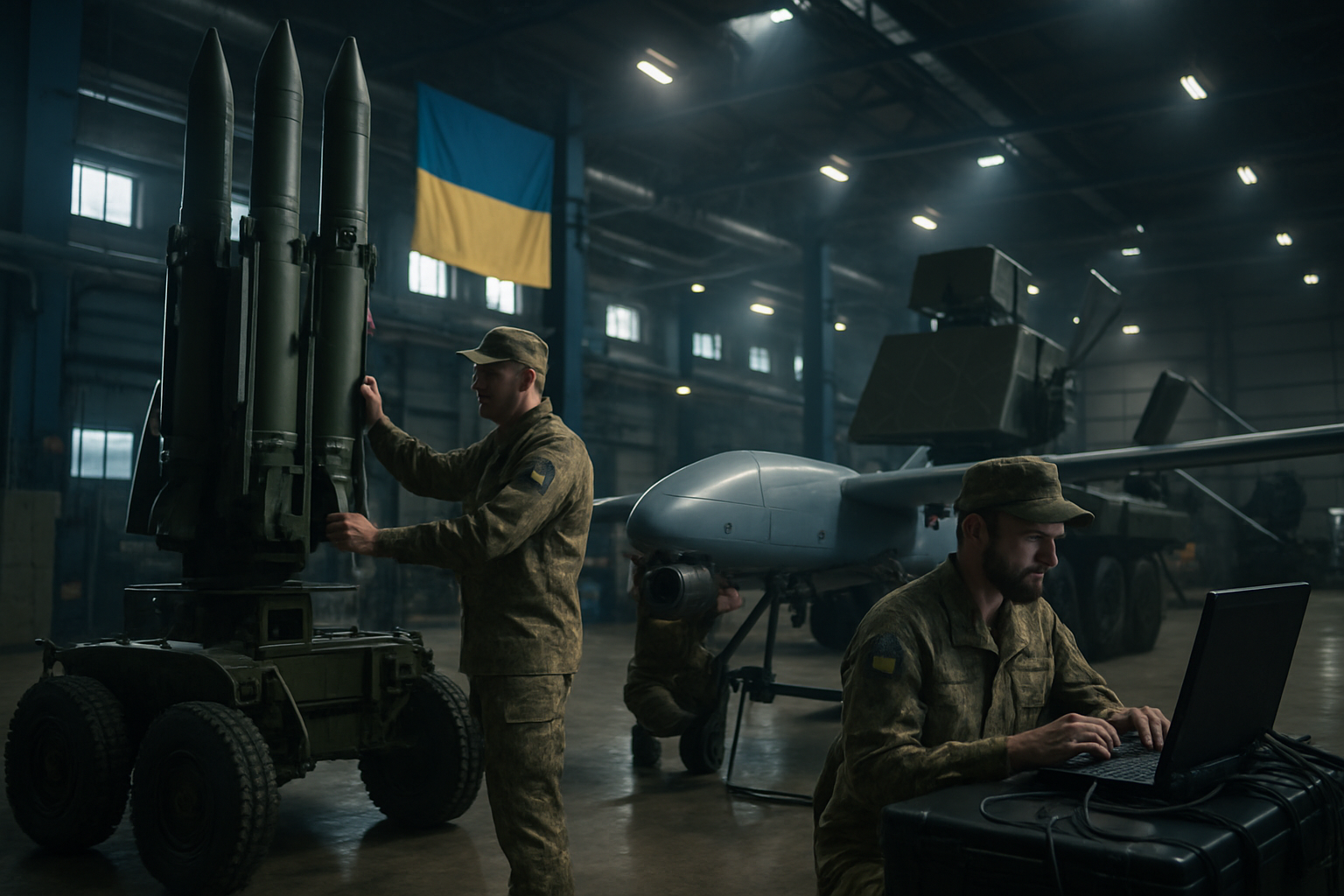
Ukraine is accelerating plans for mass production of air defense systems while implementing stricter state control over drone exports, marking a strategic shift from conflict victim to defense technology powerhouse as the war against Russia enters its third year.
President Volodymyr Zelensky announced the ambitious defense manufacturing initiative during a series of high-level meetings this weekend, as Ukraine simultaneously strengthens regulatory oversight of its rapidly expanding drone industry. The dual developments underscore Ukraine's evolution from aid recipient to strategic security partner, leveraging hard-won battlefield experience into technological leadership.
Mass Air Defense Production Initiative
The Ukrainian government has committed to establishing large-scale manufacturing capabilities for advanced air defense systems, building on successful integration of Western technologies including the Franco-Italian SAMP-T system. Zelensky confirmed Ukraine will receive and test the SAMP-T platform this year as an alternative to American Patriot systems, with production capabilities to follow.
"We are moving beyond simply receiving defensive systems to manufacturing them ourselves," Zelensky stated during weekend announcements. The initiative represents a fundamental shift in Ukraine's defense posture, transitioning from dependence on foreign military aid to domestic production capabilities that could serve both national defense and export markets.
"This transition from aid recipient to security provider demonstrates Ukraine's determination to build long-term defensive capabilities beyond the current conflict."
— Defense Industry Analyst
The mass production plans emerge as Ukraine has successfully demonstrated advanced air defense capabilities, with recent operations neutralizing 90 of 97 Russian drones in overnight attacks. Ukrainian forces have consistently achieved high interception rates despite facing an estimated 1,750 strike drones, 1,530 guided aerial bombs, and 39 missiles over the past week alone.
Enhanced State Control Over Drone Exports
Parallel to the air defense expansion, Ukrainian authorities are implementing stricter government oversight of drone exports, recognizing the strategic importance of unmanned systems technology developed through battlefield innovation. The enhanced controls reflect growing international demand for Ukrainian drone technology, tested in the world's most intensive electronic warfare environment.
Ukraine's drone industry has expanded dramatically, with 450 companies now engaged in production, making it the largest Ukrainian defense sector. The industry has established 10 European export centers operational by 2026, demonstrating significant international market penetration.
Serbian media reports indicate Zelensky has expressed intentions to strengthen state control over sales of Ukrainian-produced drones to foreign markets, ensuring strategic technologies remain aligned with national security interests. This regulatory enhancement comes as Ukrainian drone technology has proven highly effective against sophisticated Russian electronic warfare systems.
Strategic Middle East Expansion
Ukraine's defense technology expertise is gaining global recognition, with military experts now deploying to Middle Eastern nations including the UAE, Qatar, Jordan, Bahrain, and Kuwait. These partnerships focus on combating Iranian Shahed drones—the same weapons systems that have targeted Ukrainian infrastructure throughout the conflict.
This international cooperation represents Ukraine's evolution from aid recipient to security provider, leveraging unique battlefield experience against advanced drone warfare. Ukrainian military advisers previously deployed to these regions have demonstrated effectiveness in countering Iranian drone attacks, creating demand for expanded cooperation.
International Defense Infrastructure
Supporting Ukraine's defense expansion, the United Kingdom has revealed the existence of four operational maintenance, repair, and overhaul (MRO) facilities within Ukraine, servicing Western-supplied equipment, with a fifth facility planned. This represents the first public acknowledgment of such extensive military infrastructure on Ukrainian soil.
These facilities enable rapid repair turnaround for Western weapons systems without requiring transport to neighboring countries, representing a long-term commitment to Ukrainian military modernization. The MRO capabilities address critical logistical challenges while ensuring operational readiness for sophisticated Western defense systems.
Diplomatic Context and Peace Talks
The defense expansion announcements come as peace negotiations between Ukraine, Russia, and the United States remain suspended due to the Iranian crisis. Zelensky confirmed that trilateral talks are postponed "until the security situation allows," despite previous diplomatic momentum including a historic 314-prisoner exchange and restored US-Russia military communications.
The suspension represents a significant setback to February's breakthrough achievements, though the diplomatic framework remains intact for future reactivation. The June 2026 deadline established by the Trump administration for comprehensive peace talks remains technically active but uncertain given Middle East priorities.
Nuclear Governance Challenges
The defense initiatives unfold against an unprecedented nuclear governance crisis, with the New START treaty's expiration in February 2026 marking the first time in over 50 years without US-Russia nuclear constraints. Both nations control 80% of global nuclear weapons, with UN Secretary-General António Guterres warning of a "grave turning point" in nuclear risks.
Economic and Strategic Implications
Ukraine's defense industry expansion carries significant economic implications, with the sector becoming a major driver of technological innovation and export revenue. The combination of mass air defense production and enhanced drone export controls positions Ukraine as a significant player in global defense markets.
The strategic transition reflects broader changes in European security architecture, with Ukraine developing indigenous defense capabilities that reduce dependence on foreign suppliers while creating new international partnerships. This evolution supports long-term security guarantees that Ukraine seeks as part of any peace settlement.
International support remains substantial despite diplomatic setbacks, with the EU's historic €90 billion loan package representing the largest single-nation assistance ever provided, though Slovakia, Czech Republic, and Hungary have refused participation, exposing European divisions.
Future Outlook
Ukraine's simultaneous expansion of air defense manufacturing and drone export controls represents a strategic recalibration toward self-reliance and international influence. The initiatives demonstrate confidence in long-term defensive capabilities while creating new leverage in both military and diplomatic contexts.
As the conflict continues with Russian territorial gains accelerating—481 square kilometers captured in January versus 260 in December 2025—Ukraine's focus on indigenous defense production and export controls reflects adaptation to prolonged confrontation while building foundations for post-conflict security.
The success of these initiatives will likely influence Ukraine's negotiating position in future peace talks, providing both defensive capabilities and economic leverage through defense technology exports. The transition from aid recipient to security provider marks a fundamental shift in Ukraine's strategic positioning within the global security framework.