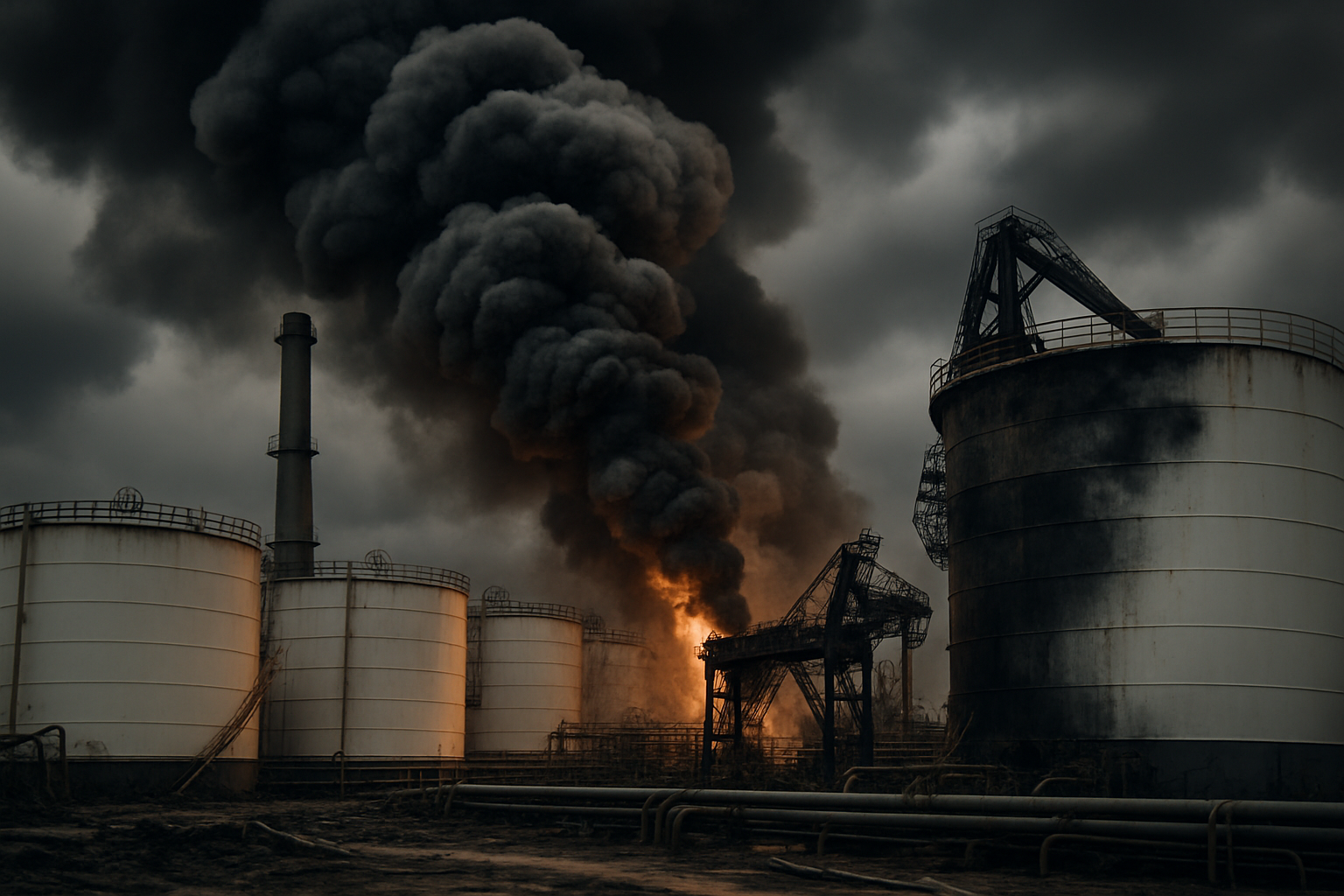
Ukrainian Defense Forces confirmed successful strikes on key Russian oil facilities, including the critical Novatek-Ust-Luga plant in the Leningrad region and a combat icebreaker at the Vyborg Shipyard, while Hungarian Prime Minister Viktor Orbán escalated diplomatic tensions by threatening to halt gas supplies to Ukraine over the ongoing Druzhba pipeline dispute.
The coordinated Ukrainian operations, conducted on March 25, 2026, represent a significant escalation in the country's strategic campaign targeting Russian energy infrastructure that funds Moscow's war effort. The General Staff of the Armed Forces of Ukraine officially confirmed hitting the "Novatek-Ust-Luga" plant, a critical facility in Russia's Leningrad region that handles significant volumes of the country's energy exports.
Strategic Energy Warfare Intensifies
Ukrainian forces simultaneously struck multiple high-value targets across Russian territory, demonstrating enhanced deep-strike capabilities that extend over 2,000 kilometers from the front lines. In addition to the Novatek facility, Ukrainian Defense Forces successfully targeted a Russian combat icebreaker stationed at the Vyborg Shipyard in the Leningrad region, dealing a blow to Russia's Arctic naval capabilities.
The attacks have created significant operational disruptions for Russian energy exports, with dozens of shadow fleet tankers reportedly anchored in the Gulf of Finland after drone strikes forced Russia's Ust-Luga and Primorsk terminals to halt petroleum product loading operations, according to Reuters reporting.
Russian authorities confirmed that firefighters are battling blazes at the Baltic Sea port, which has the capacity to handle approximately 700,000 barrels of oil exports per day. The successful penetration of Russian air defenses and precision targeting of such critical infrastructure demonstrates Ukraine's evolving military capabilities and strategic focus on disrupting Moscow's war financing mechanisms.
Hungary Escalates Diplomatic Crisis
Parallel to the military developments, Hungarian Prime Minister Viktor Orbán announced that his government would "progressively halt" gas supplies to Ukraine until Kyiv restores transit of Russian oil through the Druzhba pipeline. The Hungarian position has garnered support from French far-right leader Marine Le Pen, highlighting the complex political dynamics surrounding European energy security.
The Druzhba pipeline dispute has become a critical flashpoint in EU-Ukraine relations, with Hungary and Slovakia maintaining that Ukraine deliberately manipulated oil supplies as "political blackmail." Ukrainian officials counter that the pipeline was damaged in Russian drone attacks and requires repairs, representing the latest chapter in what has been an ongoing energy infrastructure conflict since late January.
Slovakia has already declared an oil emergency and released 250,000 tons of strategic reserves, while Hungarian Foreign Minister Péter Szijjártó confirmed the country will maintain its veto of both the EU's €90 billion aid package and the 20th sanctions package until oil transit resumes through the critical pipeline.
Drone Technology and Cross-Border Operations
The military operations have had broader regional implications, with both Latvia and Estonia confirming that Ukrainian drones crashed in their territories while conducting missions against targets in Russia. Latvian President Edgars Rinkevics confirmed that a Ukrainian drone fell in the Kraslava region during operations to strike Russian targets, while Estonian authorities acknowledged similar incidents.
"The authorities in Latvia have confirmed that a drone that crashed in the east of the country in the early hours of Wednesday, March 25th, was Ukrainian."
— LSM Report
These incidents highlight the increasingly sophisticated nature of Ukrainian long-range operations and the challenges of conducting precision strikes across international borders. The drone technology being employed demonstrates significant advances in Ukraine's military capabilities, supported by international partnerships and technology transfers throughout the conflict.
Broader Strategic Context
The simultaneous military and diplomatic developments occur against the backdrop of ongoing efforts to manage the conflict's broader implications. Ukrainian Defense Minister Mykhailo Fedorov recently held closed meetings with representatives of 13 assault and infantry units to address front-line situations and discuss specific approaches to service terms and financial support for military personnel.
The energy warfare dimension of the conflict continues to demonstrate Ukraine's strategic evolution from a primarily defensive posture to conducting proactive operations targeting Russian war-supporting infrastructure. This approach aims to create cumulative economic pressure on Moscow while disrupting military logistics networks that support Russian operations.
The Hungarian gas supply threat represents a concerning development in European unity regarding support for Ukraine. Lithuania's Foreign Minister has previously warned that the "EU cannot become Budapest's hostage," reflecting broader concerns about maintaining collective European support for Ukrainian defense efforts while managing internal energy security challenges.
Regional Security Implications
The confirmed strikes on Russian energy infrastructure near the Finnish border carry significant regional security implications, particularly given the proximity to NATO territory. The successful operations demonstrate Ukraine's ability to project force across substantial distances while maintaining precision targeting of military-relevant infrastructure.
The disruption of Russian oil exports through Baltic Sea terminals creates additional pressure on Moscow's alternative export routes, forcing reliance on more expensive and less efficient transportation methods. This economic warfare dimension complements Ukraine's broader strategy of undermining Russian financial capabilities to sustain military operations.
The involvement of shadow fleet tankers in the disrupted operations highlights the complex networks supporting Russian energy exports despite international sanctions. The successful targeting of these critical nodes demonstrates Ukrainian strategic planning and intelligence capabilities in identifying high-value targets that support Russian war efforts.
International Response and Support
The operations occur within the context of continued international military cooperation and technology sharing that has enhanced Ukrainian capabilities throughout the conflict. The precision and coordination of the strikes reflect benefits of Western military support and intelligence sharing that have enabled increasingly sophisticated operations.
However, the Hungarian position on gas supplies and pipeline transit represents a significant challenge to European unity in supporting Ukrainian defense efforts. The dispute over the Druzhba pipeline has created divisions within the EU, with some member states prioritizing energy security concerns over collective support for Ukraine.
The situation demonstrates the ongoing challenges of balancing national energy interests with broader strategic objectives in supporting Ukrainian territorial integrity and defense capabilities. The resolution of these tensions will likely influence future European approaches to energy security and military support for Ukraine.
Looking Ahead
The successful Ukrainian strikes on Russian energy infrastructure represent a significant escalation in the strategic targeting of war-supporting facilities, while the Hungarian gas supply threats highlight ongoing challenges in maintaining European unity. These developments occur as Ukraine continues to demonstrate enhanced military capabilities and strategic planning in conducting operations across substantial distances.
The energy warfare dimension of the conflict continues to evolve, with both military targeting of infrastructure and diplomatic disputes over pipeline transit creating complex dynamics that affect regional stability and international relations. The resolution of these challenges will significantly influence the trajectory of both military operations and diplomatic efforts to address the broader conflict.
As Ukraine continues to develop its long-range strike capabilities and strategic targeting doctrine, the international community faces ongoing challenges in balancing support for Ukrainian defense efforts with managing regional energy security concerns and maintaining collective unity in response to Russian aggression.