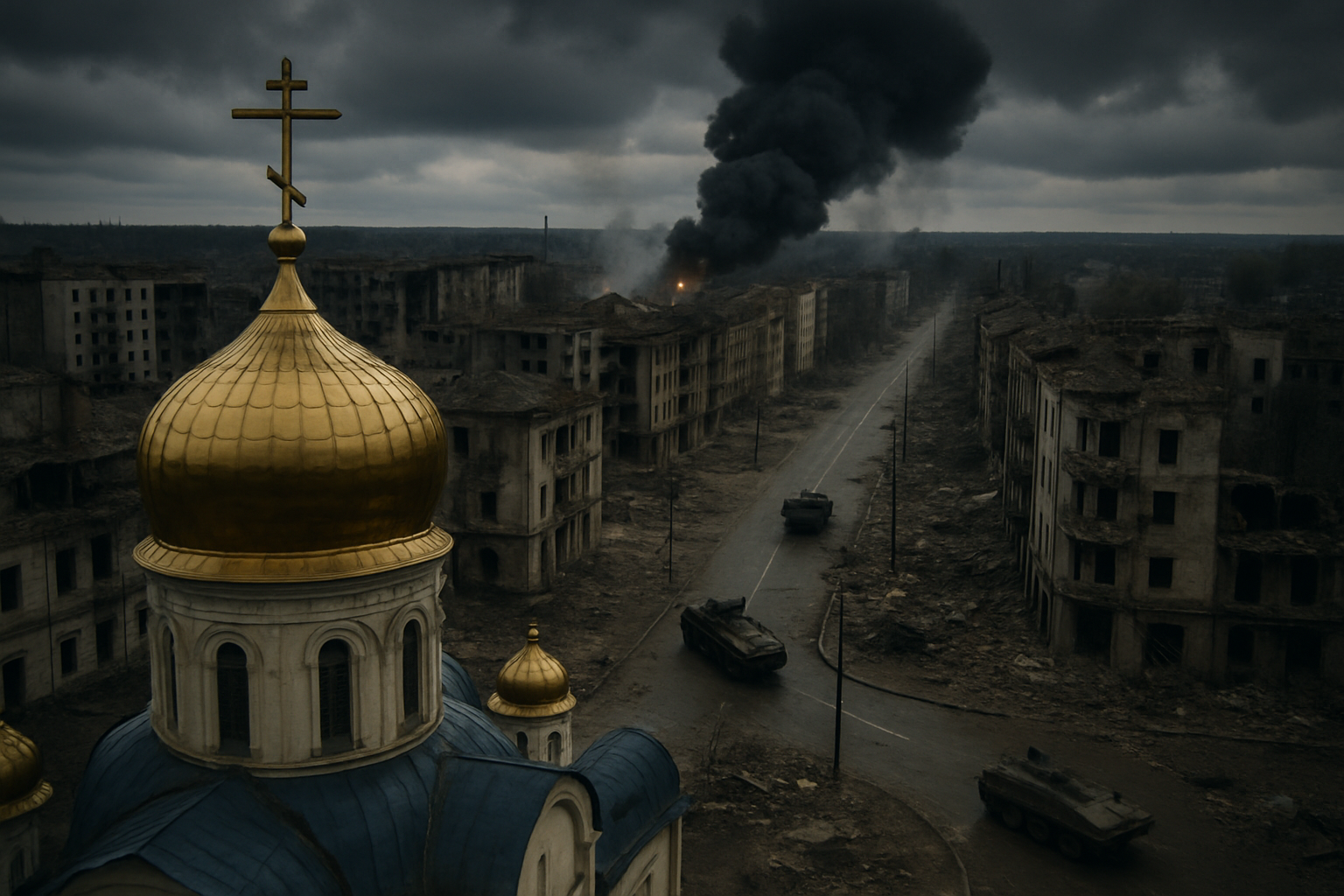
Ukraine reported 2,299 violations of the Orthodox Easter ceasefire by Russian forces during the 32-hour humanitarian pause that began Saturday at 4 PM Moscow time, according to Ukrainian military officials. The widespread breaches of the religious truce underscore the deepening crisis in diplomatic efforts to end the conflict, as trilateral peace negotiations remain indefinitely suspended due to the Iran crisis.
The Orthodox Easter ceasefire, which ran from April 11 at 1600 hours through the end of April 12, was the first coordinated humanitarian pause since trilateral Ukraine-Russia-US peace talks were suspended in March 2026. Despite President Vladimir Putin's formal declaration and President Volodymyr Zelensky's confirmation that Ukraine would honor the truce, both sides accused each other of violations within hours of the ceasefire taking effect.
Massive Scale of Ceasefire Violations
French media sources confirmed Ukrainian forces documented 2,299 violations of the Easter ceasefire, representing one of the most systematic breaches of a humanitarian pause since the conflict began. The violations occurred across multiple regions, with drone strikes, artillery bombardments, and infantry attacks continuing throughout the Orthodox Christian holy period.
Russian regional authorities reported Ukrainian drone attacks in border regions, including strikes on Nova Kakhovka that caused damage and injured one civilian. Pro-Russian sources claimed Ukrainian forces targeted the Lgov gas station in the Kursk region, wounding three people including a one-year-old child, according to Governor Hinshtein.
Austrian media noted the fragile nature of the ceasefire, reporting that "both sides threw accusations of violations at each other" despite the religious significance of the Orthodox Easter period for more than 500 million Christians worldwide.
Diplomatic Crisis Deepens
The Easter ceasefire violations occurred against the backdrop of a major diplomatic crisis, with the most significant peace opportunity since the invasion's beginning now suspended indefinitely. The trilateral Ukraine-Russia-US negotiations, which achieved historic breakthroughs in February 2026, have been derailed by the Iran crisis consuming American foreign policy attention.
February's achievements included a historic 314-prisoner exchange (the largest in five months), the restoration of US-Russia military communications after a four-year suspension, and Geneva talks that showed "significant progress" on ceasefire monitoring with European "Big 5" observers participating for the first time.
"The framework for negotiations remains intact, but the timeline is uncertain due to Middle East priorities,"
— Senior European diplomatic source
The suspension has dealt a severe blow to the Trump administration's June 2026 Washington venue deadline, which had been planned to potentially include presidential-level engagement. The evolution from Abu Dhabi to Geneva to Washington had suggested a deliberate diplomatic escalation strategy now interrupted by competing international crises.
Military Situation Deteriorates
The ceasefire violations occurred amid accelerating military escalation on both sides. Russian territorial gains reached 481 square kilometers in January versus 260 square kilometers in December 2025, representing an 85% increase and the fastest expansion in months. Ukrainian officials report that Russia has deployed over 101,000 troops dedicated to drone operations as of April 2026, representing the largest unmanned force in modern warfare.
Energy infrastructure remains a primary target in what Ukrainian officials term "energy terrorism." Over 1,170 buildings in Kyiv still lack adequate heating from previous attacks, and Ukrainian nuclear plants were forced to halt electricity production for the first time in the conflict. The systematic targeting of civilian infrastructure during extreme winter conditions constitutes documented violations of the Geneva Conventions.
Ukraine's Strategic Evolution
Despite the diplomatic setbacks, Ukraine has undergone a strategic transformation from aid recipient to security provider. Over 200 Ukrainian military specialists are now deployed across five Middle Eastern countries—the UAE, Qatar, Jordan, Bahrain, and Kuwait—sharing expertise in combating Iranian Shahed drones, the same weapons being used to attack Ukrainian infrastructure.
The UK revealed four operational Maintenance, Repair, and Operations (MRO) facilities in Ukraine servicing Western equipment, with a fifth planned. This represents the first public acknowledgment of extensive military infrastructure on Ukrainian soil and demonstrates unprecedented military cooperation during an active conflict.
Nuclear Governance Crisis
The Easter ceasefire violations occurred against an unprecedented nuclear governance crisis. The New START Treaty between the United States and Russia expired on February 5, 2026, marking the first time in over 50 years that the two nuclear superpowers operate without bilateral nuclear constraints. Both nations control 80% of the world's nuclear weapons, with Russia possessing 4,380 warheads and the US holding 3,708.
UN Secretary-General António Guterres has warned of a "grave turning point," stating that nuclear risks are at their "highest in decades." The restored military communications through Pentagon-Moscow deconfliction protocols represent the only remaining formal diplomatic channel between the superpowers.
International Support Despite Divisions
International support for Ukraine remains substantial despite growing divisions. The European Union approved a historic €90 billion loan package, the largest single-nation assistance ever provided. However, Slovakia, the Czech Republic, and Hungary refused participation, highlighting internal EU divisions on Ukraine policy.
Additional support includes Sweden and Denmark's €246 million air defense package featuring Tridon Mk2 systems, and Germany's delivery of 35 Patriot missiles. Over 17.8 million Ukrainians are currently accessing winter support programs as the humanitarian crisis deepens.
Humanitarian Toll and War Crimes
President Zelensky has disclosed that 55,000 Ukrainian soldiers have been officially killed, with a "large number" missing. International estimates suggest the actual casualties are 2-3 times higher. The systematic targeting of civilian infrastructure, emergency services, and repair personnel has been documented as war crimes under international humanitarian law.
The pattern includes targeting 15 DTEK energy workers killed while restoring power, representing calculated humanitarian pressure tactics during life-threatening winter conditions. The deliberate attacks on civilian infrastructure during religious observance periods demonstrate the conflict's entrenchment transcending spiritual significance.
Territorial Disputes Remain Unchanged
The fundamental sticking point in negotiations remains unchanged: eastern Ukrainian territories under Russian control. Russia demands territorial recognition and insists that any Putin-Zelensky talks must occur in Moscow. Ukraine maintains its territorial integrity position while seeking long-term security guarantees.
President Zelensky has categorically rejected territorial concessions, stating that the Ukrainian people would reject "handing over territories" as a "failure story." The accelerating Russian territorial gains potentially strengthen Moscow's bargaining position when negotiations eventually resume.
Framework Preservation for Future
Despite the suspension, diplomatic achievements remain intact. The prisoner exchange mechanisms, structured negotiation format, and Pentagon-Moscow deconfliction protocols covering Syria, Arctic, and Africa operations can be reactivated when the Iranian crisis permits favorable conditions. The UAE methodology of working groups by topic has proven effective for humanitarian results and provides a foundation for future engagement.
The most substantial US-Russia agreement since the conflict began demonstrates that sustained diplomatic engagement can produce concrete breakthroughs despite fundamental disagreements on territorial issues.
Global Implications and Strategic Stakes
The suspension of the most significant diplomatic opportunity since the invasion began carries implications far beyond the Ukraine-Russia conflict. The stakes include European security architecture redefinition, international law enforcement credibility, and territorial sovereignty principles for the 21st century.
Success in eventual resumed talks could end Europe's deadliest war since World War II and provide a conflict resolution template for territorial disputes worldwide. Failure may intensify military operations globally and undermine diplomatic credibility for innovative solutions to territorial conflicts.
The interconnected nature of regional conflicts in the multipolar security environment demonstrates how crises in the Middle East can derail the most promising European diplomatic initiatives since the Cold War.
Looking Ahead
The timeline for resumed negotiations depends entirely on the resolution of the Iran situation and broader Middle East stability. Military escalation continues with systematic civilian targeting while Ukraine maintains operational capabilities and expands international partnerships as a security provider.
The Orthodox Easter ceasefire violations serve as a stark reminder that the entrenchment of the conflict transcends religious and cultural boundaries. With over 500 million Orthodox Christians worldwide observing Easter, the failure to maintain even a brief humanitarian pause during the holiest period demonstrates the depth of the military and political challenges facing any future peace efforts.
As the fourth anniversary of the invasion approaches, the suspension of trilateral talks by competing international crises highlights the complex reality of conflict resolution in an interconnected world where multiple regional conflicts compete for diplomatic attention and resources.