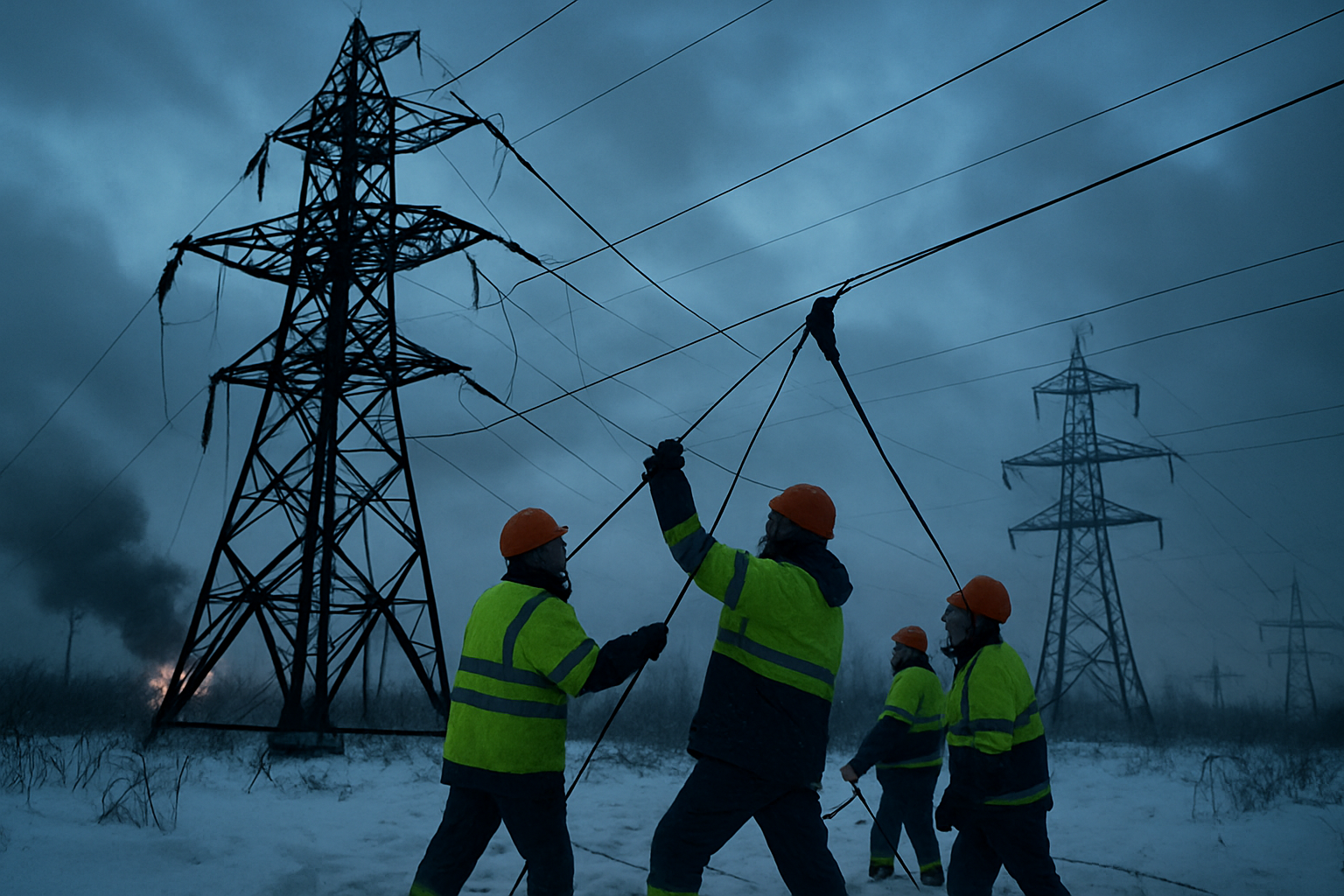
Ukraine faces continued Russian attacks on its energy infrastructure as peace negotiations remain indefinitely suspended, with President Zelensky offering conditional energy truce while seven regions experience power outages from fresh strikes.
The latest attacks on Ukrainian power systems underscore Russia's persistent "energy terrorism" strategy, even as diplomatic frameworks established through historic prisoner exchanges earlier this year remain stalled due to competing global crises in the Middle East.
Energy Truce Proposal Amid Ongoing Attacks
Ukrainian President Volodymyr Zelensky told journalists Monday that if Russia is prepared to stop attacks on Ukraine's energy network, Ukraine would act similarly. This conditional offer comes as Ukrenergo reports power outages affecting consumers in seven regions due to new Russian attacks on the power grid as of March 30 morning.
The proposal reflects Ukraine's evolution from a primarily defensive posture to one where it has developed significant long-range strike capabilities against Russian energy infrastructure. Recent Ukrainian operations have targeted Russian oil facilities across multiple regions, including successful strikes on the Alchevsk Metallurgical Plant and Russian military convoys.
However, Zelensky has indicated that Ukraine received "signals" from some allies to reduce strikes on Russia's oil sector, suggesting Western concerns about potential market disruptions and escalation risks.
Systematic Infrastructure Targeting Continues
The pattern of attacks on Ukrainian energy infrastructure represents a continuation of what officials describe as "energy terrorism" - a systematic campaign to destroy civilian power systems during harsh winter conditions. This strategy has forced over 1,170 buildings in Kyiv alone to operate without adequate heating during sub-zero temperatures.
The targeting extends beyond power generation to include:
- Electrical transmission networks connecting nuclear power plants
- Regional distribution substations serving civilian populations
- Emergency response teams attempting repairs
- Critical infrastructure supporting industrial operations
Ukrainian nuclear facilities have been particularly vulnerable, with attacks forcing the unprecedented shutdown of nuclear power generation for the first time since the conflict began. The International Atomic Energy Agency (IAEA) has repeatedly warned that strikes on electrical systems supporting nuclear plants create risks extending far beyond Ukraine's borders.
Peace Talks Suspended by Regional Crises
The energy infrastructure attacks continue despite significant diplomatic progress achieved earlier this year. In February 2026, trilateral talks between Ukraine, Russia, and the United States produced breakthrough results including a historic 314-prisoner exchange and restoration of US-Russia military communications after a four-year suspension.
However, these negotiations have been indefinitely suspended due to the Iran crisis consuming American foreign policy attention. President Zelensky confirmed there are "no necessary signals for trilateral meeting" until the security situation allows for high-level diplomatic engagement.
"The Middle East situation is preventing the high-level trilateral engagement necessary for territorial dispute resolution"
— Senior Diplomatic Source
The suspension represents a significant setback for what many observers considered the most promising diplomatic opportunity since Russia's invasion began in February 2022. The framework established through UAE mediation had proven effective for producing concrete humanitarian results even amid continued military operations.
Military Developments and Casualties
Beyond energy infrastructure, Ukrainian forces have maintained operational capabilities across multiple fronts. Recent operations have included strikes on Russian military facilities, with Ukrainian Defense Forces successfully targeting a Russian military convoy and a launcher belonging to Russia's S-400 Triumph mobile surface-to-air missile system.
The human cost of the conflict continues mounting, with President Zelensky having disclosed that 55,000 Ukrainian soldiers have been officially confirmed killed, with a "large number" still missing. International estimates suggest actual casualties could be two to three times higher when including undocumented deaths and missing personnel.
Civilian casualties from infrastructure attacks also continue accumulating. A recent Russian drone attack on a minibus in Kherson city center injured a 62-year-old man, highlighting how the conflict's reach extends into everyday civilian life far from traditional military targets.
International Support Despite Divisions
Ukraine continues receiving unprecedented international support despite the diplomatic stalemate. The European Union has approved a historic €90 billion loan package - the largest single-nation assistance program in EU history. However, this support shows some cracks, with Slovakia, Czech Republic, and Hungary refusing to participate in the financing arrangements.
Additional military aid includes:
- Sweden-Denmark's €246 million air defense package with Tridon Mk2 systems
- Germany's provision of 35 Patriot missiles
- World Bank allocation of $40 million for energy restoration efforts
- Over 17.8 million Ukrainians accessing winter support programs
The United Kingdom has also revealed the existence of four operational Maintenance, Repair, and Operations (MRO) facilities within Ukraine servicing Western-supplied equipment, with a fifth facility planned. This represents a significant long-term commitment to Ukrainian military capabilities beyond the current conflict.
Nuclear Governance Crisis
The energy infrastructure attacks occur against a backdrop of unprecedented nuclear governance challenges. The New START treaty between the United States and Russia expired in February 2026, marking the first time in over 50 years without bilateral nuclear constraints between the two superpowers who control 80% of the world's nuclear weapons.
UN Secretary-General António Guterres has described this as a "grave turning point" with nuclear risks at their "highest in decades." The restoration of US-Russia military communications through Pentagon deconfliction protocols represents the only remaining formal diplomatic channel between the nuclear superpowers.
Strategic Evolution and Regional Impact
Ukraine's strategic position has evolved significantly since the conflict's early stages. The country has transitioned from primarily receiving aid to becoming a security provider, with Ukrainian military experts now deployed to five Middle East countries - UAE, Qatar, Jordan, Bahrain, and Kuwait - sharing expertise on defending against Iranian Shahed drones, the same weapons being used to attack Ukrainian infrastructure.
This evolution reflects Ukraine's development of substantial technological capabilities and battlefield experience that have global applications. The country now operates 450 companies in drone production, making it the largest sector in the Ukrainian economy, with 10 European export centers operational by 2026.
The regional impact extends beyond Ukraine's borders, with neighboring countries like Moldova declaring energy emergencies due to damaged transmission lines connecting to European energy networks. The broader implications include questions about infrastructure protection, energy security, and the vulnerability of civilian systems in modern warfare.
Looking Forward
With peace negotiations suspended indefinitely and no clear timeline for resumption dependent on resolution of the Iran crisis, the pattern of infrastructure attacks and military operations appears likely to continue. The preservation of the diplomatic framework established through earlier breakthroughs offers hope for eventual reactivation when conditions permit.
The stakes extend far beyond Ukraine-Russia relations, encompassing European security architecture, international law enforcement, and territorial sovereignty principles that will shape decades of international relations. The success or failure of eventual resumed talks carries global implications for 21st-century conflict resolution and the credibility of diplomatic solutions to territorial disputes worldwide.
As winter approaches again, Ukraine's energy resilience will face another critical test, while the international community continues grappling with how to balance support for Ukraine with management of multiple simultaneous global crises that compete for attention and resources.