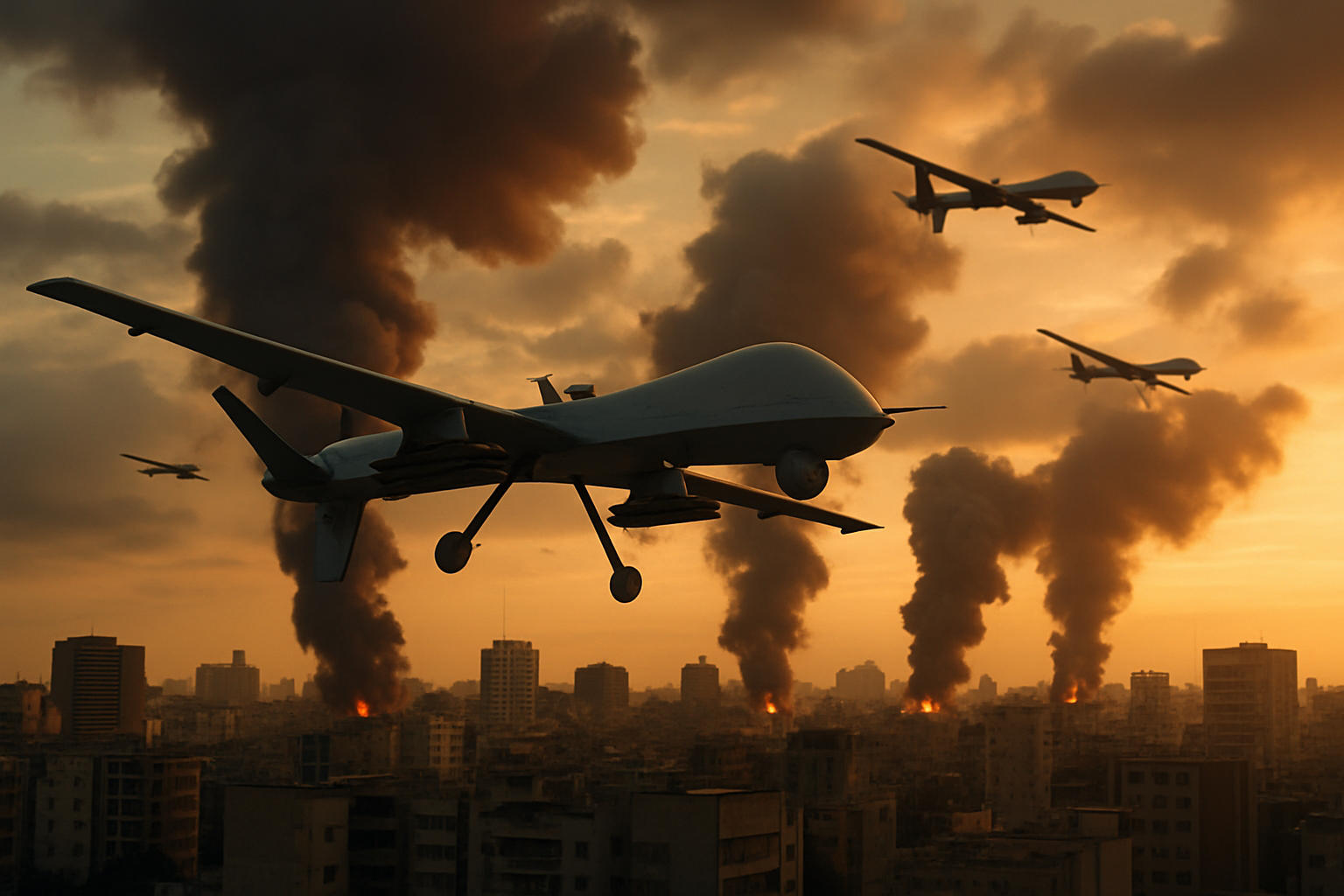
Ukraine has dramatically escalated its drone warfare operations against Russian territory, with Moscow's Defense Ministry reporting the interception of 76 Ukrainian unmanned aerial vehicles in a single wave, while President Volodymyr Zelensky warns that Russia is preparing massive new strikes on Ukrainian energy infrastructure during the harsh winter conditions.
The latest developments represent a significant intensification of the conflict as both sides employ increasingly sophisticated drone tactics, with Ukraine targeting strategic Russian installations deep within enemy territory while Russia continues its systematic campaign against civilian energy infrastructure.
Major Drone Interceptions Over Russian Territory
Russian air defense systems intercepted a substantial Ukrainian drone assault, with the Defense Ministry announcing the destruction of 76 unmanned aircraft over Russian airspace. The operation represents one of Ukraine's most ambitious deep-strike campaigns to date, demonstrating Kyiv's growing capability to project force far beyond the immediate conflict zone.
Ukrainian forces successfully struck multiple high-value targets during recent operations, including the Tamanneftegaz oil terminal in Russia's Krasnodar region and a Pantsir-S1 air defense system in occupied Crimea. These precision strikes showcase Ukraine's evolving tactical approach, targeting critical infrastructure and defensive systems to degrade Russian military capabilities.
The attacks come as part of Ukraine's broader strategy to disrupt Russian logistics and energy exports that fund the war effort. Intelligence reports indicate that Ukrainian forces have also targeted the Ільский oil refinery in the Krasnodar region, where fires broke out following the drone strikes, causing significant damage to refining operations.
Civilian Casualties in Russian-Controlled Areas
The Ukrainian drone campaign has resulted in civilian casualties in Russian-occupied territories. In Sevastopol, local authorities reported that a child was injured when drone debris fell in residential areas after Russian air defense systems intercepted over 24 unmanned aircraft in what officials described as "one of the most prolonged attacks in recent times."
"Sevastopol was subjected to one of the most prolonged attacks in recent times. Over 24 drones were shot down over the region."
— Mikhail Razvozhaev, Russian-appointed Governor of Sevastopol
Debris from intercepted drones scattered across multiple districts of the city, with explosive warheads detonating in residential courtyards. The attack highlights the increasingly complex nature of modern warfare, where civilian areas become inadvertent targets during military operations.
Zelensky's Warning of Imminent Energy Strikes
President Zelensky has issued stark warnings about Russia's preparations for renewed massive attacks on Ukraine's energy infrastructure, describing Moscow's inability to resist targeting civilian power systems during the severe winter weather.
According to multiple European intelligence sources, Russia has been systematically preparing for what could be the most devastating energy infrastructure assault of the winter season. These warnings come as Ukraine already faces critical energy shortages following previous Russian attacks that damaged power generation facilities across the country.
The anticipated strikes would continue Russia's controversial "winter weapon" strategy, deliberately targeting civilian infrastructure during sub-zero temperatures to maximize humanitarian impact. Previous such attacks have left over 1,170 buildings in Kyiv alone without heating during temperatures as low as minus-30°C.
Russian Counter-Strike Operations
Russia has responded to Ukrainian drone operations with its own escalating strikes against Ukrainian positions and infrastructure. Recent attacks on Odesa resulted in two civilian casualties when Russian drones struck a residential building and damaged critical infrastructure facilities.
Ukrainian air defenses have been working around the clock to counter Russian attacks, with reports indicating systematic targeting of repair crews attempting to restore damaged energy infrastructure. This deliberate targeting of maintenance personnel represents an escalation in tactics designed to prevent Ukraine from recovering from infrastructure damage.
Impact on Border Guard Operations
Ukrainian border guard units have reported significant success in operations against Russian forces, particularly in the Kursk and Northern Slobozhanshchyna sectors. The "Steel Border" brigade has documented striking a Russian tank, two communication antennas, a military vehicle, and a reconnaissance drone in recent operations.
These tactical victories demonstrate Ukraine's continued ability to conduct effective operations despite the intensity of Russian defensive measures. The targeting of communication systems is particularly significant, as it disrupts Russian command and control capabilities in contested areas.
International Response and Strategic Implications
The escalation in drone warfare occurs against the backdrop of ongoing diplomatic efforts, including the recent Geneva peace talks scheduled for February 17-18, which represent an evolution from the Abu Dhabi trilateral breakthrough that achieved a historic 314-prisoner exchange.
European allies continue to provide critical support, with Sweden and Denmark announcing a €246 million air defense package including advanced Tridon Mk2 systems. The EU has also approved an unprecedented €90 billion loan package for Ukraine, representing the largest financial assistance program ever for a single nation.
However, the intensification of military operations on both sides raises questions about the genuine commitment to diplomatic solutions, particularly as fundamental territorial disputes remain unresolved despite humanitarian breakthroughs achieved through sustained diplomatic engagement.
Technology and Tactical Evolution
The current phase of the conflict demonstrates the rapidly evolving nature of modern warfare, with both sides employing increasingly sophisticated drone technologies. Ukraine has successfully disrupted Russian communications through coordinated electronic warfare operations, while Russia continues to adapt its air defense systems to counter Ukrainian deep-strike capabilities.
The systematic nature of attacks on energy infrastructure during extreme winter conditions represents what international observers describe as "energy terrorism," violating Geneva Conventions provisions for civilian protection. The pattern of targeting repair personnel and emergency services further complicates humanitarian recovery efforts.
Looking Ahead
As both sides continue to escalate their drone warfare capabilities, the conflict enters a critical phase where military pressure intersects with diplomatic initiatives. The success or failure of ongoing peace negotiations may ultimately depend on whether humanitarian breakthroughs can translate into sustainable territorial dispute resolution.
The coming weeks will be crucial in determining whether the current military escalation represents preparation for more intensive fighting or a final push before serious diplomatic engagement. With nuclear governance crises adding urgency to the situation following the expiration of the New START treaty, the stakes for successful conflict resolution have never been higher.
The international community continues to watch closely as Ukraine's drone operations demonstrate growing tactical sophistication while Russia's response threatens further humanitarian crises through systematic infrastructure targeting during the harsh winter conditions.