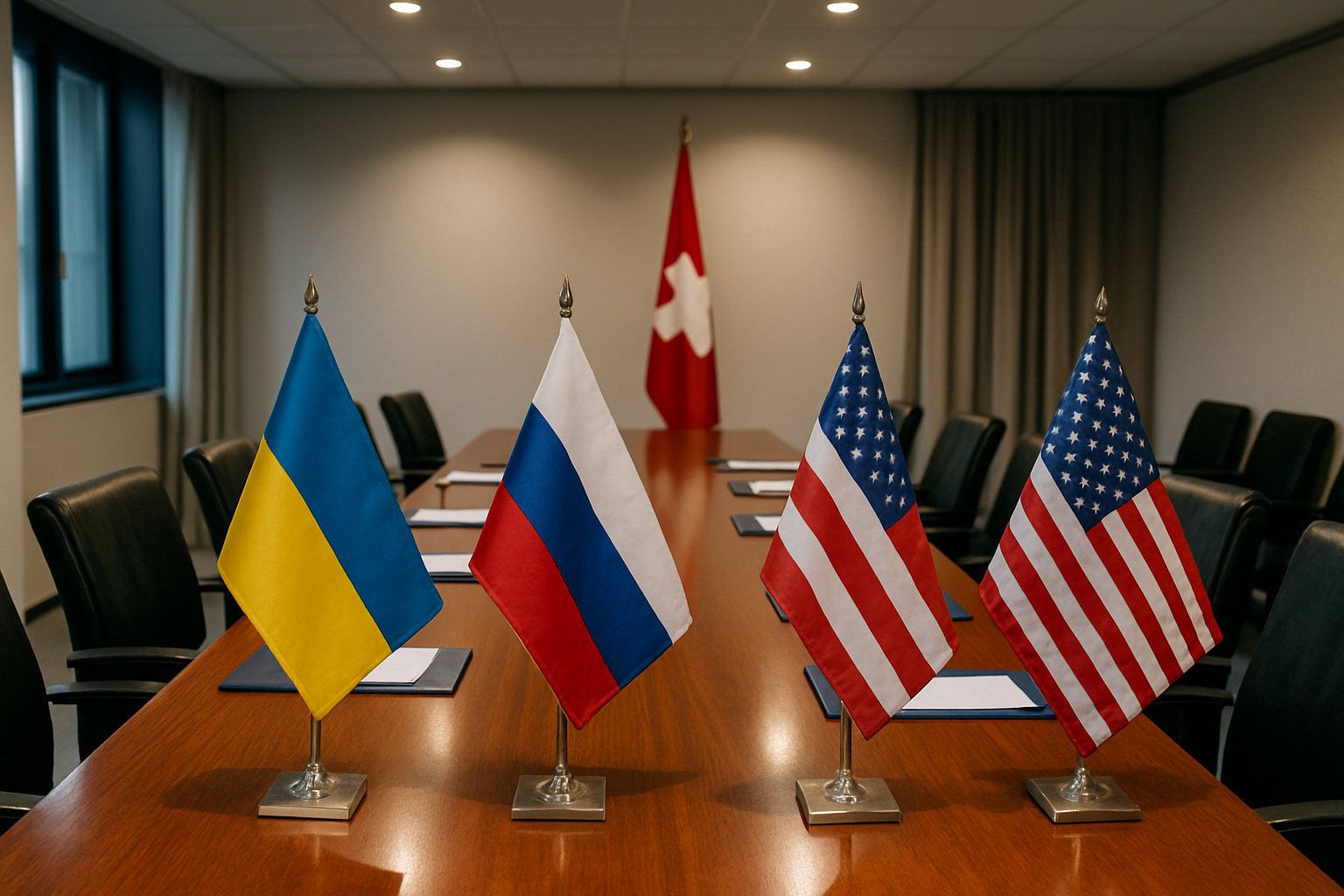
Ukrainian drone strikes hit Russian oil facilities and military targets as preparations intensify for pivotal Geneva peace talks on February 17-18, representing a crucial test of diplomatic momentum amid escalating military operations and accelerating Russian territorial gains.
The trilateral negotiations between Ukraine, Russia, and the United States mark an evolution from the breakthrough Abu Dhabi talks that achieved the first prisoner exchange in five months and restored US-Russia military communications after a four-year suspension. However, the diplomatic progress occurs against a backdrop of intensifying military operations that underscore the complex challenges facing negotiators.
Ukrainian Strike Operations Target Russian Infrastructure
Ukrainian forces conducted coordinated strikes against Russian military and energy infrastructure on February 15, hitting the Tamanneftegaz oil terminal near the village of Volna in Russia's Krasnodar region. The attack ignited fires at the Black Sea facility and damaged oil storage infrastructure according to Krasnodar Governor Veniamin Kondratyev.
The Ukrainian Defense Forces also struck a Pantsir-S1 air defense system in occupied Crimea, demonstrating continued operational capabilities despite defensive pressures. These operations represent Ukraine's sustained effort to disrupt Russian logistics and military capabilities while diplomatic channels remain active.
"Despite severe winter conditions, combined forces and military units continue operations across multiple sectors,"
— Russian Army Chief Valery Gerasimov
Geneva Talks Build on Abu Dhabi Breakthrough
The Geneva meeting, scheduled for February 17-18, will be led by Ukrainian National Security and Defense Council Secretary Rustem Umerov and Russian presidential aide Vladimir Medinsky, with continued US mediation under Steve Witkoff. The venue shift from Abu Dhabi to Geneva represents an evolution toward European neutral territory, potentially signaling growing diplomatic seriousness.
The negotiations build on significant momentum from the February 5 Abu Dhabi talks, which achieved a historic 314-prisoner exchange - the largest in five months. More significantly, the talks restored US-Russia military communications after a four-year suspension, establishing deconfliction protocols that include incident prevention measures covering global operations in Syria, the Arctic, and Africa.
Ukrainian Defense Minister Umerov described the previous talks as "substantial and productive," with detailed discussions on ceasefire monitoring mechanisms and implementation procedures.
Military Escalation Contradicts Diplomatic Progress
Despite the diplomatic breakthrough, Russian forces have accelerated territorial gains, capturing 481 square kilometers in January 2026 compared to 260 square kilometers in December 2025. Over 10,000 Russian drones and bombs were launched in January alone, representing a significant escalation in military pressure.
Russian forces have claimed control of approximately 12 eastern Ukrainian villages in the first half of February, according to statements from Russian military leadership. This territorial expansion continues even as diplomatic channels produce concrete humanitarian results.
The most concerning escalation involved systematic attacks on Ukrainian energy infrastructure during extreme winter conditions. Russia's "winter weapon" strategy has left over 1,170 buildings in Kyiv without heating during temperatures reaching minus-30°C, representing what Ukrainian officials term "energy terrorism" in violation of international humanitarian law.
Civilian Casualties Mount Amid Peace Efforts
The tragic human cost of the conflict continues to escalate alongside diplomatic efforts. A February 11 Russian drone strike on Bohodukhiv in the Kharkiv region killed four civilians, including three young children - two one-year-old boys and one two-year-old girl - along with their 34-year-old father. This marked the second deadly attack on the same town within three days.
President Zelensky has disclosed that 55,000 Ukrainian soldiers have been officially confirmed killed since the February 2022 invasion, with a "large number" still classified as missing in action. International research estimates suggest actual military casualties could be 2-3 times higher when including undocumented losses.
The systematic targeting of civilian infrastructure during winter conditions has affected 17.8 million Ukrainians accessing emergency support programs, highlighting the humanitarian dimension of the military campaign.
Nuclear Crisis Adds Urgency
The diplomatic initiatives occur against the backdrop of an unprecedented nuclear governance crisis. The New START treaty between the US and Russia expired on February 5, 2026, marking the first time in over 50 years without bilateral nuclear constraints between the superpowers.
UN Secretary-General António Guterres warned of a "grave turning point" with nuclear weapon use risks "higher than at any time in decades." The military communications restoration represents the only remaining major diplomatic channel between nuclear powers controlling 80% of global nuclear weapons.
Ukrainian nuclear plants were forced to halt electricity production for the first time during the conflict following Russian attacks on electrical distribution networks, with IAEA Director Rafael Grossi confirming the unprecedented shutdown created additional security concerns.
International Support Reaches Historic Levels
Despite the escalating violence, international support for Ukraine has reached unprecedented levels. The European Union approved a historic €90 billion loan package - the largest EU assistance ever provided to a single nation. The European Parliament approved the package with 458 votes in favor, 140 against, and 44 abstentions, though Slovakia, Czech Republic, and Hungary refused participation, highlighting continued divisions within Europe.
Additional military support includes Sweden and Denmark's €246 million air defense package featuring Tridon Mk2 systems, and Germany's provision of 35 Patriot missiles. NATO Secretary-General Mark Rutte made a surprise visit to Kyiv, addressing the Ukrainian Parliament and condemning the energy attacks as a "bad signal" ahead of negotiations.
Sticking Points Remain Unchanged
The fundamental territorial dispute remains the primary obstacle to comprehensive peace. Eastern Ukrainian territories under Russian control represent the core disagreement, with Russia demanding territorial recognition while Ukraine maintains its position on territorial integrity in accordance with international law.
The accelerating Russian territorial gains in January may be calculated to strengthen Moscow's bargaining position ahead of the Geneva talks. The pattern of military escalation coinciding with diplomatic engagement suggests a coordinated strategy of pressure tactics alongside negotiations.
"The key focus remains on territorial control issues and the long-term fate of eastern Ukrainian territories currently under Russian administration,"
— Diplomatic source familiar with negotiations
June 2026 Deadline Creates Pressure
The Trump administration has established a June 2026 deadline for achieving a comprehensive peace agreement, with potential for Washington venue talks that could involve presidential-level engagement. This timeline creates unprecedented pressure for innovative solutions to decade-old territorial challenges.
The evolution from Abu Dhabi to Geneva to potentially Washington suggests a deliberate diplomatic escalation designed to test whether higher-level engagement can produce breakthrough solutions where traditional negotiations have failed.
European divisions persist regarding engagement strategies, with Germany opposing direct Putin talks due to "maximalist demands" while France and Italy support broader diplomatic engagement. This disagreement reflects broader challenges in maintaining Western unity on negotiation approaches.
Strategic Implications for Global Order
The Geneva talks represent the most significant diplomatic opportunity since the conflict began, with implications extending far beyond Ukraine. Success could end Europe's deadliest war since World War II and provide a template for 21st-century conflict resolution combining military pressure, humanitarian diplomacy, and territorial compromise innovation.
Failure, however, could intensify military operations globally and undermine confidence in diplomatic solutions for territorial disputes. The stakes include fundamental questions about European security architecture, international law enforcement, and territorial sovereignty principles in an era of renewed great power competition.
The restoration of US-Russia military communications, while occurring amid continued combat operations, demonstrates that sustained diplomatic engagement can produce concrete results even in the most challenging circumstances. The Pentagon framework includes transparency mechanisms and reduced escalation protocols that could prevent miscalculation between nuclear powers.
Coming Weeks Will Prove Decisive
The February 17-18 Geneva talks will test whether the humanitarian breakthrough achieved in Abu Dhabi can translate into progress on the fundamental territorial disputes that have sustained this conflict for nearly four years. The neutral Swiss venue provides institutional support for sensitive compromise discussions while maintaining the momentum from UAE mediation success.
International observers will closely monitor whether innovative territorial dispute resolution mechanisms can bridge the gap between Ukrainian territorial integrity positions and Russian demands for territorial recognition. The prisoner exchange and military communications frameworks provide confidence-building measures, but the core territorial challenge remains unprecedented in modern conflict resolution.
The simultaneous continuation of military operations alongside diplomatic progress creates a complex dynamic where humanitarian results coexist with escalating violence. This paradox will likely define the Geneva negotiations, testing whether genuine peace commitment exists or whether negotiations serve primarily as humanitarian pressure tactics.
As Ukraine and Russia prepare for these critical talks, the international community watches to see whether diplomatic innovation can resolve territorial challenges that have defined European security for the past four years, or whether the cycle of military escalation and diplomatic engagement will continue toward the June 2026 deadline.