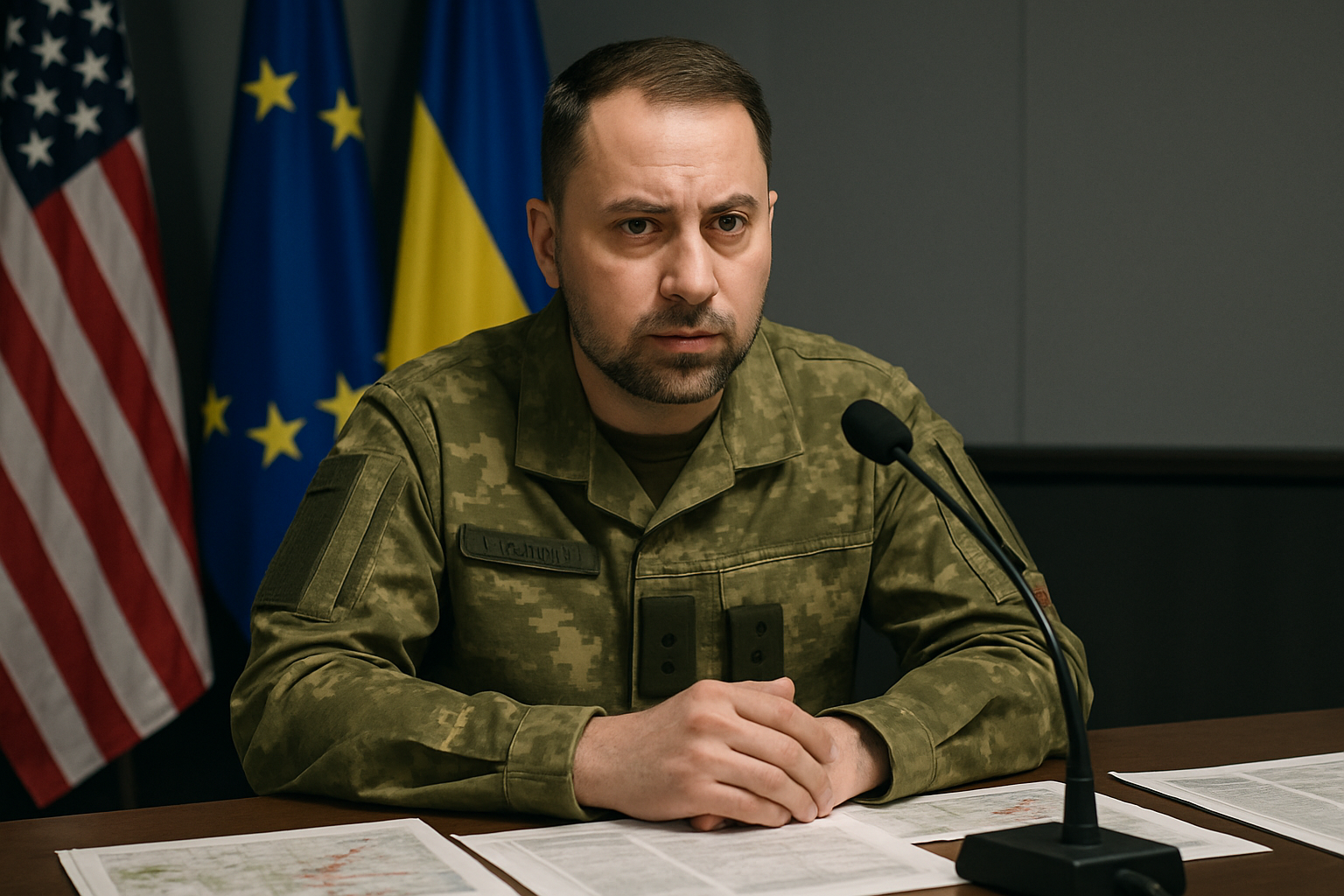
Ukrainian military intelligence chief Lieutenant General Kyrylo Budanov has delivered significant updates on the nation's strategic position and international cooperation efforts, while addressing critical challenges in domestic military recruitment and parliamentary relations as the conflict with Russia approaches its fifth year.
Speaking at a high-level briefing on April 10, 2026, Budanov provided comprehensive insights into Ukraine's evolving military strategy, emphasizing the importance of deep-strike capabilities and continued international partnerships. His remarks came as Ukrainian forces demonstrated increasing operational sophistication despite ongoing territorial pressures from Russian forces.
Strategic Initiative Through Deep-Strike Operations
According to Estonian defense officials, Ukraine has "seized the strategic initiative" through its enhanced deep-strike campaigns targeting Russian air defense systems. Gert Kaju, head of the Defense Readiness Department at the Estonian Ministry of Defense, confirmed during an April 10 briefing that Ukrainian forces have significantly intensified their strikes on Russian defensive positions.
The strategic shift represents a fundamental evolution in Ukrainian military doctrine, moving from primarily defensive operations to proactive targeting of critical Russian military infrastructure. These deep-strike capabilities have enabled Ukrainian forces to systematically degrade Russian air defense networks, creating operational opportunities across multiple fronts.
International Diplomatic Developments
Budanov announced that Ukraine expects to host a high-level U.S. delegation next week for continued discussions on ending Russia's war against Ukraine. The anticipated visit builds on previous diplomatic momentum, including the historic February 2026 prisoner exchange breakthrough that saw 314 individuals returned - the largest such exchange in five months.
The upcoming diplomatic engagement occurs against the backdrop of suspended trilateral peace talks between Ukraine, Russia, and the United States, which were postponed indefinitely due to the ongoing Iran crisis consuming American foreign policy attention. Despite the suspension, diplomatic frameworks established during February's Abu Dhabi and Geneva talks remain intact and can be reactivated when conditions permit.
"The dialogue with members of the Verkhovna Rada will continue on a systematic basis. We have reached agreement with MPs on the next meeting."
— Lieutenant General Kyrylo Budanov, Head of Ukrainian Presidential Office
Parliamentary Relations and Domestic Coordination
Budanov emphasized the importance of systematic dialogue with Ukraine's parliament, the Verkhovna Rada, indicating that coordination between military leadership and legislative bodies remains a priority despite wartime pressures. This systematic approach to parliamentary relations demonstrates Ukraine's commitment to democratic governance even under extreme circumstances.
Critical Assessment of Military Technology
In a significant strategic assessment, Budanov stated that "wars are not won without people" and that "drones cannot fight for us," providing crucial perspective on the role of technology in modern warfare. This commentary comes as both Ukrainian and Russian forces have dramatically expanded their use of unmanned systems, with Russia deploying an estimated 101,000 troops dedicated to drone operations by April 2026.
The intelligence chief's remarks address growing debates about the role of autonomous weapons systems in determining conflict outcomes. While acknowledging the transformative impact of drone technology, Budanov emphasized that human soldiers remain indispensable for achieving strategic objectives.
Domestic Recruitment Challenges
Budanov issued sharp criticism of draft evaders and those opposing Territorial Recruitment Centers (TRC), calling on Ukrainian society to "grow up." His pointed remarks reflect growing tensions over military conscription as the conflict enters its fifth year and manpower needs continue to increase.
The intelligence chief's comments highlight one of Ukraine's most sensitive domestic issues - balancing military recruitment needs with public sentiment. Ukrainian officials have documented challenges in maintaining adequate troop levels while preserving social cohesion and public support for the war effort.
Current Military Situation
Recent developments indicate continued Russian territorial advances, with forces gaining approximately 481 square kilometers in January 2026 compared to 260 square kilometers in December 2025 - representing an 85% increase in the pace of territorial acquisition. This acceleration has intensified pressure on Ukrainian forces to maintain defensive positions while developing counteroffensive capabilities.
Ukrainian forces have demonstrated resilience through continued operations targeting Russian supply lines, command posts, and air defense systems across occupied territories. Recent strikes have successfully targeted facilities in Crimea, Donetsk, and Zaporizhzhia regions, indicating sustained operational capabilities despite territorial pressures.
International Support Framework
Ukraine continues to receive unprecedented international support, including the European Union's historic €90 billion loan package - the largest single-nation assistance effort in EU history. Additional support includes Sweden-Denmark's €246 million air defense package and Germany's delivery of 35 Patriot missile systems.
The United Kingdom has revealed four operational Maintenance, Repair, and Operations (MRO) facilities within Ukraine servicing Western-supplied equipment, with a fifth facility planned. This represents the first public acknowledgment of extensive military infrastructure supporting Ukrainian operations with allied equipment.
Nuclear Governance Context
Budanov's briefings occur amid unprecedented nuclear governance challenges following the February 5, 2026 expiration of the New START treaty between the United States and Russia. For the first time in over 50 years, the world's two largest nuclear powers operate without bilateral nuclear constraints, with both nations controlling approximately 80% of global nuclear weapons.
UN Secretary-General António Guterres has described the situation as a "grave turning point," with nuclear risks at their "highest in decades." The restoration of US-Russia military communications through previous diplomatic breakthroughs represents the only remaining formal channel between the nuclear superpowers.
Regional Security Implications
The intelligence chief's updates reflect Ukraine's evolution from aid recipient to security provider, with Ukrainian military experts now deployed across five Middle Eastern countries - UAE, Qatar, Jordan, Bahrain, and Kuwait - to combat Iranian Shahed drones. These same drone systems continue to target Ukrainian civilian infrastructure, demonstrating the interconnected nature of regional conflicts.
Estonia's assessment that Ukraine has seized strategic initiative suggests a potential shift in conflict dynamics, though fundamental territorial disputes remain unresolved. Russian demands for recognition of occupied territories continue to clash with Ukrainian insistence on territorial integrity and international law principles.
Strategic Outlook
As Ukraine approaches the fifth year of full-scale conflict, Budanov's updates reveal a nation adapting its military doctrine while maintaining democratic governance structures. The emphasis on systematic parliamentary dialogue, international cooperation, and technological innovation demonstrates Ukrainian leadership's commitment to long-term strategic planning beyond immediate tactical needs.
The intelligence chief's frank assessment of recruitment challenges and military technology limitations provides insight into Ukrainian strategic thinking as the conflict potentially transitions from territorial defense to more complex regional security dynamics involving multiple international partners and adversaries.
With diplomatic frameworks preserved despite current suspensions, and military capabilities continuing to evolve, Ukraine's strategic position reflects both immediate challenges and longer-term opportunities for resolution through diplomatic or military means. The coming weeks may prove decisive in determining whether renewed international engagement can break the current stalemate or whether military operations will continue to define the conflict's trajectory.