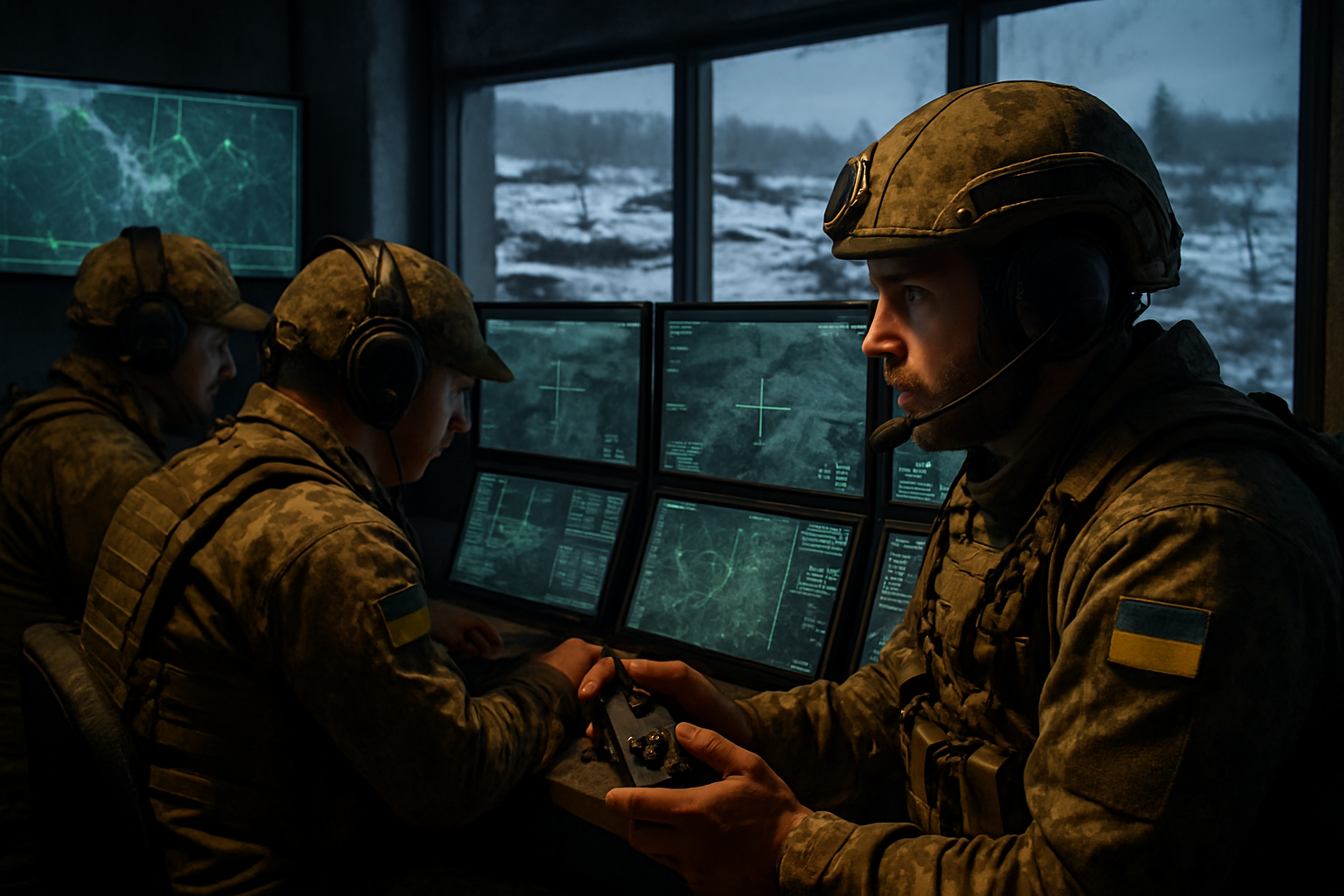
Ukraine launched one of its most extensive drone campaigns of the war, striking Russian territory with 283 unmanned aircraft in a massive overnight operation, while diplomatic efforts to end the conflict remain suspended due to ongoing Middle East crises.
The unprecedented scale of the drone assault marks a significant escalation in Ukraine's operational capabilities, coming as peace negotiations between Kyiv, Moscow, and Washington remain indefinitely postponed due to the Iran crisis that has dominated American foreign policy attention since early March.
Record-Breaking Drone Operations
Ukrainian forces launched 283 drones against Russian targets in what Russian officials described as one of the largest such attacks since the conflict began. The Russian Defense Ministry reported intercepting the majority of the incoming drones, though the sheer scale of the operation demonstrates Ukraine's growing capacity for long-range strikes deep into Russian territory.
Among the confirmed impacts, drone strikes hit the city of Ufa in Russia's Bashkortostan region, injuring two construction workers when debris struck a building site near oil refineries. Russian regional governor Radiy Khabirov confirmed the casualties were minor and did not require hospitalization, though the psychological impact of strikes reaching industrial heartlands continues to pressure Moscow.
The coordinated assault targeted multiple regions across Russia, representing a sophisticated operation that required extensive planning and coordination. Swedish media outlets reported the attack as potentially the largest Ukrainian drone offensive since the full-scale invasion began, highlighting Ukraine's evolution from a primarily defensive posture to conducting strategic deep strikes.
Miami Diplomatic Mission
Even as military operations intensified, Ukrainian diplomatic efforts continued with a high-level delegation arriving in Miami for crucial bilateral discussions with US representatives. The talks, involving Ukrainian officials and American envoys including figures from the Trump administration's circle, represent a significant diplomatic engagement on US soil.
According to sources familiar with the arrangements, the Miami meetings are designed to address security guarantees, sanctions policy, and potential next steps in diplomatic efforts to resolve the conflict. The choice of Miami as a venue, rather than Washington, suggests these are preparatory discussions ahead of potentially higher-level engagement.
The talks occur against the backdrop of suspended trilateral negotiations between Ukraine, Russia, and the United States. President Zelensky had confirmed in March that these crucial peace talks were postponed indefinitely due to the Iran crisis consuming American foreign policy bandwidth.
NATO Commitment Reaffirmed
Amid the operational and diplomatic developments, NATO leadership has reinforced its commitment to supporting Ukraine's defense efforts. Admiral Vandier, representing NATO command structures, publicly declared the alliance's full commitment to helping Ukraine resist Russian aggression.
This reaffirmation comes as the conflict enters what many analysts consider a critical phase, with both sides demonstrating enhanced capabilities while diplomatic channels remain constrained by broader geopolitical crises. NATO's continued support provides crucial backing as Ukraine develops its long-range strike capabilities.
The alliance's position reflects broader international support that has sustained Ukraine through nearly two years of full-scale warfare. Despite political changes in various member nations, the core commitment to Ukrainian sovereignty and territorial integrity remains firm across the Atlantic alliance.
Stalled Peace Process
The diplomatic landscape remains complex following the suspension of trilateral peace negotiations that had shown promising momentum earlier in the year. The talks had achieved significant breakthroughs, including a historic 314-prisoner exchange and the restoration of US-Russia military communications after a four-year suspension.
The February Geneva talks had included European observers for the first time and made "significant progress" on ceasefire monitoring mechanisms, according to US Special Envoy Steve Witkoff. However, fundamental disagreements over territorial control of eastern Ukrainian regions remained unresolved.
The Iran crisis that erupted in March has fundamentally altered American foreign policy priorities, relegating the Ukraine peace process to a secondary position despite previous commitments to a June 2026 resolution timeline. This shift demonstrates how interconnected regional conflicts can derail promising diplomatic initiatives in the modern multipolar security environment.
Military Situation Assessment
Recent combat reports indicate continued intensity along multiple front lines, with Ukrainian forces repelling 161 separate combat engagements in a 24-hour period. The heaviest fighting has been concentrated in the Pokrovsk and Kostiantynivka sectors, where Russian forces have maintained offensive pressure despite Ukrainian defensive capabilities.
The drone campaign represents a strategic shift in Ukrainian tactics, leveraging technological capabilities to strike deep into Russian territory while maintaining defensive positions along established front lines. This approach allows Ukraine to maintain pressure on Russian logistics and infrastructure while conserving manpower for defensive operations.
Russian territorial gains had accelerated to 481 square kilometers in January compared to 260 square kilometers in December 2025, representing an 85% increase that had concerned Ukrainian leadership. The enhanced drone capabilities may serve to disrupt Russian supply lines supporting these territorial advances.
International Support Framework
Despite the diplomatic complications, international support for Ukraine remains robust. The European Union's historic €90 billion loan package represents the largest single-nation assistance program in European history, though divisions persist with Slovakia, Czech Republic, and Hungary refusing participation.
Military support continues through various channels, including Sweden-Denmark's €246 million air defense package and Germany's delivery of Patriot missile systems. These contributions demonstrate sustained commitment even as attention has shifted to Middle East crises.
Ukraine's strategic evolution from aid recipient to security provider, particularly in Middle Eastern partnerships combating Iranian drone threats, represents a significant diplomatic achievement that may influence future negotiations and support arrangements.
Nuclear Governance Challenges
The military and diplomatic developments occur within a broader nuclear governance crisis following the expiration of the New START treaty in February 2026. For the first time in over 50 years, the United States and Russia operate without bilateral nuclear constraints, creating an unprecedented strategic environment.
Both superpowers control approximately 80% of global nuclear weapons, and UN Secretary-General António Guterres has described the current situation as a "grave turning point" with nuclear risks at their highest level in decades. The restored military communications between Washington and Moscow, achieved through earlier diplomatic breakthroughs, remain the only formal channel between the nuclear superpowers.
Humanitarian Impact
The continued conflict maintains severe humanitarian pressures across Ukrainian territory. Over 17.8 million Ukrainians continue accessing winter support programs, while systematic attacks on civilian infrastructure persist in violation of Geneva Conventions.
Ukraine has officially disclosed 55,000 military casualties, though the actual numbers are likely significantly higher according to international estimates. The systematic targeting of civilian infrastructure, including energy facilities and emergency services, represents what Ukrainian officials term "energy terrorism" designed to pressure civilian populations during extreme weather conditions.
Strategic Implications
The current phase of the conflict carries profound implications for 21st-century conflict resolution approaches. The suspension of promising peace negotiations due to competing regional crises demonstrates the challenges of managing multiple simultaneous conflicts in an interconnected global system.
Success in eventual resumed talks could provide a template for territorial dispute resolution and international law enforcement. However, continued military escalation risks undermining diplomatic credibility globally and may encourage military solutions over negotiated settlements in future conflicts.
The stakes extend beyond Ukraine to encompass European security architecture, international law enforcement mechanisms, and territorial sovereignty principles that will influence global conflicts for decades. The framework achievements - including prisoner exchange mechanisms and communications restoration - remain intact for potential reactivation when geopolitical conditions permit focused diplomatic engagement.
Looking Forward
The timeline for resumed peace negotiations remains uncertain, dependent on resolution of the Iran crisis and broader Middle East stability. Military escalation continues with both sides demonstrating enhanced capabilities while Ukraine expands international partnerships and maintains operational effectiveness.
The success or failure of eventual resumed talks will carry global implications for territorial sovereignty enforcement, conflict prevention mechanisms, and the balance between diplomatic innovation and military solutions in determining European security architecture for the coming decades.
As Ukraine demonstrates growing operational capabilities through record-setting drone campaigns while maintaining diplomatic channels through high-level engagements in Miami, the conflict enters a phase where military pressure and diplomatic preparation proceed simultaneously, awaiting favorable conditions for comprehensive peace negotiations to resume.